

- Home
- Agriculture & Farming Applications
- Agricultural Tracks Guide for 2026
Agricultural Tracks Guide for 2026

TL;DR: Agriculture Tracks
- Agricultural Tracks help most when traction, flotation, and tight field windows are the real bottlenecks.
- They can reduce slip and surface rutting, but high axle loads can still compact deeper soil layers.
- A well-managed tire setup, especially with proper inflation, can still be a strong option on many farms.
- Road travel, heat, sharp turns, and worn undercarriage parts can shorten service life fast.
- The best buying decision comes down to your machine, soil conditions, road use, axle loads, and the actual problem you need to solve.
NEW >> Download the New AG Tracks Break-In Guide
Installing new agricultural tracks is only part of the job. How you handle the first hours of use can have a real impact on wear, heat, alignment, and long-term performance.
That is why Dyne Industries created the New AG Tracks Break-In Guide.
This practical guide explains why break-in matters before planting season, what happens during the first critical hours, and what operators should watch for before putting a machine into full service.
It also includes a simple pre-season checklist to help you inspect the undercarriage, confirm track tension, limit early road travel, and make sure the machine is ready for the field.
If you want to protect tread life, support undercarriage performance, and reduce the risk of early downtime, this guide is a smart place to start.
Agricultural tracks can be a smart upgrade, but only when they match the machine, the soil, and the way the operation actually runs.
That matters even more in 2026. Equipment is heavier, weather windows are tighter, and when a machine is down in planting or harvest, the cost shows up fast. It shows up in missed hours, backed-up crews, delayed trucks, and extra stress for everyone trying to keep the day on track.
This guide takes a practical look at agricultural tracks. We are not going to pretend they fix every field problem. We are also not going to write them off.
Instead, we will look at where agricultural tracks help most, where tires can still compete, and how to make a better buying decision when uptime, traction, and soil conditions are all on the line.
Research and extension guidance continue to show the same pattern: tracks can help with traction, flotation, and surface performance, but axle load, inflation, soil moisture, and operating habits still drive the real outcome.
If you are buying replacement agricultural tracks for a tractor, combine, or grain cart, the goal is simple. You want a setup that helps the machine stay productive, protects the ground where it can, and does not create new problems through poor fit, too much road travel, or a worn undercarriage.
Sources:
Why agricultural tracks matter more in 2026


In this section, let’s look at why agricultural tracks keep coming up in buying conversations. The short answer is simple: machines are heavy, field timing is tight, and soft ground still shows up when you can least afford it.
Today’s operations are asking more from every pass. A tractor may need to pull hard in spring when the top layer is soft. A combine may need to keep moving through a wet harvest window. A grain cart may be carrying loads that put serious pressure on the soil profile.
Extension guidance from the University of Minnesota continues to warn that heavy equipment, especially loaded grain carts and combines, can create serious subsurface compaction regardless of whether they run tracks or tires.
That is one reason agricultural tracks are getting more attention, but it is also a reminder to stay realistic about what they can and cannot do.
Weather pressure is another reason agricultural tracks matter more now. When planting or harvest windows get squeezed, operators are more willing to invest in anything that helps the machine stay moving on borderline ground.
That can mean fewer deep ruts, steadier pull, and less time spent fighting slip in soft areas.
There is also a bigger soil-health conversation happening across agriculture. More growers want to know the difference between surface damage and deeper subsoil damage. That is a good thing. It leads to better buying decisions.
Agricultural tracks are often strongest where flotation, traction, and surface management matter most, but they do not cancel out heavy axle loads or poor timing on wet ground.
So yes, agricultural tracks matter more in 2026, but not because they are trendy. They matter because they can help solve real field problems when the machine, the load, and the operating conditions line up.
That sets up the next question, what agricultural tracks actually do once they hit the ground.
Sources:
What agricultural tracks actually do
Before you decide whether agricultural tracks are worth it, it helps to understand what they are really doing under the machine.
This is where the conversation gets more useful, because instead of relying on sales language or assumptions, you can look at how agricultural tracks affect traction, flotation, and ground pressure in real working conditions.
At the most basic level, agricultural tracks spread machine weight over a longer footprint than a typical tire setup. That larger contact area can improve flotation and traction, especially in soft ground.
In field research comparing tracks, single wheels, and dual wheels on the same tractor type, tracks and duals produced similar stresses at the depths studied, while single wheels created clearly higher stresses. The same work also found lower slip with tracks than with the wheeled options.
That matters on the job. Lower slip usually means the machine puts power down more efficiently. Instead of wasting energy clawing for grip, it moves forward more cleanly. In soft fields, that can mean better pull, steadier steering, and fewer moments where you are wondering if the machine is about to bury itself.
Agricultural tracks can also reduce visible rutting compared with a narrow, high-pressure setup. That is one reason operators often feel the benefit right away. The machine may ride better, hold a line better, and leave a cleaner-looking path behind.
Still, agricultural tracks do not spread pressure perfectly. Research and extension sources both point out that pressure can spike under rollers and other track system components. In other words, the footprint is larger, but the load is not perfectly even from front to back. That is why a tracked machine can still compact soil, especially when loads are high or the soil is wet.
So what do agricultural tracks actually do in practice? They usually help a machine float better, pull better, and slip less, especially when conditions get soft.
But they do not change the basic fact that a heavy machine is still putting serious force into the ground. That is where a lot of buyers get tripped up, and it leads straight into one of the biggest misconceptions about agricultural tracks.
Sources:
The biggest myth about agricultural tracks

One of the biggest mistakes buyers make is expecting agricultural tracks to solve every compaction problem on their own. They can help in important ways, but they do not change the basic limits of soil, load, and field conditions.
A big part of the confusion comes from treating all compaction like it is the same. It is not. Topsoil compaction and deep subsoil compaction are different problems. Lower contact pressure can help reduce surface damage and topsoil stress, which is where agricultural tracks, flotation tires, duals, and correct inflation can all make a difference.
Deeper compaction is a different story. That is driven much more by axle load and soil moisture. In practical terms, that means a very heavy machine can still compact the soil below the surface, even if it is riding on agricultural tracks.
That is why large grain carts are such a good example. They may gain flotation and reduce visible rutting with agricultural tracks, but heavy axle loads can still push damaging pressure deeper into the soil profile. When fields are wet, that risk goes up even more.
Another part of the myth is the idea that agricultural tracks somehow make poor field conditions safe. They do not. Wet soil is still vulnerable soil. If the ground is too soft, traffic can still cause damage that lasts long after the machine leaves the field.
The better way to look at agricultural tracks is as one part of a broader field management strategy. They can improve traction, flotation, and surface performance, but they work best when paired with sensible axle loads, fewer unnecessary passes, better traffic control, and proper setup across the rest of the machine.
Once you see agricultural tracks in that more practical way, it becomes much easier to compare them honestly against tires and decide what really fits your operation best.
Sources:

Let's keep you on track
Agricultural tracks vs tires: the real 2026 answer
For many buyers, this is where the decision gets more complicated. Agricultural tracks and tires both have real advantages, but they do not solve the same problems in the same way.
The better question is not which one is better in general. It is which one makes more sense for your machine, your soil, and the way you actually work.
Where agricultural tracks usually win
Agricultural tracks usually have the strongest advantage when traction and flotation are the main concern. If a machine is slipping under load, struggling through soft spots, or leaving deep surface damage during a tight work window, tracks often have a clear edge.
That advantage shows up in real field conditions. Research comparing tracks and wheeled setups found lower slip with tracks, which helps explain why they often feel stronger and steadier when the ground turns soft.
Instead of losing power to wheel spin, the machine can put more of that power into forward motion.
Tracks also make sense when visible rutting is a constant problem. A longer footprint helps the machine stay on top better, which can mean cleaner passes, fewer ugly low spots, and less time spent fighting through conditions that are already slowing the day down.
In some setups, agricultural tracks can also reduce the amount of the field being trafficked compared with wider dual-wheel arrangements. For operations that care about traffic control and surface management, that can be another point in their favour.
Where tires can still compete
Tires still deserve a serious look. A well-managed tire setup can perform much better than many buyers think, especially when inflation pressure is matched properly to the real load and speed.
That is an important point, because some farms do not actually have a track problem. They have a setup problem. If tires are overinflated, poorly matched to the machine, or not adjusted for the work being done, performance drops fast.
On the other hand, a good radial tire setup with proper pressure can still deliver strong traction, reasonable flotation, and solid topsoil protection in the right conditions.
That can make tires the better fit on well-drained ground, on operations with more road travel, or in cases where the cost of tracks would be hard to justify against the actual benefit.
What road travel changes
Road travel can shift the whole decision. Agricultural tracks may perform very well in the field, but hard-surface use creates more heat and wear than many operators expect.
The more time a machine spends on pavement, especially at higher speed or under heavy load, the harder the track system has to work.
That is why transport distance matters so much in this comparison. If a machine spends most of its life in the field, tracks may make a lot of sense. If it spends long stretches moving between yards, fields, or jobs on the road, tires may be the more practical choice over time.
So the real 2026 answer is not tracks versus tires as a simple winner-and-loser debate. It is a fit decision. Agricultural tracks often make the most sense in soft ground, heavy pull, and narrow field windows.
Tires can still be the smarter buy when pressures are managed properly, soils drain well, and road miles are a bigger part of the machine’s life.
Once you look at the choice that way, the next question becomes much easier: when are agricultural tracks actually worth the investment?
Sources:

When agricultural tracks are a smart buy

The value of agricultural tracks becomes much clearer when you tie them to real-world work, not just product features. A smart purchase is not about buying the most expensive option. It is about solving a specific problem in a way that saves time, improves performance, and reduces costly slowdowns.
Agricultural tracks are often a smart buy when a machine regularly works in soft fields, during wet harvests, or in spring conditions where flotation matters. If you lose time every season because a tractor slips too much, a combine leaves deep ruts, or a grain cart struggles to stay mobile without beating up the field, tracks can help in a very practical way.
They are also worth serious attention when the machine has the horsepower but is not putting that power to the ground efficiently. Lower slip can mean more usable pull, less wasted fuel, and steadier work rates in demanding conditions. That is one of the clearest reasons agricultural tracks make sense on machines doing heavy work in softer ground.
Agricultural tracks also earn their keep when timing pressure is high. That might mean seeding ahead of another weather system, working through soft areas during forage season, or keeping harvest moving when the forecast only gives you a short opening. In those situations, even a modest gain in flotation or field access can make a real difference to the schedule.
That said, agricultural tracks are not the right answer for every operation. They may be a poor fit when a machine spends a large part of its life on pavement, when fields are usually firm and well drained, or when a lower-cost tire setup could solve the real issue just as well. In some cases, better tire pressure management or machine setup may deliver most of the benefit without the added cost of tracks.
So when are agricultural tracks a smart buy? Usually when traction loss, soft-ground performance, and downtime are costing you more than the track system would. That is the most practical way to look at the decision, and it is the best place to start before spending the money.
Once that is clear, the next step is making sure you choose agricultural tracks that actually fit the machine, the work, and the conditions they will see.
Sources:
Agricultural tracks by machine type

Not all machines ask the same thing from agricultural tracks. The weight, the work, and the field conditions all change the equation, which means the right setup for one machine may be the wrong fit for another.
Agricultural tracks for tractors
On tractors, agricultural tracks are usually chosen to improve pull, flotation, and traction in softer ground. That is where they often make the biggest day-to-day difference. If a tractor is doing heavy draft work and struggling to put power down cleanly, agricultural tracks can help reduce slip and make better use of the horsepower already available.
That said, tractors are also one of the clearest examples of why setup still matters. A well-managed tire system can perform much better than many people expect, especially when inflation pressure is matched properly to the load and working conditions. So if the main goal is protecting topsoil while keeping good traction, the real comparison should be between agricultural tracks and a properly set up tire system, not a neglected one.
Agricultural tracks for combines
On combines, agricultural tracks are often about keeping harvest moving when conditions get soft. When the crop is ready, waiting for perfect ground is not always an option. Tracks can help improve flotation, reduce visible rutting, and support better mobility in the kind of conditions where singles may struggle.
At the same time, combines are a good reminder that agricultural tracks do not remove the effect of weight. A tracked combine may leave a cleaner surface, but it is still carrying a heavy load. That is why unloading strategy and timing still matter, especially in wet conditions where axle load can do real damage below the surface.
Agricultural tracks for grain carts
Agricultural tracks can also make a real difference on grain carts, especially when harvest conditions are soft and flotation becomes a bigger concern. They can help reduce visible field damage and improve mobility when the cart needs to stay moving without carving up the ground.
Still, this is where expectations need to stay realistic. Grain carts can carry very high loads, and agricultural tracks do not cancel that out. They may improve surface performance, but deeper compaction risk can still be there, especially in wet soil and under heavy axle loads.
The best way to think about agricultural tracks by machine type is to match the decision to the machine’s main bottleneck. On a tractor, that may be pull and reduced slip. On a combine, it may be harvest mobility. On a grain cart, it may be flotation at the surface while still managing realistic limits below it.
Once that is clear, the next step is just as important, making sure agricultural tracks are installed properly so they can perform the way they should from day one.
Sources:
How to install agricultural tracks the right way
Getting agricultural tracks off to a good start matters more than most people realize. A careful installation helps the machine run true, wear evenly, and avoid the kind of early issues that turn a new set of tracks into an expensive headache.
Start with a clean, fully inspected undercarriage. Before new agricultural tracks go on, inspect the rollers, idlers, sprockets, tensioning components, and alignment points. If anything is loose, worn, or out of line, fix that first. A new track will not perform properly on a worn system, and early wear often starts there.
Alignment should also be treated as part of the installation, not something to look at later if a problem shows up. During the first hours of use, check alignment more often and make small corrections if needed. New agricultural tracks can settle in during break-in, so this is the time to catch issues before they turn into uneven wear or tracking problems.
Break-in matters too. Our recommendation is to avoid long periods of heavy road travel right after installation. Too much pavement, speed, or heat early on can put extra stress on the lugs and tread before the track has had a chance to settle into normal working conditions. It is better to ease the machine back into service and keep an eye on how the track is running.
This is also the right time to confirm proper tension, check machine balance, and make sure the operator knows what to watch during the first days back in the field. If something is off, new agricultural tracks usually show early signs through noise, tracking behaviour, heat, or uneven wear.
The goal at installation is simple: give the track every chance to run straight, settle properly, and wear evenly from the start. When agricultural tracks go on a clean, well-aligned, properly inspected machine, you reduce the odds of early problems and set the foundation for better service life. From there, the next step is just as important, how you run and maintain them day to day.
Let's keep you on track
How to make agricultural tracks last longer

Once agricultural tracks are installed properly, daily habits become the next big factor. Small choices in the field, on the road, and in the yard can have a real impact on how long they last and how well they perform.
Our recommendation is to avoid fast, sharp turns, especially on asphalt, concrete, or other hard surfaces. That kind of turning puts extra side load on the track and undercarriage. It is also smart to be careful around sharp rocks, broken concrete, metal edges, and rough ground that can cut or stress the rubber.
Daily checks matter more than most people think. Keep debris out of the undercarriage, watch for signs of misalignment, and inspect the lugs, rollers, and other wear points regularly. Catching a small issue early is almost always cheaper than running it until the track starts failing in the field.
Operating habits also make a real difference. Slow down when turning, especially under load or on side slopes. If possible, raise the implement slightly when turning and avoid aggressive manoeuvres that put extra twist and torque into the system. Those small habits can help reduce the stress that shortens track life over time.
Roading is another big factor. The more pavement, speed, heat, and weight you add, the harder you are working the track. If a machine needs to spend time on the road, keep transport reasonable and avoid treating agricultural tracks like a tire setup that can shrug off endless hard-surface travel.
Storage matters too, especially in Canada where equipment can sit through big seasonal swings. Whenever possible, store the machine indoors or in conditions that reduce long exposure to sunlight, moisture, and temperature extremes. Good storage will not fix poor operation, but it does help protect the rubber over time.
In the end, track life usually comes down to habits more than hope. Careful turns, controlled road use, regular inspections, and a clean undercarriage all help agricultural tracks stay in service longer and perform the way they should. With that in mind, let’s look at the most common problems operators run into, and what usually causes them.
Common problems with agricultural tracks, and what usually causes them

Most track problems start small before they turn into real downtime. The sooner you can spot the pattern, the better chance you have of fixing the root cause before it costs you a day in the field or a bigger repair bill.
One common issue is misalignment. When agricultural tracks are not running true, the wear usually starts to show around the lugs, edges, or tread pattern. Over time, that can lead to faster wear, tracking problems, and extra stress across the whole undercarriage. Daily visual checks can help catch those warning signs early.
Another common issue is too much hard-surface travel. Agricultural tracks are built for demanding field conditions, but long stretches on pavement still create extra heat and wear. If a machine spends a lot of time on the road, especially at higher speeds or under heavy load, track life can drop faster than expected.
Worn undercarriage parts are another frequent cause. Rollers, idlers, sprockets, and tensioning components all affect how the track runs. If those parts are already worn, the track may run hot, wear unevenly, or start showing problems that look like a bad track when the real issue is the system around it.
Operating style matters too. Sharp turns on high-friction surfaces, turning hard under load, side-slope work, and uneven transitions between soft ground and pavement can all add stress. Even small habits, repeated day after day, can shorten the life of agricultural tracks faster than most operators realize.
When agricultural tracks start showing unusual wear, the smartest move is to step back and look at the full picture. Check alignment, undercarriage condition, road use, machine setup, and operator habits before blaming the track itself. In many cases, the wear pattern points straight to the real problem.
Track de-tracking (coming off rollers)
Causes: loose tension, packed debris, worn idlers/rollers, or alignment off.
Fix: clean thoroughly, reset tension to spec, replace worn guides, and verify alignment. Coach operators to avoid pivoting on hard ground.
Uneven or rapid wear patterns
If one edge wears faster, your alignment or suspension is out. Check idler parallelism, bushings, and equal load across rollers. Running heavy on abrasive roads will also eat tread—plan for faster replacement if you road daily.
Cracks, cuts, and chunking damage
Shallow weathering is normal. Deep cuts into cords or missing lugs are not. If you see wires, plan replacement. Patch kits are only a short-term bandage to finish a season.
Track tension loss or slippage
Look for grease leaks at the tensioner, failing seals, or stretched cords. If a belt needs constant retensioning, it’s likely done.
Abnormal noises or vibration
Clunks often mean a broken inner lug or foreign object trapped in the run. Vibration can be a flat spot or missing tread. Check sprocket bolts for torque and inspect the whole path.
Once you know what causes early wear, it becomes much easier to look at agricultural tracks through an ROI lens, not just a replacement cost lens.
A better ROI view for agricultural tracks

This section is important because too many buying decisions stop at sticker price. Agricultural tracks need a wider ROI lens than that.
The value side is fairly easy to see when conditions get tough. Agricultural tracks can help reduce slip, improve flotation, limit surface rutting, and keep the machine productive in soft fields. On an operation where one delayed machine slows everything behind it, that matters a lot.
The research side supports that value when traction is the problem. Tracks showed lower slip than single and dual wheel setups in the Swedish tractor study, which helps explain why operators often notice a real improvement in usable pull.
But the cost side matters just as much. Agricultural tracks ask more from the operator in some ways. Alignment matters. Roading habits matter. Undercarriage health matters. Break-in matters. If those things are ignored, the cost per hour can climb quickly.
A better ROI question is this: will agricultural tracks solve the operation’s main bottleneck better than the alternatives? Sometimes the answer is yes. Sometimes the better investment is proper tire pressure, a better traffic pattern, less axle load, or a different machine setup. University and extension guidance both support that more balanced approach.
That is why the best ROI decision on agricultural tracks is rarely emotional. It is practical. Solve the biggest problem first, then measure the track system against that problem.
Typical lifespan of rubber tracks
Real-world range is often 1,200–1,600 hours with good care. Light seasonal use can go longer; heavy tillage on abrasive soils can be shorter. Track it like a wear item and plan ahead.
Calculating cost-per-hour performance
Simple math: price ÷ hours. A “cheaper” belt that lasts half as long costs more per hour. Consider install time, machine downtime, and lost acres when you pick a belt. That’s the true cost.
Preventing downtime with proactive replacement
Swap before harvest if you’re near end-of-life. Keep one spare set for critical machines—grain carts, combines, primary tillage. It’s cheaper than bleeding days of weather.
Leveraging warranties and supplier support
Register your belts. Follow maintenance that keeps warranty valid. If something looks wrong early, call us. We’ll help diagnose wear patterns and get you back up.
Now let’s be clear about what agricultural tracks do not solve by themselves.
Sources:
What agricultural tracks do not solve on their own
Agricultural tracks can solve some real problems, but they are not a cure-all. To make a smart buying decision, it helps to be clear about where they add value and where they do not change the bigger limits of weight, soil, and machine management.
First, agricultural tracks do not solve overloaded axles. They may improve flotation and reduce visible surface damage, but heavy loads can still drive pressure deeper into the soil. If the machine is carrying too much weight, the risk of deeper compaction does not disappear just because it is running on tracks.
Second, agricultural tracks do not make wet soil safe to traffic. Soft ground may look manageable on the surface, especially when tracks help the machine stay moving, but soil moisture still has a major effect on compaction risk. If the field is too wet, damage can still happen below the surface and stay there long after the pass is finished.
Third, agricultural tracks do not replace good traffic habits. The way a machine moves through the field still matters. Repeated passes, poor route planning, and unnecessary traffic can all add up, even with a track system in place. Good field discipline is still one of the best tools for protecting the ground.
Finally, agricultural tracks do not make up for poor maintenance or neglect. If daily inspections are skipped, the undercarriage is worn, or the machine is constantly pushed hard on pavement, the track system will show it sooner or later through heat, uneven wear, or shortened service life.
The simplest way to look at it is this: agricultural tracks are a strong tool, but they still need the right conditions and the right habits around them. Once you understand those limits, it becomes much easier to make a practical buying decision and focus on what the machine really needs.
A practical buyer checklist for agricultural tracks
Agricultural tracks can solve some real problems, but they are not a cure-all. To make a smart buying decision, it helps to be clear about where they add value and where they do not change the bigger limits of weight, soil, and machine management.
Define the main problem clearly
Is the issue wheel slip, rutting during harvest, poor flotation, early field access, or repeated downtime in soft conditions?
Measure how much road travel the machine really does
If the machine spends a lot of time on pavement, factor that into the decision.
Look at real working loads
Base your decision on actual field loads, not brochure numbers.
Confirm the issue is really a track issue
Check whether the real problem could be tire pressure, ballast, traffic patterns, or machine setup.
Inspect the undercarriage before buying
Check rollers, idlers, sprockets, and tensioning components for wear or damage.
Choose the right width for the work
Think about row spacing, flotation, transport conditions, and the type of ground the machine sees most often.
Match the track to real operating conditions
Make sure the track fits the machine’s actual workload, not just the machine model.
Slow down if the answers are unclear
If you cannot answer these questions with confidence, pause before ordering.
Talk to a supplier who understands real-world fitment
Work with a supplier who can help you match the track to your machine, conditions, and daily use.
Conclusion: Why agricultural tracks keep your farm moving forward

If you work in mud, protect soil, or pull heavy iron, agricultural tracks are the practical choice. They give traction when you need it, protect your fields for next year, and keep machines working when the clock is tight.
At Dyne Industries Inc., we stock high-quality tractor tracks for the most common ag machines. We ship fast, and we help you get the install and tension right. Because downtime hurts—and support matters.
Need help choosing? Send us your make, model, and how you use it. We’ll size it, quote it, and get it moving.
Let's keep you on track
FAQs about agricultural tracks
With good care, many operators see 1,200–1,600 hours. Heavy draft on abrasive soils can be lower; light seasonal work can be higher. Inspect often and plan replacements before peak season.
In mud, soft soils, and heavy draft, tractor tracks win—more traction and less compaction. If you road a lot on dry ground, premium radials may pencil out.
Steel is tougher on rock but heavy, loud, and hard on roads and soil. Rubber tracks are field-friendly, quieter, and roadable for short moves—better for most farm jobs.
Check the old belt’s width, pitch, and lug count, then match to your make/model and undercarriage type (friction or positive drive). If you’re unsure, call us with the serial—we’ll confirm.
Small surface cuts can be patched short-term. If cords are exposed or lugs are torn, plan to replace. Patches get you through a window; they’re not a permanent fix.

- agricultural tracks
- block tread
- chevron tread
- combine tracks
- farm traction
- fitment
- flotation
- friction drive
- grain cart tracks
- inner lugs
- positive drive
- ROI
- row crop tracks
- rubber tracks
- soil compaction
- stubble resistant tracks
- track installation
- track maintenance
- track pitch
- track sag
- track tension
- track width
- tractor tracks
- tread patterns
- troubleshooting
- undercarriage

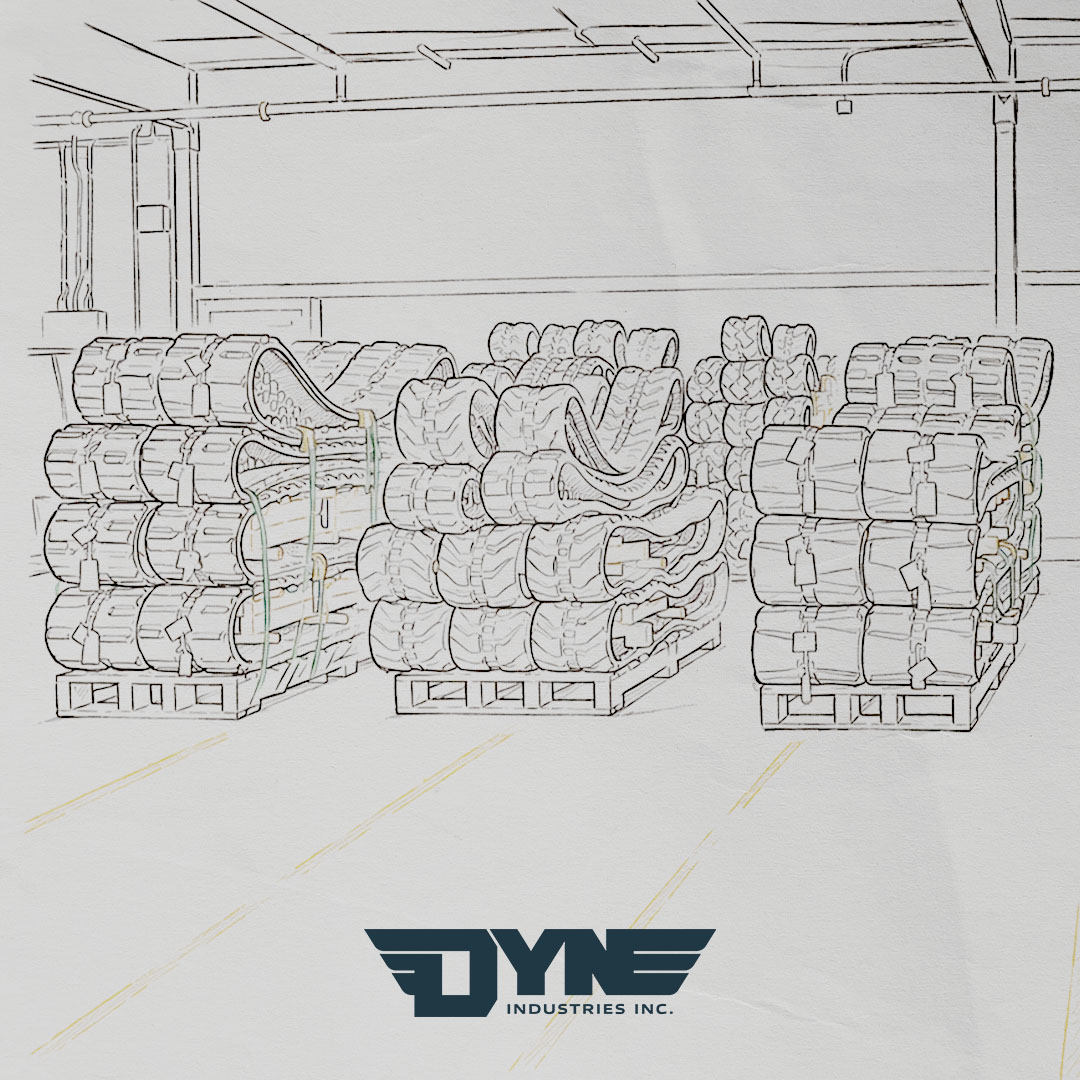
Aftermarket rubber tracks can help reduce downtime when they are matched to the right machine, tread, and jobsite conditions.
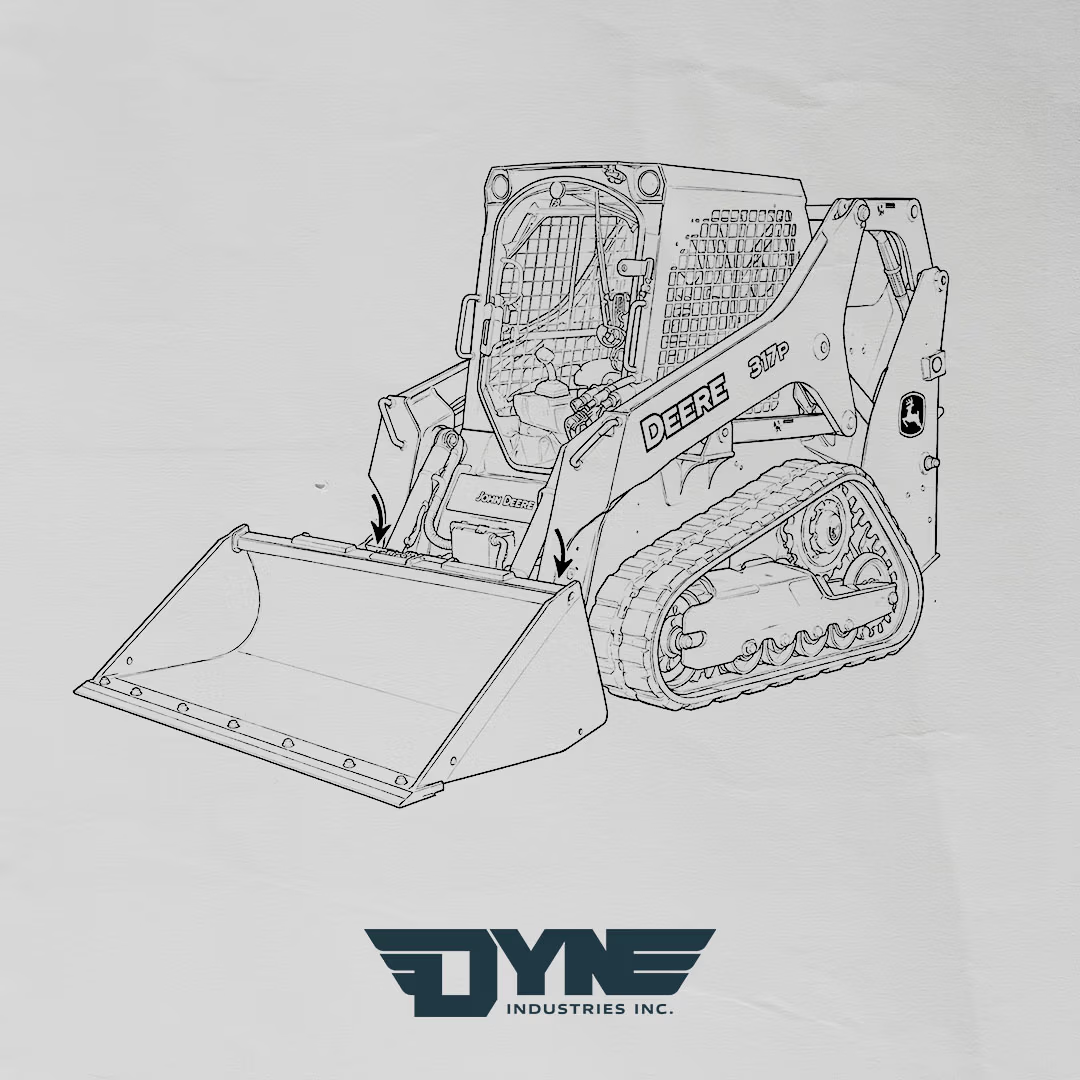
Learn what a John Deere skid steer on tracks means, including CTL replacement tracks, OTT kits, tread patterns, fitment, cost, and maintenance.
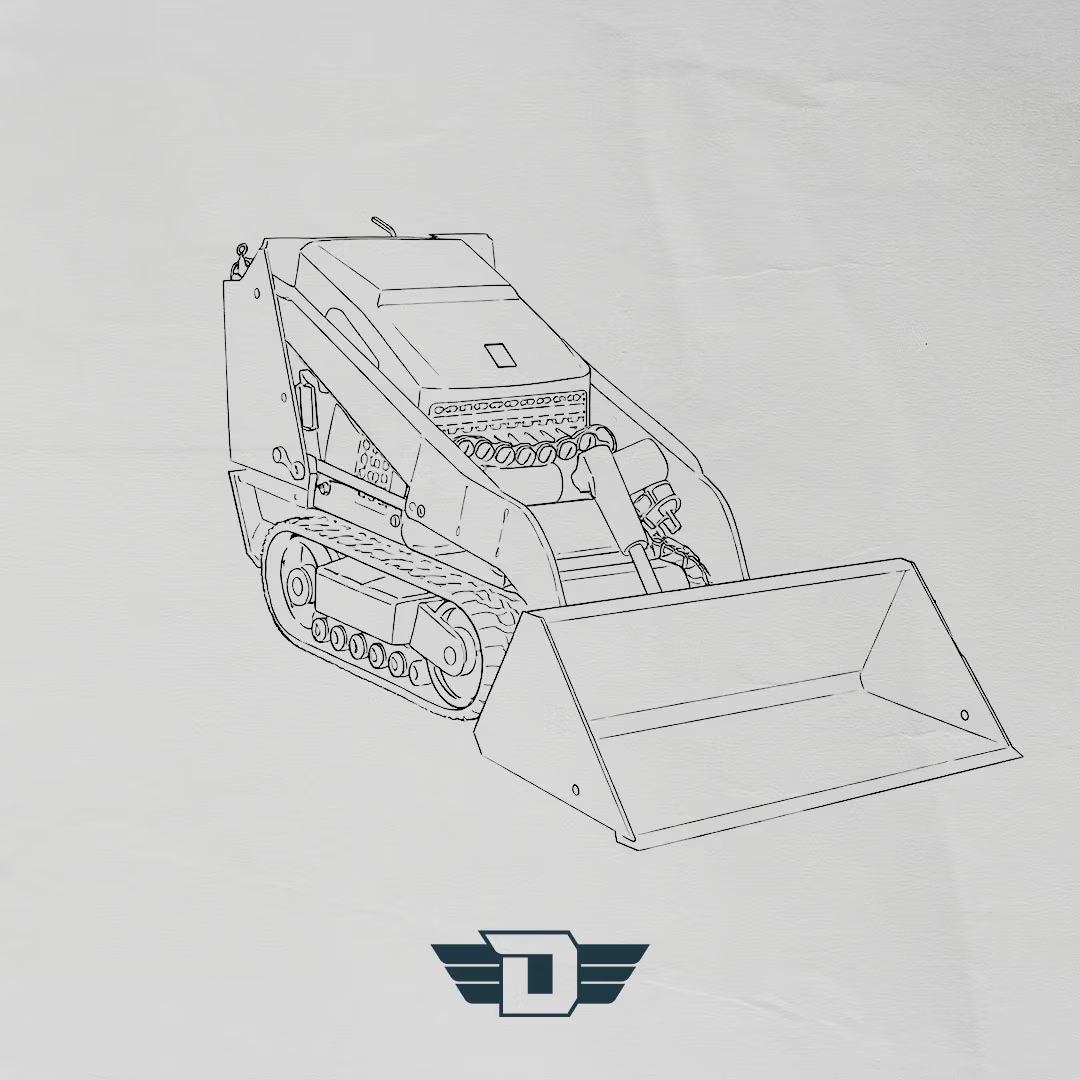
Not all Toro Dingo machines use the same rubber tracks. This guide breaks down models, track sizes, and fitment basics so you can choose the right replacement with confidence and avoid costly mistakes.
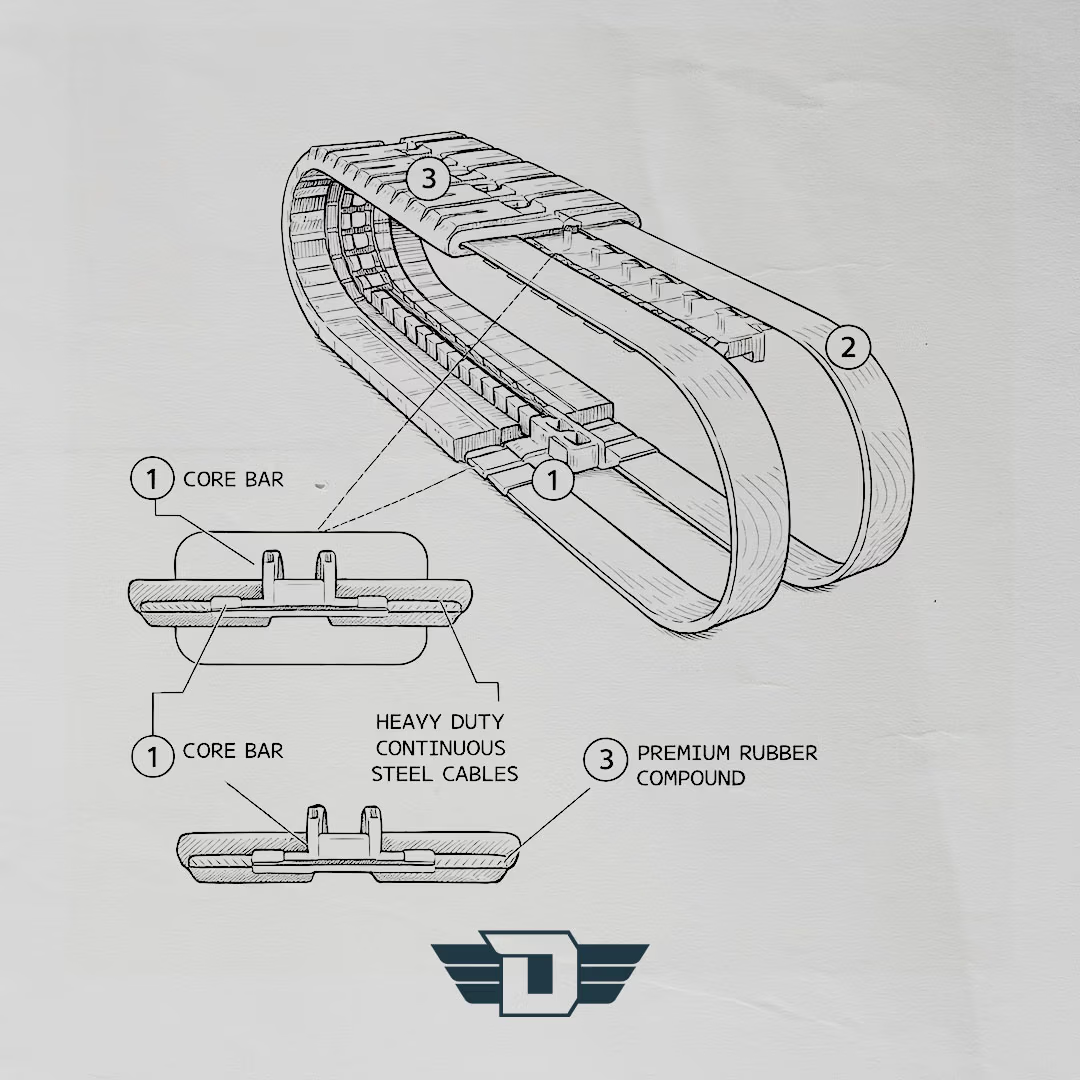
Replacement Rubber Tracks for Skid Steers buyer guide, sizing, treads, costs, lifespan, and ordering tips for Canadian jobs.