

If you are shopping for replacement rubber tracks for a Toro Dingo, the first thing to know is simple: not every Toro Dingo uses the same track.
That is where many buyers get into trouble. They search by brand, find a track that looks close, and assume it will fit. Sometimes it does. Many times it does not.
This guide is here to make that easier. We will walk through the Toro Dingo lineup, explain what makes these machines different, and show you how to choose the right rubber tracks without guessing.
Shop toro dingo rubber tracks now
Products by Brand

Summary
- Toro Dingo rubber tracks are not universal, and fitment depends on the exact model and configuration.
- Always confirm model, serial number, and whether the machine is narrow or wide before ordering.
- Track sizing is based on width, pitch, and link count, and all three must match correctly.
- Choosing the right tread depends on your jobsite conditions, not just the machine.
- At Dyne Industries, we help you find the right fit the first time so your machine stays working, not waiting.
What Is a Toro Dingo?
A Toro Dingo is Toro’s compact utility loader line. These machines are built for digging, trenching, hauling, grading, cleanup, and attachment-driven work in places where a full-size skid steer would be too large or too heavy.
In plain terms, a Toro Dingo is a compact machine built to do hard work in tight spaces. It helps crews move material, run attachments, and stay productive in backyards, side yards, narrow access points, and smaller jobsites.
That is a big reason these machines are so popular. They give operators real lifting and digging ability in areas where larger equipment simply cannot fit.
At the same time, Toro Dingo is not just one machine. It is a full lineup. That matters because track fitment can change from one model to the next.
Why Toro Dingo Machines Are Popular
Toro Dingo machines are popular because they save labour, speed up work, and handle a wide range of jobs.
First, they are compact. That makes them useful on tight-access sites where space is limited.
Next, tracked models offer solid traction on soft ground, loose soil, mud, and uneven terrain. That can make a real difference when conditions are rough.
On top of that, the Dingo lineup supports many attachments. One machine can trench, auger, lift, haul, grade, and clean up. For contractors, landscapers, and rental fleets, that kind of flexibility matters.
However, that same flexibility can also confuse buyers. A machine may share attachments with another model and still use a different rubber track. So when it comes time to order, fitment matters more than general similarity.
Toro Dingo Models at a Glance
Before you buy tracks, you need to know exactly which Toro Dingo you have. That sounds obvious, but it is where many mistakes begin.
Some Dingo models are older and still common in the field. Some are newer. Some come in narrow and wide versions. Some use different undercarriage layouts. Because of that, it is never smart to assume all Toro Dingo tracks are interchangeable.
Here is a simple look at the main models buyers often ask about.
Toro Dingo TX 427 and TX 525
These are older machines, but they are still widely used. They often show up in landscaping fleets, smaller contractor operations, and rental inventory.
Because they are older, they also deserve extra care when ordering tracks. Machines may have seen years of wear, prior repairs, or aftermarket replacements. So visual confirmation matters.
Toro Dingo TX 450 and TX 550
These compact models are common choices for tighter access work. They are practical, widely recognized, and often searched when buyers need replacement rubber tracks.
Some configurations in this part of the lineup are easier to cross-reference than others. Even so, it is still smart to confirm the exact setup before ordering.
Toro Dingo TX 700
The TX 700 is a step up in capability. It is used for more demanding material handling and heavier attachment work.
From a track standpoint, this model should be treated as its own platform. It is not something you want to lump in with the smallest Dingo machines.
Toro Dingo TX 1000 and TX 1000 TURBO
The TX 1000 is one of the most important models to verify carefully. It is also one of the easiest to misquote if someone orders by name only.
That is because machines in this family may not all share the same undercarriage details. So if you are ordering tracks for a TX 1000, slow down and verify before you buy.
Toro Dingo TX 1300
The TX 1300 is built for heavier-capacity work. It uses a wider track setup than the smaller Dingos, which helps with stability and ground pressure.
For that reason, it should not be treated like a smaller narrow-track machine when choosing replacement tracks.
Toro Dingo TXL 2000
The TXL 2000 sits in a larger class again. Its track size and undercarriage setup are much different from the smaller compact utility loaders.
So if you are looking for tracks for a TXL 2000, treat it as its own machine class.
eDingo and newer electric models
Toro’s lineup also includes newer electric options. These add another layer to fitment because newer machines may differ from older gas or diesel platforms in important ways.
So the main point is this: saying you need tracks for a Toro Dingo is only the starting point. The real job is identifying the exact model and setup.
What Can a Toro Dingo Do?
Toro Dingo machines are used for a wide range of work. That is one reason they are so valuable. It is also why track wear can vary so much from one machine to the next.
A Dingo that mostly moves mulch over soft ground will not wear tracks the same way as a machine that runs a trencher in rock, pivots on gravel, or works long hours in rough conditions.
Common jobs for a Toro Dingo
These machines are often used for:
- hauling soil, gravel, sod, and debris
- trenching and digging
- auger work
- grading and leveling
- lifting and material handling
- cleanup and site prep
Because of that range, there is no one-size-fits-all answer for track life or tread choice.
Why job type matters
Track wear depends on more than just age. It also depends on how the machine is used.
Hard turning, abrasive surfaces, heavy loads, and high-torque attachments can all wear tracks faster. So before you buy replacement rubber tracks, it helps to think honestly about the kind of work your machine does most often.
That makes it easier to choose the right fit and the right tread for the job.
Toro Dingo Track Systems Explained
This is where many ordering mistakes happen. Two Toro Dingo machines may look similar and still use different tracks.
The reason is simple. Track fitment depends on the undercarriage design, not just the brand or model family.
Narrow vs wide track setups
Some Dingo models came in narrow and wide versions. That matters because track width affects fitment, machine footprint, stability, and ground pressure.
A narrow machine may be better for gates and tight access. A wide machine may offer more stability. Since those configurations differ, the correct track can differ too.
Drive wheel vs drive sprocket systems
Some models use a drive wheel setup. Others use a drive sprocket. That changes how the track engages the machine.
So even if two tracks look close from the outside, the internal fitment may be wrong if the drive pattern does not match.
Why undercarriage design matters
The undercarriage controls how the track rides, tensions, and drives. Width, lug pattern, pitch, and overall layout all play a role.
In other words, the undercarriage tells the real fitment story. The model name gets you close, but the undercarriage confirms what actually fits.
Toro Dingo Track Sizes and Fitment Basics
Once you know the model, the next step is understanding how rubber track sizing works. This sounds technical at first, but the basics are straightforward.
How rubber tracks are sized
Most rubber tracks are identified by three measurements:
- width
- pitch
- link count
Width is how wide the track is. Pitch is the spacing between the internal drive lugs. Link count is the number of pitch sections around the track.
Those three numbers work together to define the size.
Why each measurement matters
Each part matters for a reason.
Width affects clearance and flotation. Pitch affects drive engagement. Link count affects overall circumference and tension.
If one number is off, the track may not install properly, may not tension correctly, or may wear poorly once in use.
Why OEM references help
OEM part numbers are one of the best ways to narrow fitment. They give you a stronger starting point when comparing replacement tracks.
That does not mean you should order by part number alone. It means you are starting from something more reliable than a guess.
Why serial number verification matters
Serial number verification helps confirm exact configuration. That matters because machines can change within the same model family.
So before ordering, always try to confirm the machine model, serial number, and current setup.
Are Toro Dingo Tracks Interchangeable?
Usually, no.
This is one of the biggest misconceptions buyers have. Just because two machines are both Toro Dingos does not mean they use the same rubber tracks.
Same brand does not mean same fitment
Different Dingo models can use different widths, drive systems, and undercarriage layouts. That means the track fitment can be completely different from one model to another.
Shared attachments do not mean shared tracks
A bucket or auger may fit several models. That does not mean the tracks do too.
This is a common buying mistake, especially when operators are familiar with the attachment side of the lineup.
Why some models need extra caution
Some models, especially ones with multiple configurations or more than one undercarriage style, need extra care before ordering.
That is why the safest rule is simple: verify first, then buy.
Toro Dingo Track Fitment by Model
Now let’s look at where fitment differences usually matter most across the lineup.
TX 450 and TX 550
These are often easier to cross-reference than other Dingo models. Still, that does not make them automatic. It is always worth confirming the exact setup before placing an order.
TX 700
The TX 700 should be handled as its own platform. It is larger and built for more demanding work, so its track fitment should be treated separately from smaller models.
TX 1300
The TX 1300 uses a wider and heavier setup. Because of that, it should not be treated like a narrow-track machine when matching replacement tracks.
TX 1000
This is one of the most important models to verify carefully. If there is one Dingo model where assumptions can cost you, this is it.
Two machines in the TX 1000 family may not always use the same replacement track. So check the setup carefully before you buy.
TX 427 and TX 525
Older models often need extra attention because of age, wear, machine history, and possible past repairs. For those machines, visual confirmation is especially useful.
The bottom line is simple. Exact machine identification is what leads to correct track fitment.
How to Choose the Right Rubber Tracks for a Toro Dingo
Once fitment is narrowed down, the next step is choosing the right type of replacement track for your work.
Start with exact machine identification
Always begin with the precise model. Do not stop at “Toro Dingo.”
Confirm narrow or wide setup
If the machine came in more than one width, verify which one you have before ordering.
Check the drive setup
Make sure the replacement track matches how the machine drives the track.
Match the tread to the jobsite
After fitment comes jobsite conditions. Think about where the machine works most often. Mud, mixed soil, turf, gravel, and hard surfaces all call for different tread priorities.
Choose the right durability level
Some operators need a standard replacement track for lighter work. Others need a heavier-duty option because the machine runs long hours or sees rough conditions.
So the best track is not just the one that fits. It is the one that fits and matches the work.
Best Tread Options for Toro Dingo Rubber Tracks
Once fitment is confirmed, tread pattern becomes the next big decision.
All-purpose tread
This is often the best choice for mixed conditions. It offers a solid balance of traction, wear, and versatility.
For many operators, this is the most practical starting point.
Turf-friendly tread
If the machine works on lawns, finished landscapes, or sensitive surfaces, a turf-friendly tread can help reduce scuffing and surface damage.
Aggressive tread
If the machine works in mud, loose soil, or sloppy conditions, an aggressive tread may offer better bite.
That said, it may not be the best choice for delicate surfaces or general all-around use.
How to choose the best tread
Choose based on the conditions you see most often, not the rare exception. That will usually give you a better balance of traction, durability, and day-to-day performance.
OEM vs Aftermarket Toro Dingo Tracks
Many buyers compare OEM and aftermarket options. That is normal. The right choice depends on fitment confidence, availability, budget, and product quality.
When OEM references are most useful
OEM references are valuable because they help confirm fitment. Even if you buy aftermarket, OEM numbers give you a solid anchor point.
When aftermarket tracks make sense
A quality aftermarket track can be a smart choice when fitment is confirmed and the product is built to a dependable standard.
For many buyers, the goal is not just to buy OEM. The goal is to get the right track, get the machine working again, and avoid unnecessary downtime.
What matters most
Price matters, but it is not the only thing that matters.
Fitment confidence, quality, support, and availability often matter just as much. In real-world buying, the best track is the one that fits right the first time and holds up on the job.
Common Toro Dingo Track Buying Mistakes
A few mistakes show up again and again. The good news is that most of them are easy to avoid.
Ordering by machine family only
“Toro Dingo tracks” is too broad to order from safely.
Ignoring narrow vs wide setup
This is one of the fastest ways to buy the wrong track.
Skipping serial number verification
The serial number helps confirm the real machine setup and reduces guesswork.
Assuming similar models share the same track
Sometimes they do. Often they do not.
Replacing tracks without checking the undercarriage
A worn sprocket, drive wheel, roller, or tension component can shorten the life of a new track.
So before you order, take a few minutes to confirm the details. That small step usually saves time and money later.
Signs It Is Time to Replace Toro Dingo Tracks
Rubber tracks usually give clear warning signs before they fail completely.
Cracks and chunking
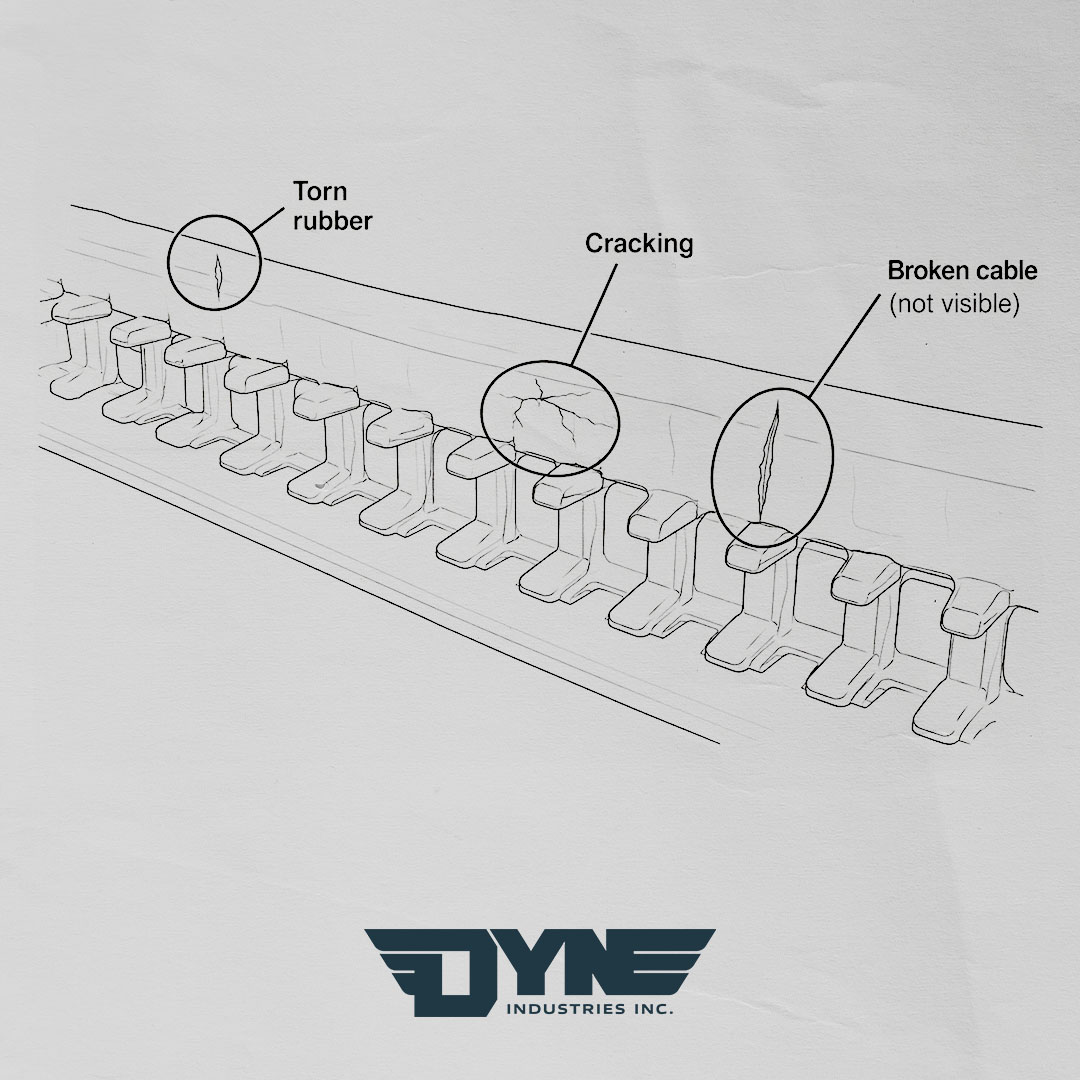
Light weathering is one thing. Deeper cracking, torn rubber, and chunking are stronger signs that replacement time is getting close.
Worn drive lugs
If the internal lugs are worn down, the track may not engage the drive system properly.
Repeated derailment
If the track keeps walking off, there may be wear, tension issues, or undercarriage problems that need attention.
Uneven wear
Uneven wear often points to a bigger issue, such as roller wear, alignment problems, or poor tension.
Poor traction and rough performance
If the machine no longer feels stable, smooth, or predictable, the tracks may be near the end of their useful life.
Catching these signs early helps reduce downtime and may protect the rest of the undercarriage too.
How to Verify Toro Dingo Track Compatibility Before Ordering
If you want to avoid buying the wrong track, this is the step that matters most.
Step 1: Find the model and serial number
Start with the machine identification plate. Without that, you are already guessing.
Step 2: Measure the current track
Check the width, pitch, and link count if possible. Also look for any numbers still visible on the old track.
Step 3: Confirm narrow or wide setup
Verify the actual machine configuration before moving forward.
Step 4: Check the drive style
Make sure the replacement track matches the machine’s drive method.
Step 5: Compare with OEM fitment references
Use OEM numbers as a guide, then confirm the final replacement match from there.
That process is simple, but it is also what separates a confident order from an expensive mistake.
Toro Dingo Track Maintenance Tips
Even the best rubber tracks wear out faster if the undercarriage is neglected.
Check tension regularly
Too loose can lead to derailment. Too tight can speed up wear.
Keep the undercarriage clean
Mud, stones, and packed debris put extra stress on the system.
Reduce hard turns on abrasive surfaces
Sharp turns on concrete, gravel, and other rough surfaces wear rubber faster.
Inspect rollers and drive components
Tracks do not wear alone. The rest of the undercarriage affects how well they perform and how long they last.
Match the machine to the work
If a machine is constantly pushed beyond the kind of work it normally handles well, track wear often shows it first.
Good maintenance will not stop wear, but it can help you get more life from the tracks you buy.
Which Toro Dingo Model Is Best for Different Jobs?
The best model depends on the kind of work you do most often.
Best for landscaping and tight access
Smaller and narrower models are often better for backyards, gates, and residential access work.
Best for heavier lifting
Larger models like the TX 1000, TX 1300, and TXL 2000 make more sense for heavier lifting and tougher daily use.
Best if you care about long-term track cost
If track cost matters most, it helps to choose a machine that fits your normal workload instead of oversizing for occasional jobs.
That usually leads to better efficiency and less unnecessary wear.
Toro Dingo vs Dingo Toro: Is There a Difference?
People search equipment names in all kinds of ways. Some type “Toro Dingo.” Others type “Dingo Toro.”
Which name is correct?
Toro Dingo is the correct product name.
Why both still matter
Even though one is correct, people still search both versions. So from an SEO point of view, it helps to understand both search habits.
For clarity, though, Toro Dingo is the phrasing you want to use throughout the article.
Conclusion: Buy the Right Toro Dingo Rubber Tracks with Confidence
If there is one takeaway from this guide, it is this: do not guess when ordering Toro Dingo rubber tracks.
Start with the exact model. Confirm the serial number. Check whether the machine is narrow or wide. Look at the drive setup. Then match the replacement track to the real machine in front of you.
That process is what helps you avoid wrong orders, cut downtime, and get the machine back to work faster.
When the job depends on traction, uptime, and fitment, the right track is not just a part number. It is a decision that affects the whole machine.
FAQ: Toro Dingo
This last section answers the questions buyers ask most often. If you are still narrowing down fitment, these quick answers should help.
It depends on the undercarriage setup. Toro’s parts catalog shows one track reference for lug-driven TX 1000 configurations and another for sprocket-driven versions, so you need to verify the exact machine before ordering.
Toro’s parts catalog shows track part number 138-0804 for the TX 700, along with drive sprocket 145-4463. That is a strong OEM anchor for cross-referencing the right aftermarket rubber tracks.
Not as a rule. Some models do share track references, like TX 450 and TX 550 narrow, but many do not. Always verify by model, configuration, and OEM reference.
Yes, that is the safer way to do it. Toro’s manuals tell owners to have the model and serial number ready for parts and service support.
Yes, as long as the fitment is confirmed properly. A quality aftermarket track from Dyne Industries Inc matched to the correct model and undercarriage can be a practical replacement choice.
Learn More