


Rubber tracks for multi-terrain loaders are not something you want to guess on.
A wrong track can hold up a crew, damage the undercarriage, cause de-tracking, or leave a machine sitting when the job is already behind schedule. That matters even more if you run an ASV, Terex, Cat, or another suspended-undercarriage loader built for traction, flotation, and smoother travel over soft or uneven ground.
This guide will help you choose the right replacement rubber tracks for your loader. We will look at fitment, track size, tread pattern, terrain, wear signs, and what to check before you request a quote.
TL;DR
- Confirm your machine model, track size, pitch, and link count before ordering.
- Rubber Tracks for Multi-Terrain Loaders must match the machine, undercarriage, and jobsite conditions.
- Choose tread based on terrain, including mud, gravel, turf, snow, or finished surfaces.
- Inspect rollers, sprockets, idlers, and track tension to help reduce early wear.
- Shopping for Multi-Terrain Loader rubber tracks is easier with Dyne’s fitment support and product guidance.
Find My Tracks
Search your machine make, model, or track size and find rubber tracks built to keep your equipment moving.
What Multi-Terrain Loader Tracks Need to Do
Multi-terrain loaders are built for jobs where traction, ground contact, and ride quality matter. These machines are often used where wheeled equipment may rut, sink, slip, or struggle to stay stable.
Many buyers use terms like multi-terrain loader, MTL, Posi-Track, compact track loader, suspended undercarriage, or low-ground-pressure loader. The names can vary by brand and model, but the buying problem is usually the same.
You need a track that matches:
- The exact machine
- The undercarriage style
- The correct width, pitch, and link count
- The terrain you work on
- The kind of wear your jobs create
- The downtime risk if the track fails
A track is not just a rubber loop. It is part of the system that keeps your loader moving, stable, and productive.
That is why replacement tracks for multi-terrain loaders need to be chosen carefully. Before comparing tread patterns or price, the first step is confirming the right fit.
Common Multi-Terrain Loader Track Sizes and Compatible Machines
Choosing rubber tracks for multi-terrain loaders is easier when you look at the machine, the undercarriage, and the track size together. Many buyers start with the loader model, but the real fitment question comes down to width, pitch, link count, tread type, and drive-lug style.
This is especially important for machines from Caterpillar, ASV, Terex, Bobcat, and Takeuchi. Some of these machines are classic multi-terrain loaders, while others are compact track loaders with suspended or low-ground-pressure undercarriages.
The table below gives a practical starting point for common track size families. Always confirm your exact machine, track size, and fitment before ordering.
| Track Size Family | Common Compatible Machines | Best For | Dyne Product Link |
|---|---|---|---|
| 450x86x56 | Cat 279D3, Cat 279D, Cat 279C2, Cat 289D3, Cat 289D, Cat 289C2 | Mixed construction, landscaping, municipal work, snow, and general site use | Cat 279D3 Rubber Tracks 450x86x56 |
| 450x86x60 | Cat 299D3, Cat 299D2, Cat 299D2 XHP, Cat 299D, Cat 299C, Bobcat T870, Takeuchi TL12R2, Takeuchi TL12V2 | Large-frame loaders, loading, grading, site travel, and heavy mixed work | Cat 299D3 Rubber Tracks 450x86x60 |
| 460x102x51 | Cat 297D2, Cat 297D2 XHP, Cat 297D, Cat 297C, Cat 287D, Cat 287C, Cat 277D, Cat 277C, Terex PT75, Terex PT80, Terex PT100G, Terex PT110, Terex R-265-T | Severe mixed terrain, land clearing support, rental fleets, grading, and heavy jobsite use | Cat 297D2 Rubber Tracks 460x102x51 |
| 457×101.6×51 | ASV RC85, ASV RC100, ASV RCV, Cat 287, Cat 287B, Terex PT100 | Classic MTL work, snow, dirt, mud, landscaping, and all-season municipal use | ASV RC85 Rubber Tracks 457×101.6×51 |
| 381×101.6×42 | Cat 247, Cat 247B, Cat 247B2, Cat 247B3, Cat 257, Cat 257B, Cat 257B2, Cat 257B3, Cat 257D, Cat 257D3, ASV PT50, ASV PT60, ASV RC50, ASV RC60, Terex PT50, Terex PT60 | Older low-ground-pressure MTL fleets, restoration, finish grading, landscaping, and light-to-medium dirt work | Cat 247B Rubber Tracks 381×101.6×42 |
These five size families are important because they cover many common multi-terrain loader and suspended-undercarriage loader applications. They also show why fitment should not be treated as a simple brand search.
For example, one track family may serve Cat, ASV, and Terex machines. Another may fit large-frame Cat loaders, while also crossing into Bobcat and Takeuchi applications. That is why Dyne Industries recommends confirming your machine details before ordering.
How the Main Loader Brands Compare
Not every tracked loader is built the same way. When choosing replacement rubber tracks, it helps to understand how each brand approaches traction, flotation, ride quality, and undercarriage design.
Caterpillar compact track loaders include popular models like the Cat 279D3 and Cat 299D3. These machines are often used in construction, grading, snow removal, material handling, and site preparation. Cat describes models such as the 279D3 and 299D3 as using a suspended undercarriage system designed to support traction, flotation, stability, and speed across different underfoot conditions.
ASV compact track loaders are closely tied to the ASV Posi-Track undercarriage. This design is well known in low-ground-pressure applications where traction, ride quality, and ground contact matter. Older ASV models such as the RC85, RC100, PT50, PT60, RC50, and RC60 are still common in the replacement track market.
Terex Posi-Track machines, including models like the PT50, PT60, PT75, PT80, PT100, and PT110, are also important in this category. Many of these machines share fitment families with ASV and Cat models, which makes cross-reference support important before ordering.
Bobcat compact track loaders such as the Bobcat T870 are common in large-frame track loader applications. These machines are often used for loading, lifting, material handling, grading, and farm or construction work.
Takeuchi compact track loaders such as the Takeuchi TL12V2 are also used in demanding construction, land development, and material handling work. When a track size crosses into Takeuchi applications, fitment should still be confirmed by machine model, series, and existing track size.
The main lesson is simple: do not buy by brand name alone. Buy by verified fitment, track size, undercarriage style, and the work your machine actually does.
How Dyne Tracks Compare to Premium Track Brands
Many buyers compare replacement tracks against well-known premium brands such as Bridgestone and Camso. That comparison makes sense because these brands are known in the rubber track market.
Bridgestone highlights compact track loader rubber track features such as steel cord construction, anti-cut rubber, and edge protection. These are the kinds of construction details buyers often look for when they work in rocky, abrasive, or mixed jobsite conditions.
Camso’s MTL HXD track information focuses on multi-terrain loader applications, heavy-duty carcass construction, drive-lug protection, and durability in demanding work. This makes Camso a useful benchmark for classic MTL buyers who care about uptime and undercarriage protection.
Dyne Industries stands out in this buying decision as a Canadian supplier that combines precise fitment support with strong product quality and nationwide availability. Dyne rubber tracks are built with high-grade natural rubber compounds, continuous steel cord reinforcement, and durable bonding processes designed to resist cuts, chunking, and premature wear in demanding conditions.
Instead of only selling by size, Dyne helps buyers connect the machine model, track size, OEM cross-reference, tread type, and application—ensuring the right track is selected the first time. With warehouses across Canada, Dyne offers faster delivery and local support, while typically providing a more cost-effective alternative to premium brands without sacrificing performance or reliability.
For many contractors, fleet managers, rental companies, farmers, and landscapers, the goal is not just to find a track that looks close. The goal is to get the right replacement rubber track the first time, reduce downtime, and keep the machine working.
Best Buying Advice for Multi-Terrain Loader Tracks
The best rubber track is not always the most aggressive tread or the lowest price. The best track is the one that fits the machine, matches the terrain, and supports the way the loader is used every day.
Before ordering, check these details:
- Confirm the machine make, model, and series.
- Look for the size stamp on the inside of the old track.
- Confirm width, pitch, and link count.
- Check drive-lug style and undercarriage type.
- Match the tread pattern to your main work surface.
- Inspect the rollers, sprockets, and idlers before installing new tracks.
- Ask for fitment support if the machine is older, modified, or hard to identify.
For mixed construction, gravel, snow, mud, and general site work, choose a tread that balances traction, wear resistance, and cleanout. For turf, parks, landscaping, and finished surfaces, consider a tread that reduces ground disturbance. For rocky or abrasive work, focus on track construction, rubber compound quality, and undercarriage condition.
How to Confirm Fitment Before Ordering Rubber Tracks for Multi-Terrain Loaders
Fitment is the most important step when buying rubber tracks for multi-terrain loaders. If the track does not match the machine, the tread pattern and price will not matter.
Most rubber track sizes are shown as three measurements:
- Width
- Pitch
- Number of links or lugs
For example, a track size may be written as 450x86x56. The first number is the width in millimetres. The second number is the pitch, which is the distance between links. The third number is the number of links.
You may also see imperial sizing, OEM part numbers, or model-based listings. These can help, but they can also create confusion if the machine had different track options, previous repairs, or undercarriage changes.
Before you order, check:
- The size stamp on the inside edge of the old track
- The machine make, model, and series
- The operator’s manual when available
- The width, pitch, and link count
- The drive-lug style
- Any OEM part numbers from the old track or machine records
- Whether the machine has been modified
This step matters because many Cat, ASV, and Terex machines have overlapping model names, similar track sizes, or cross-brand fitment. Older machines can be even trickier because they may have changed hands several times.
A track that is close but not correct can lead to tension problems, poor alignment, guide-lug wear, or de-tracking.
Before you buy, confirm the size. If you are not fully sure, contact Dyne Industries with your machine make, model, and track details so the team can help confirm the right fit before you order.
Common Rubber Track Size Families for Multi-Terrain Loaders
Many multi-terrain loader buyers shop by machine model first, but track size family is just as important. The same size can sometimes fit several machines across different brands.
Here are common replacement track families often used in MTL and suspended-undercarriage loader applications. Always confirm fitment before ordering.
| Track Size Family | Common Machine Examples | Typical Use |
|---|---|---|
| 450x86x56 | Cat 279D3, 279D, 289D3, 289D, and related models | Mixed construction, landscaping, snow, and site work |
| 450x86x60 | Cat 299D3, 299D2, Bobcat T870, and large-frame loaders | Heavier loading, grading, and mixed jobsite use |
| 460x102x51 | Cat 297D2, 297C, 287C, 277C, Terex PT75, PT80, and PT110 | Severe mixed terrain, land clearing support, and rental fleets |
| 457×101.6×51 | ASV RC85, RC100, RCV, Cat 287, 287B, and Terex PT100 | Classic MTL work, dirt, snow, mud, and municipal use |
| 381×101.6×42 | Cat 247, 257, ASV PT50, PT60, RC50, RC60, and Terex PT50, PT60 | Legacy MTL fleets, landscaping, and lower-ground-pressure work |
These size families are useful starting points, but they are not a substitute for fitment confirmation. Machine series, undercarriage condition, and drive-lug style still need to be checked.
The safest buying process is simple: confirm the machine, confirm the size, confirm the application, then choose the tread.
How to Choose the Right Tread Pattern for Your Work
The right tread pattern depends on where your loader spends most of its time. A contractor working in mud, gravel, and frozen soil does not need the same track as a landscaper working on lawns and finished ground.
This is where many buyers make a costly mistake. They choose the most aggressive-looking tread because it looks tough. But the best tread is the one that fits the job.
For mixed construction work
If your loader works on dirt, gravel, clay, snow, packed ground, and rough jobsites, you likely need a strong all-around tread.
This is common for:
- General contractors
- Builders
- Site prep crews
- Municipal crews
- Snow removal operators
- Small excavation companies
- Farm and acreage work
On these jobs, the track needs to handle changing conditions. One day the loader may be pushing wet material. The next day it may be travelling over gravel, frozen soil, or packed yard space.
For mixed work, look for a tread that balances traction, cleanout, ride quality, and wear resistance.
For turf and finished surfaces
If the loader works on lawns, parks, sports fields, acreages, or landscaped areas, surface protection becomes more important.
This is common for:
- Landscapers
- Property maintenance crews
- Irrigation contractors
- Parks departments
- Rental companies
- Light construction crews
A lower-disturbance tread can help reduce ground damage. It may not bite as hard in mud, but it can be easier on sensitive surfaces.
This matters when the job is not just about moving material. It is also about leaving the site clean enough that the customer is happy when the machine leaves.
For rough, rocky, or abrasive work
If your loader works around rock, demolition debris, frozen ruts, hard-packed gravel, or sharp material, durability becomes a bigger concern.
In these conditions, look at:
- Rubber compound quality
- Carcass strength
- Steel cord reinforcement
- Drive-link strength
- Cut and chunk resistance
- Sidewall protection
- How the tread cleans out in mud and debris
No rubber track is immune to sharp rock or poor operating habits. But choosing a track built for rougher work can help reduce avoidable failures.
The key is to match tread to terrain. The most aggressive track is not always the best track. The right track is the one that fits your surface mix, machine, and uptime needs.
What to Compare Before You Buy Replacement Rubber Tracks
Once you know the correct fitment and tread style, you can compare replacement rubber tracks with more confidence. Price matters, but it should not be the only thing you look at.
A cheaper track that wears early, de-tracks, or does not fit right can cost more in the long run. A machine sitting on the side of the job can hold up operators, trucks, attachments, and the rest of the crew.
Before you buy, compare these points.
Exact machine compatibility
Look for track listings that mention your machine model, not only the track size.
Size matters, but model compatibility gives you another layer of confidence. This is especially useful on Cat, ASV, and Terex machines where fitment can overlap across several models.
OEM cross-references
OEM part numbers can help confirm the right track, especially on older machines.
This is useful when one track size fits several related models across Cat, ASV, and Terex families. If a supplier can cross-reference the track clearly, you are less likely to order the wrong one.
Construction quality
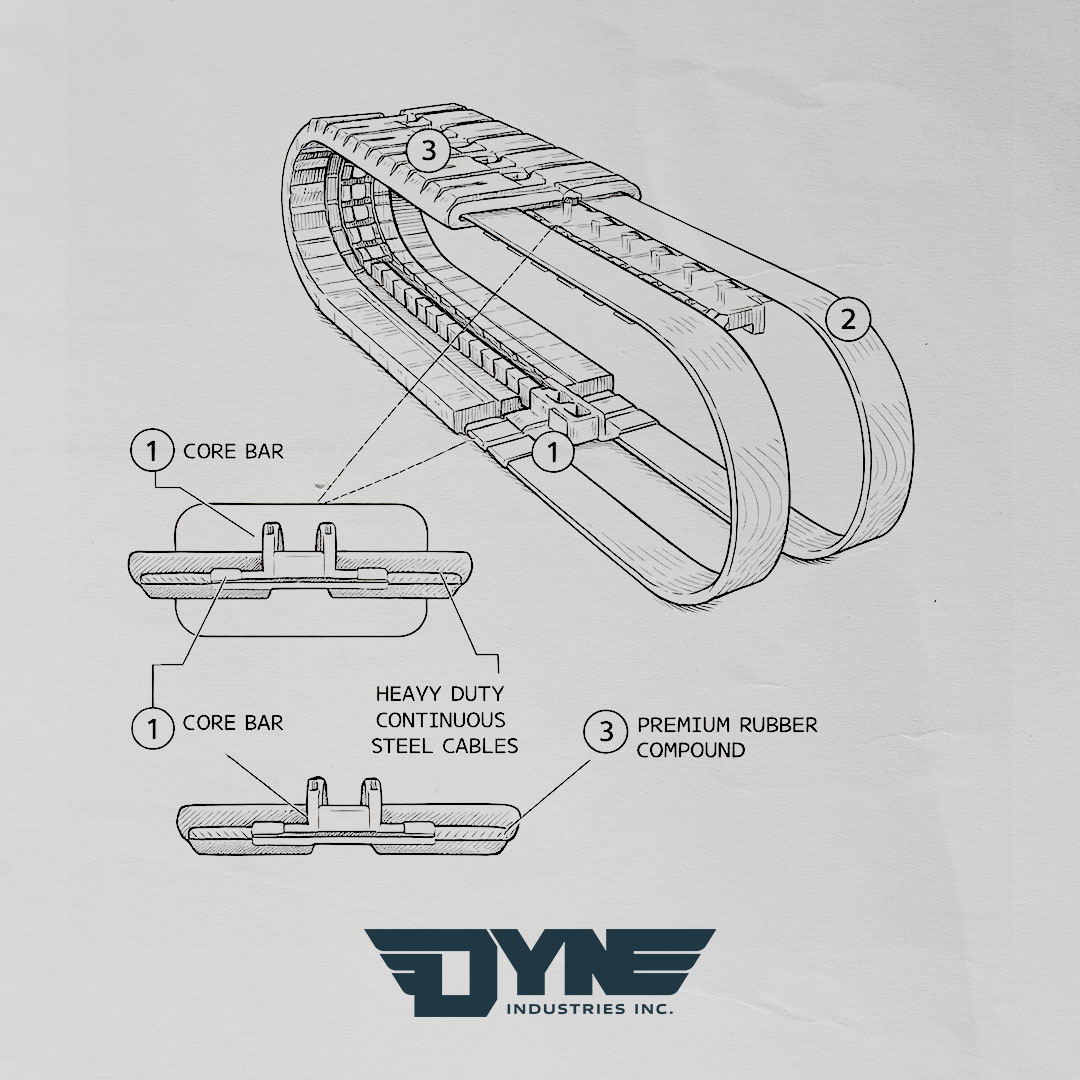
Look for practical construction details, such as:
- Continuous steel cord reinforcement
- Strong drive links
- Quality rubber compound
- Wear resistance
- Tear resistance
- A tread pattern suited to your work
These details matter because multi-terrain loaders often work in conditions that stress both the tread and the internal structure of the track.
Warranty and support
Warranty terms should be checked before buying. Read what is covered and what is not.
Damage from poor tension, worn undercarriage parts, sharp debris, or misuse may not be treated the same as a manufacturing defect. Before ordering, confirm the current warranty for your track type and application.
Availability and delivery
Downtime changes the buying decision. If a loader is down during peak season, speed and support matter.
Before planning your repair window, confirm whether the track is in stock, where it will ship from, and how long delivery is expected to take.
The best replacement track is not just the lowest-priced track. It is the right fit, with the right tread, from a supplier that can help you avoid downtime and ordering mistakes.
Common Signs It Is Time to Replace Your Tracks

Rubber tracks rarely fail without warning. In many cases, the signs show up before the track becomes a job-stopping problem.
Checking your tracks often can help you plan replacement before the machine is stuck on site. This matters for contractors, rental fleets, farms, and landscapers who cannot afford surprise downtime.
Watch for these signs.
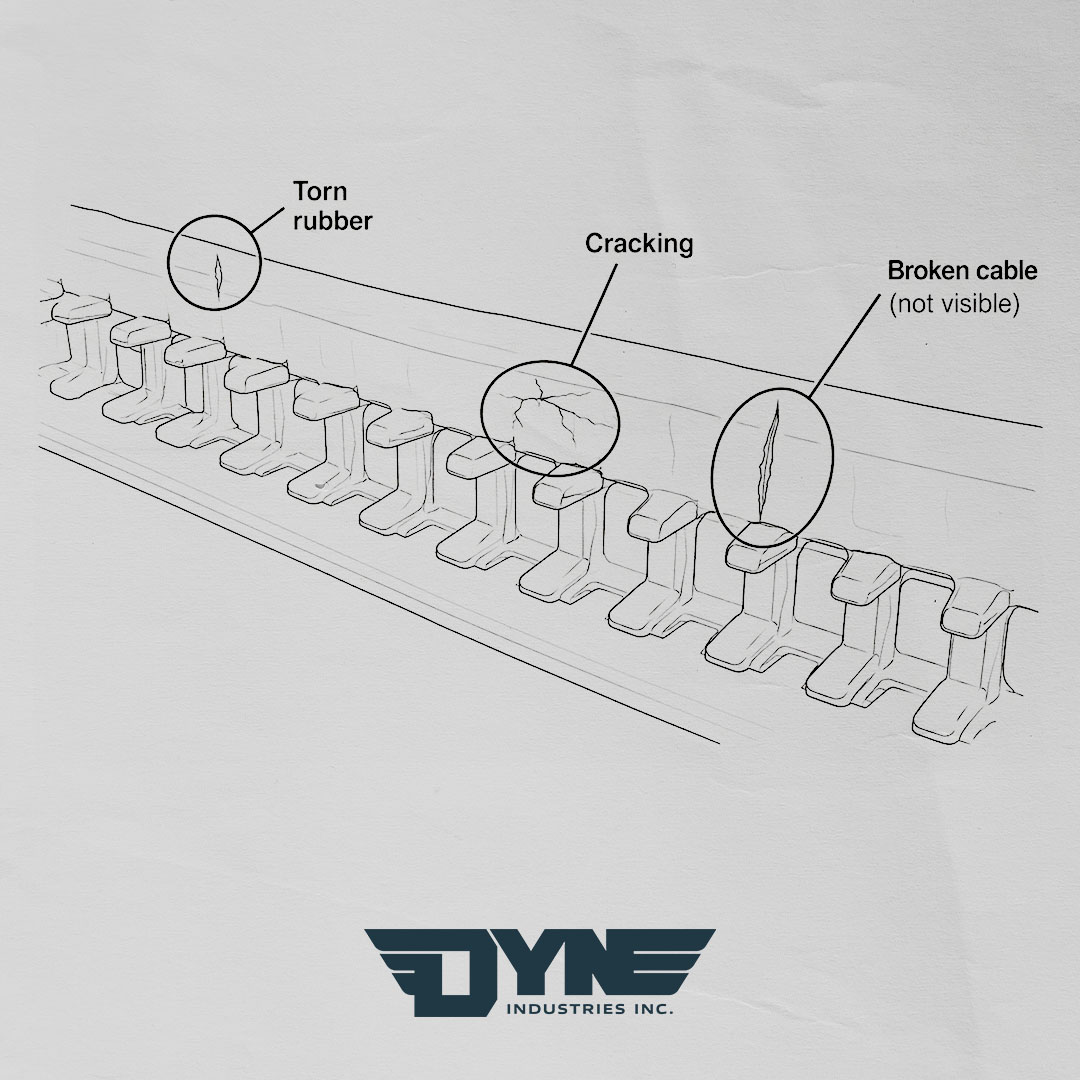
Deep cuts or exposed cords
Small surface cuts can happen during normal work. But deep cuts that reach the internal structure are more serious.
If cords are exposed, water and debris can get in and speed up damage.
Chunking or missing tread
Chunking means pieces of rubber are breaking away from the tread.
This is common when machines work on sharp rock, demolition debris, frozen ground, or rough gravel. Some chunking may be manageable for a time, but severe chunking can reduce traction and increase failure risk.
Cracking or dry rubber
Cracks can show age, weather exposure, chemical exposure, or harsh use.
Tracks stored outside in direct sun or used around oil, fuel, and grease may break down faster.
Uneven wear
Uneven tread wear can point to undercarriage issues.
Worn rollers, idlers, sprockets, poor alignment, or incorrect tension can all affect track life.
De-tracking or poor alignment
If the track keeps walking off the undercarriage, do not just blame the track.
The cause may be tension, undercarriage wear, side-slope operation, packed debris, or incorrect fitment.
Loss of traction
If the loader starts slipping more often, especially in conditions it used to handle well, tread wear may be part of the problem.
Track life can vary a lot. Terrain, tension, undercarriage condition, operator habits, and machine type all play a role. Use hours as a planning guide, not a hard rule.
The key is to inspect before failure. If your tracks show deep cuts, exposed cords, major chunking, uneven wear, or repeated de-tracking, it is time to plan replacement.
Rubber Track Maintenance Tips That Can Help Reduce Downtime
Good maintenance will not make a track last forever, but it can help reduce avoidable damage. It can also protect the undercarriage, which is just as important as the track itself.
A rubber track works as part of a system. The sprockets, rollers, idlers, tension, alignment, and operator habits all affect wear.
Check track tension
Track tension should be checked according to the machine manual.
Too loose can increase the risk of de-tracking. Too tight can add stress to the track and undercarriage parts.
If you are not sure how to check tension on your loader, use the machine’s operation and maintenance manual or contact a qualified service technician.
Clean the undercarriage
Mud, stones, frozen material, and debris can pack into the undercarriage. This can add stress and cause wear.
Clean around the rollers, sprockets, and idlers often, especially after muddy, wet, or frozen work.
Inspect rollers, sprockets, and idlers
Tracks do not wear alone.
A worn sprocket, damaged roller, or weak idler can shorten the life of a new track. Before installing replacement tracks, inspect the undercarriage as a full system.
Replacing tracks without checking the rest of the undercarriage can lead to repeat problems.
Avoid sharp turns when possible
Sharp turns, especially on hard surfaces like asphalt or concrete, can increase tread wear.
Use wider turns when the job allows. This is not always possible on tight jobsites, but smoother operation can help reduce unnecessary stress.
Watch side-slope work
Side slopes can add extra side load to the track and undercarriage.
If you are working across slopes, avoid fast turns and keep the machine controlled. This helps reduce guide-lug stress and de-tracking risk.
Keep oil and fuel off the rubber
Oil, fuel, grease, and similar substances can degrade rubber over time.
If these substances get on the track, clean them off as soon as possible.
Match operating habits to the surface
Hard surfaces, rock, frozen ground, and sharp debris are harder on rubber tracks.
If the job is severe, inspect more often and plan replacement earlier.
A simple maintenance routine can save time. Check tension, clean the undercarriage, inspect for damage, and watch operating habits. These small steps can help keep your loader working when the schedule is tight.
Get the Right Rubber Tracks for Your Multi-Terrain Loader
The right replacement track starts with the right information. Before you buy, confirm the track size, machine model, undercarriage style, tread pattern, and real jobsite conditions.
For multi-terrain loaders, small fitment mistakes can create big problems. A track that does not match the machine can lead to poor tension, uneven wear, de-tracking, and more downtime. A tread that does not match the work can wear early or damage sensitive ground.
That is why Dyne Industries focuses on fitment support, practical buying advice, and replacement rubber tracks built for real jobsite pressure.
Need help finding the right replacement rubber tracks? Contact Dyne Industries or request a quote, and our team can help you confirm the right fit before you order.
Find My Tracks
Search your machine make, model, or track size and find rubber tracks built to keep your equipment moving.
Frequently Asked Questions About Rubber Tracks for Multi-Terrain Loaders
These questions come up often when buyers are comparing rubber tracks for multi-terrain loaders. Use them as a quick guide before requesting a quote.
Start by checking the size stamp on the inside edge of your old track. Then confirm your machine make, model, and series. If you are not sure, send the details to Dyne Industries so the team can help confirm fitment before you order.
Sometimes, yes. Some multi-terrain loaders and suspended-undercarriage machines are more fitment-sensitive than standard compact track loaders. That is why size, pitch, link count, drive-lug style, and model compatibility should all be checked.
The best tread depends on the work. Mixed construction, mud, gravel, and snow usually need a more versatile or aggressive tread. Turf, lawns, and finished surfaces often need a lower-disturbance tread.
There is no fixed answer. Track life depends on terrain, tension, undercarriage condition, operator habits, and application. In rough, rocky, or high-hour work, plan inspections more often and budget before failure becomes urgent.
In many cases, replacing both tracks together can help keep wear and handling balanced. However, the right choice depends on the condition of each track, the undercarriage, and your budget. Ask for support if you are unsure.