
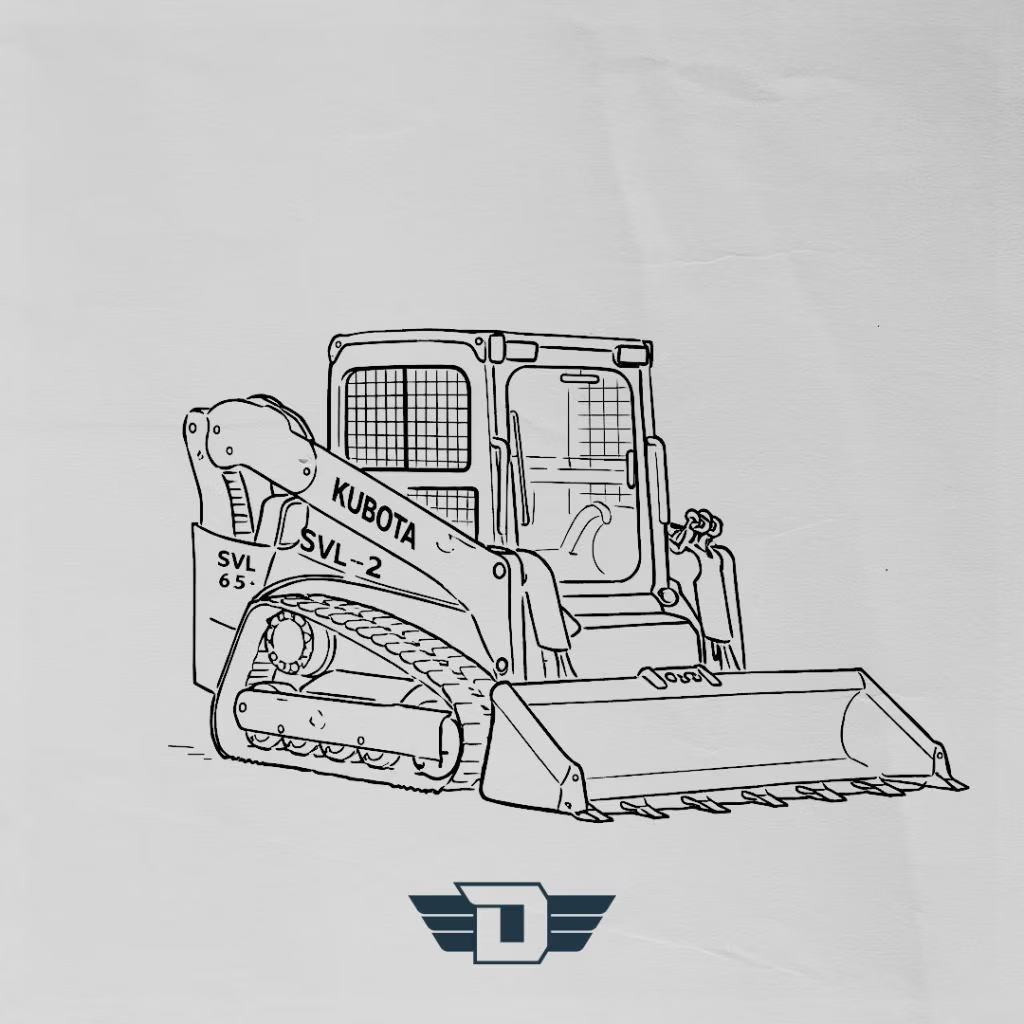
A Kubota skid steer can be a money-maker or a daily headache, and the difference usually comes down to fit. Fit for your ground, your loads, your attachments, and your trailer.
This guide keeps it practical. We will compare the SSV (wheeled) and SVL (tracked) lines, walk through Kubota skid steer sizes and buying mistakes, then finish with track sizing and ordering tips for Canada.
Quick answer, which Kubota skid steer should you buy?
If you are trying to pick the right Kubota skid steer fast, start with one question, what does your ground look like on a bad day. That single detail usually decides wheels versus tracks, and it also decides how much you will spend on upkeep.
Now let’s break it down by the way most crews actually work, hard ground and speed, or soft ground and traction.
Shop Kuboto rubber tracks now
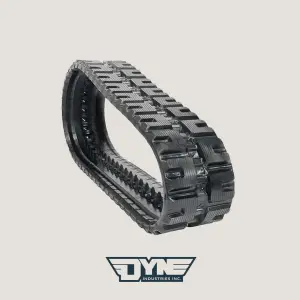
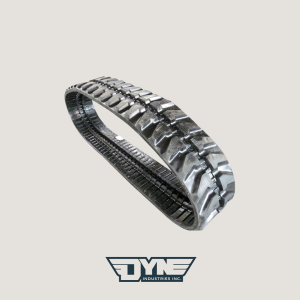
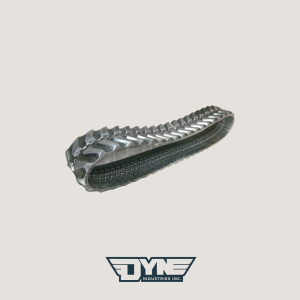
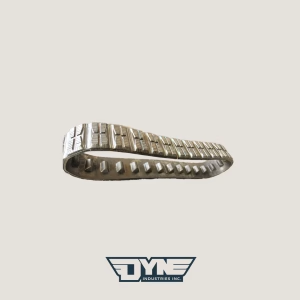
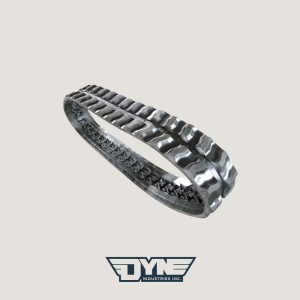
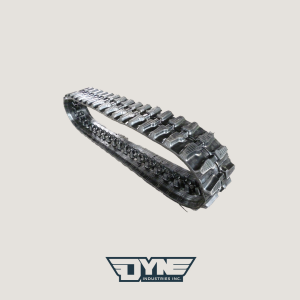
If you work on hard ground and move fast, start with the SSV series (wheels)
If you are mostly on hard pack, gravel, pavement, or frozen yards, the SSV series is often the simplest, fastest tool. You can travel quicker across the site, trailer it more easily, and you avoid track and undercarriage wear that adds up over time.
If your day is lots of short runs, quick loading, and frequent transport, an SSV is usually the cleanest answer.
If you live in mud, snow, sand, or slopes, look at the SVL series (tracks)
If you work through wet seasons, soft ground, muskeg edges, snow, sand, or side slopes, an SVL compact track loader earns its keep. The tracks spread the machine’s weight, improve traction, and help you keep working when tires would spin or sink.
If you hate getting shut down by weather and ground conditions, an SVL is usually the safer bet for uptime.
A 60-second decision checklist (budget, terrain, lifting, attachments, transport)
Use this quick checklist before you commit:
- Terrain: hard and dry most days (SSV), soft or wet often (SVL)
- Loads: pallets, heavy buckets, and high lifts (lean bigger frame and higher ROC)
- Attachments: standard flow is enough for most, high-flow is only worth it for certain tools
- Transport: confirm machine weight plus attachment weight, and confirm trailer ratings
- Work pace: lots of travel and turning (SSV), lots of pushing and traction work (SVL)
The right Kubota skid steer is the one that matches your worst ground and your normal workload, not the one that looks best on a spec sheet. Next, let’s get clear on what a skid steer actually does best, so you can match the tool to the job.
What is a Kubota skid steer, and what does it do best?
A Kubota skid steer is a compact loader built to lift, push, carry, and run attachments in tight spaces. If you are buying one, you are really buying a multi-tool for the jobsite, farm, or land work, and the right setup saves hours every week.
Here’s what to know before we get into models and Kubota skid steer sizes.
Simple definition (and why skid steers are jobsite multi-tools)
A skid steer is a small loader that turns by skidding the tires (or tracks) at different speeds. That sounds simple, but it is why these machines can turn tight, work in yards, and switch jobs fast.
Add a quick attach plate and hydraulics, and you can go from bucket work to forks to a broom in minutes.
Kubota’s approach (comfort, visibility, service access, durability)
Kubota leans into operator comfort, visibility, and service access, because that is what keeps people productive on long days. On paper, machines can look similar, but in real life, cab layout, door design, and maintenance access can decide if a machine feels good at 1,000 hours.
If you are running a crew, operator comfort is not fluff, it is fatigue and mistakes, especially in winter.
Skid Loader Kubota: What people mean, and how it compares to a Kubota skid steer
When someone searches “skid loader Kubota,” they are usually talking about the same thing as a Kubota skid steer. The wording changes by region, dealer habits, and older equipment terms.
Let’s make it simple so you do not miss the right model because of naming.
Skid loader Kubota vs Kubota skid steer, is there a difference?
Most of the time, no. “Skid loader” and “skid steer” are used interchangeably in day-to-day talk.
The only time it matters is when someone uses “skid loader” to include both wheeled skid steers and compact track loaders in one bucket. That is where SSV versus SVL comes in.
Common Kubota model terms you will see (SSV, SVL, ROC)
- SSV: wheeled skid steer loaders
- SVL: compact track loaders (tracked loaders, sometimes called track skid steers)
- ROC: rated operating capacity, the safe lift rating used for comparing machines
If you keep those three straight, you will understand most listings and spec sheets fast.
The quick takeaway, what to buy based on ground conditions
If your ground stays firm, wheels can be faster and cheaper to run. If your ground gets soft, wet, snowy, or sloped, tracks usually keep you moving.
Wrap up: “Skid loader Kubota” is usually just another way of saying Kubota skid steer, but the real decision is still wheels versus tracks. Next, we will compare the SSV and SVL platforms the way it matters on a real jobsite.
Kubota skid steer vs Kubota compact track loader (SSV vs SVL)
This is the big fork in the road. An SSV wheeled skid steer and an SVL compact track loader can do many of the same jobs, but they behave very differently when the ground turns against you.
Here’s what to watch for before you pick one and end up paying for it all season.
The core difference (tires vs rubber tracks, and why it changes everything)
Tires concentrate weight onto four contact patches. Rubber tracks spread the same machine weight over a longer footprint.
That changes traction, flotation, ground pressure, and how stable the machine feels when you lift and carry.
Traction, flotation, and ground pressure (when tracks earn their keep)
Tracks usually win when the ground is soft or uneven. They help the machine float instead of sinking, and they keep pushing when tires would spin.
If you do a lot of grading, pushing, and working through wet weather, tracks often buy you more working days.
Speed, turning, and transport (when wheels are the better tool)
Wheels tend to win on speed and travel. Kubota Canada lists higher travel speeds on the SSV models versus SVL track loaders, which matters when you are moving across lots, farms, or long sites.
Wheels can also be simpler to trailer and maintain, especially if you are not constantly in mud or debris.
Rated operating capacity (ROC) explained (35% vs 50% tipping load, why specs look lower on track loaders)
ROC can look confusing because skid steers and compact track loaders are often rated differently.
Kubota publishes SSV rated operating capacity at 50% of tipping load, and SVL rated operating capacity at 35% of tipping load, which is why a track loader’s ROC can look “lower” even when the machine is very capable.
Many manufacturers reference SAE J818 guidance that compact track loaders should be rated at no more than 35% of tipping load.
Pick SSV versus SVL based on ground conditions and work style, not just horsepower. Next, let’s look at Kubota skid steer models and the numbers that actually matter when you are comparing listings.
Kubota skid steer models and specs (current lineup plus common used models)
This section is your quick map for the common Kubota skid steer models you will see in Canada, both new and used. We will keep the specs high level, because exact configurations can vary, and Kubota updates lineups over time.
If you want to confirm any number, use the manufacturer spec page or brochure for that exact model year.
Kubota SSV65 specs snapshot (who it fits, what it’s best at)
The SSV65 is the smaller wheeled option in the SSV line. Kubota Canada lists it at 64 HP gross, with a rated operating capacity of 1,950 lb at 50% tipping load and an operating weight listed at 7,319 lb.
This is a strong fit for lighter construction, farms, and crews who trailer often and work on firmer ground.
Kubota SSV75 specs snapshot (step-up power, lift, and travel speed)
The SSV75 is the bigger wheeled SSV option. Kubota Canada lists it at 73.2 HP gross, with a rated operating capacity of 2,690 lb at 50% tipping load and an operating weight listed at 8,466 lb.
If you are routinely lifting heavier pallets, running bigger buckets, or just want more machine under you, this is the common step-up.
Kubota SVL65 specs snapshot (compact track loader for soft ground)
On the track side, the SVL65 class is the “big jobs in small places” size. Kubota Canada lists the SVL65-2 at 68.4 HP and 2,100 lb ROC at 35% tipping load.
Kubota has also introduced an SVL65-2s update, with published specs still centred around the same ROC class, and it is aimed at comfort and usability improvements.
Kubota SVL75 specs snapshot (the most common contractor pick)
If you see one SVL model on contractor sites again and again, it is the SVL75 class. In Canada, Kubota lists the SVL75-3 at 73.2 HP net, with 2,490 lb ROC at 35% tipping load, and an operating weight listed at 9,420 lb.
This size is a strong match for grading, backfill, site cleanup, snow, and a lot of general construction where traction matters.
Kubota SVL95 and SVL97 specs snapshot (big-frame CTL, what to know before you go bigger)
The big-frame machines are where transport, running costs, and attachment matching become more serious.
Kubota’s SVL97 class is the modern “big frame” anchor in Canada, with Kubota listing the SVL97-3 at 96.5 HP and 3,459 lb ROC at 35% tipping load.
If you are shopping used, you may see SVL95-2s or SVL97-2 listings. Kubota spec sheets list the SVL97-2 at about 96.4 HP gross, 3,200 lb ROC at 35% tipping load, and an operating weight around 11,299 lb.
Table to include in the article (HP, ROC, tipping load, operating weight, travel speed, aux flow, ground clearance)
These are published specs from Kubota sources, shown here to help you compare. Always verify the exact model year and configuration before you buy.
| Model | Type | HP (gross or net as listed) | ROC | Tipping load (where listed) | Operating weight | Travel speed (high) | Aux flow (std / high) | Ground clearance |
| SSV65 | Wheels | 64 HP gross | 1,950 lb (50%) | 3,900 lb (straight) | 7,319 lb | 11.1 mph | 18 / 28 gpm | 7.6 in |
| SSV75 | Wheels | 73.2 HP gross | 2,690 lb (50%) | 5,380 lb (straight) | 8,466 lb | 11.8 mph | 20.9 / 30.4 gpm | 8.1 in |
| SVL65-2 | Tracks | 68.4 HP (listed) | 2,100 lb (35%) | Check spec sheet | Check spec sheet | Check spec sheet | High flow option listed | Check spec sheet |
| SVL75-3 | Tracks | 73.2 HP net | 2,490 lb (35%) | 7,112 lb (straight) | 9,420 lb | 8.6 mph | 19.2 / 29.8 gpm | 11.7 in |
| SVL97-2 | Tracks | 96.4 HP gross | 3,200 lb (35%) | 9,143 lb (straight) | 11,299 lb | 7.9 mph | 23.9 / 40 gpm | 9.3 in |
Wrap up: Use the model list and table to narrow your search, then confirm the exact spec sheet for the unit you are buying. Next, let’s talk Kubota skid steer sizes, because “will it fit” is where purchases go sideways fast.
Kubota Skid Steer Sizes: width, height, weight, and trailer planning
A lot of Kubota skid steer buying pain comes from size assumptions. A machine can be “compact,” but still too heavy for the trailer, too tall for the door, or too wide for the gate.
Here’s how to plan it before you spend money.
What to measure before you buy (and before you show up with a trailer)
Measure the access points first, not the machine. Gates, overhead doors, barn aisles, fence corners, and turning space matter more than the brochure.
Then measure your transport setup, trailer deck length, trailer ratings, tie-down points, and the truck that is actually pulling it.
Width and height, gates, doors, and tight yards
Width is not just the machine, it is the machine plus the attachment you leave on. Buckets can add width. Snow pushers and some brooms can add a lot.
Height matters for trailers, shop doors, and older barns. If you are running an enclosed trailer, confirm the opening height with the cab.
Operating weight and tie-down reality (including attachments)
Operating weight is the machine, and your trailer cares about total weight. Add the bucket, forks, or a snow blower, then add chains, fuel, and anything else riding with it.
If you are close to limits, your “daily transport” turns into a constant stress point.
Lift height, reach at dump, and why truck loading goes wrong
If you load dump trucks, ask about hinge pin height and reach at full lift and dump. That is where machines that look similar on paper can feel different on the job.
If your machine cannot clear the side cleanly, you end up spilling, backing up, and losing time.
A will-it-fit checklist (jobsite access, storage, transport)
- Will it fit through your tightest gate with the attachment you use most
- Will it clear your storage door in winter, with snow piled near the threshold
- Can your trailer handle it with your heaviest common attachment
- Do you have safe tie-down points and enough chains
Wrap up: A Kubota skid steer that does not fit your access and transport plan becomes expensive fast. Next, let’s connect the machine to real jobs so you can choose the right platform with confidence.
What jobs Kubota skid steers are best for (real use cases)
This is where the “right machine” becomes obvious. A Kubota skid steer shines when the job needs tight turning, fast attachment swaps, and steady material handling.
Here are the real-world use cases where these machines earn their place.
Construction (grading, backfill, pallet handling, site cleanup)
For construction, skid steers are all about speed. Grade, backfill, move pallets, load trucks, clean up, repeat.
If you are in wet soil or clay, SVL tracks usually keep you pushing. If you are in hard pack and moving fast, SSV wheels can be more efficient.
Agriculture (bales, feed, manure, snow, yard work)
On farms, forks and buckets do a lot of heavy lifting. Think bales, feed, manure handling, and yard clearing.
If you are in a mixed yard with ice, ruts, and soft spots, a track loader can feel safer and steadier.
Land development and forestry edge work (brush, slopes, rough ground)
If you are doing brush work, rough ground, and slope edges, traction is everything. This is where SVL machines usually win, especially when you add a grapple or brush tool.
If you are constantly turning in rocky debris, plan for faster wear on tires or tracks.
Landscaping and property maintenance (turf risk, rut risk, finish work)
Skid steers can wreck turf fast if you pivot hard. If you do finish work, focus on turning style and attachment choice.
Tracks can reduce rutting in soft soil, but they can still tear turf if you spin aggressively.
Winter work (traction, snow attachments, cab heat, visibility)
Winter is where Canadian buyers feel the difference between “works fine” and “works all day.” Traction, visibility, and cab comfort matter.
If snow removal is a core revenue line, plan attachments and hydraulic flow up front.
Wrap up: Match your Kubota skid steer to your main jobs, not your occasional jobs. Next, let’s talk attachments, because the right tool makes the machine worth owning.
Attachments that make a Kubota skid steer worth owning
A skid steer without the right attachments is just an expensive wheelbarrow. The right attachments turn your Kubota skid steer into a money maker across seasons.
Here’s how to build a smart attachment plan.
Must-have starter set (bucket + forks, then one speciality tool)
Most owners start with a general-purpose bucket and pallet forks. That covers the majority of daily work.
Then add one speciality tool that matches your core jobs, like a grapple for land clearing, or a broom for cleanup.
High-flow hydraulics, when you actually need it
High-flow is not required for most basic work. You usually need it for attachments that demand more hydraulic horsepower, like certain snow blowers, planers, or heavy brush tools.
If you are not sure, price the attachment first. The attachment often tells you whether high-flow is worth it.
Attachment match checklist (flow, pressure, machine weight, counterweight)
- Hydraulic flow and pressure match the attachment requirements
- Machine ROC and stability match the attachment weight
- Counterweight needs are understood, especially with heavy forks and loads
- Coupler style fits, and hoses are protected
Popular attachment picks (4-in-1, grapple, auger, trencher, broom)
These are common, practical picks that add real capability:
- 4-in-1 bucket for grab and grading tasks
- Grapple for brush, logs, demolition debris
- Auger for posts and footings
- Trencher for utilities
- Broom for cleanup and light snow
Seasonal tools (snow blower, blade, snow pusher, spreader)
Seasonal tools can keep a machine earning year-round. In many parts of Canada, the machine pays for itself faster when it works in winter too.
If winter work is serious, an enclosed cab and good lighting are not optional, they are sanity.
Wrap up: Attachments decide how valuable your Kubota skid steer is across the year. Next, let’s talk ownership costs, because that is where buyers get surprised.
What it costs to own a Kubota skid steer (the stuff buyers forget)
Purchase price is only the start. The true cost of a Kubota skid steer includes maintenance time, wear parts, fuel, and the downtime that hits when something fails mid-season.
Here’s what to plan for so you are not guessing.
Maintenance basics (daily, weekly, service intervals, grease points)
Daily checks are simple but important, fluids, filters, leaks, tire or track condition, and greasing key points. If you skip this, the machine will eventually force you to pay it back.
Follow the operator’s manual for service intervals, and keep a written log, especially if resale matters.
Tires vs tracks cost reality (what usually wears first)
Wheeled machines eat tires, especially on sharp rock and demolition debris. Tracked machines eat tracks and undercarriage components, especially if you run in packed mud, gravel, and hard turns.
Neither is “cheap,” it is just a different wear bill.
Fuel, filters, and hidden costs (hoses, cutting edges, pins, downtime)
The hidden costs are usually hoses, cutting edges, bucket teeth, pins, and the small stuff that stops work. When a machine is down, labour is still burning, and deadlines do not care.
A simple habit helps, keep a small stock of common wear parts and filters during peak season.
Resale value basics, and what hurts it fastest (undercarriage wear, sloppy maintenance)
Resale usually comes down to condition and proof. Sloppy maintenance, dirty undercarriage, and worn pins hurt value fast.
If you are running an SVL, undercarriage condition is a big deal. Buyers will look at it first.
Wrap up: Ownership cost is mostly wear and downtime control. Next, we will cover the buying mistakes that cause the most pain, so you can avoid them.
Common problems and buying mistakes (and how to avoid them)
Most buying mistakes are not about the machine being “bad.” They are about picking the wrong machine for the job, then blaming the brand when reality shows up.
Here are the big ones to avoid.
Buying by horsepower only (and ignoring ROC, stability, hydraulics)
Horsepower helps, but ROC and hydraulic capability are what you feel every day. Two machines can have similar horsepower but very different lift and stability.
Start with your loads and attachments, then choose the platform.
Choosing tracks for cool factor instead of ground conditions
Tracks are amazing when you need them. If you do not need them, they can be an expensive way to do the same work as wheels.
Be honest about how often you are in soft ground, snow, or slopes.
Over-sizing the machine so transport becomes a daily pain
A bigger machine can lift more, but it can also break your transport plan. If you trailer daily, oversizing can become your biggest frustration.
If you are near trailer limits, look for a better match, not a bigger headache.
Ignoring undercarriage care until the bill shows up
Packed mud and debris in an undercarriage can speed wear and increase derailment risk. Cleaning is not glamorous, but it is cheaper than downtime.
This matters most on SVL machines, and it matters more in wet seasons.
Not planning for parts and service support (especially in remote regions)
If you work remote, parts lead time and shipping matter. Your machine choice should include a plan for support, not just a plan for purchase.
Wrap up: Most Kubota skid steer problems are preventable when you match the machine to your ground and maintain it properly. Next, we will dig into Kubota skid steer tracks, tread choices, lifespan, and ordering tips.
Kubota Skid Steer Tracks: sizes, tread patterns, lifespan, and ordering tips
Tracks are not just a consumable, they are traction, stability, and whether you can work in mud and snow. If you run an SVL, track choices and track care have a direct impact on uptime.
Let’s break down track basics in a way that is easy to use.
Do all Kubota skid steers have tracks? (SSV wheels vs SVL tracks)
No. Kubota’s SSV machines are wheeled skid steers. Kubota’s SVL machines are compact track loaders that run rubber tracks.
So when someone says “Kubota skid steer tracks,” they usually mean SVL tracks, unless they are talking about over-the-tire tracks on an SSV.
Kubota skid steer tracks vs over-the-tire tracks (when OTT tracks make sense)
OTT tracks can make sense when you have a wheeled machine and you need a traction boost for a season, like spring breakup or winter work. They can also be useful if you want some track behaviour without buying a full track loader.
They are not the same as a true SVL undercarriage, and they can be hard on tires if used aggressively.
Track size format explained (width x pitch x links)
Most rubber track sizing is written like this: width x pitch x links.
- Width is track width (often in mm)
- Pitch is the distance between drive lugs
- Links is the number of pitches around the loop
Once you know that, you can verify fitment without guessing by model name alone.
Common Kubota skid steer tracks sizes you will see on SVL machines (examples)
A common example you will see on SVL machines is 320x86x52, which means 320 mm wide, 86 mm pitch, 52 links.
Some SVL models also offer wider track options, which changes width, but not always pitch and link count. Always confirm your exact size from the track stamp or measurements.
Tread patterns in simple terms (block, C-block, zig-zag, bar styles)
- Block patterns: good all-around, stable, decent life on mixed ground
- C-block patterns: common on compact track loaders, balanced grip and wear
- Zig-zag patterns: often chosen for bite and self-cleaning in loose ground
- Bar styles: can be strong in certain soils, but can wear differently on hard surfaces
If you are mostly on rock and hard pack, focus on cut resistance and turning habits. If you are mostly in mud and snow, focus on self-cleaning tread.
How long do Kubota skid steer tracks last, and what changes lifespan (terrain, turning, cleaning)
Track life varies a lot, but many industry sources describe ranges that can span hundreds to a couple thousand hours depending on conditions and operation.
The biggest life changers are abrasive ground, spinning and counter-rotating, running too tight or too loose, and not cleaning out the undercarriage.
Choosing the right Kubota skid steer tracks is about matching tread and size to your ground and your work habits. Next, we will cover how to find your track size fast, even when the stamp is worn.
How to find your Kubota skid steer track size fast (without guessing)
Ordering tracks by model name alone is one of the most common mistakes. The faster, safer approach is to confirm your actual track size and undercarriage condition before you buy.
Here is the simple process.
Check the track for a stamp first (where it usually is)
Most tracks have the size moulded or stamped into the rubber. Look along the inside of the track first.
If the stamp is worn, do not guess. Measure it.
If there’s no stamp, measure it (and what tools you need)
You usually need a tape measure and a way to count links.
Measure the width, measure the pitch (centre to centre of the drive lugs), and count the links around the track.
What photos to take for fitment (inside lugs, guide blocks, sprocket wear)
Photos speed up fitment confirmation, especially when machines have variations.
Take clear photos of:
- Inside lugs and guide blocks
- The sprocket and visible wear
- The overall tread and any damage
If you send those with your size, a good supplier can help catch mismatches early.
Track tension basics (too tight vs too loose, and what it does to wear)
Too tight can increase wear and stress on components. Too loose can increase derailment risk and can let debris pack in and cause problems.
Always set tension to the operator manual spec for your exact model and undercarriage condition.
Track sizing is simple when you use the stamp or measure properly, and it saves you from expensive returns and downtime. Next, let’s talk about buying tracks in Canada and what you should demand from a supplier.
Where to buy Kubota skid steer tracks in Canada (and what to demand from a supplier)
Buying tracks is not just buying rubber. It is buying fitment, delivery, and support, especially when you are remote and downtime costs real money.
Here is what to look for when you buy Kubota skid steer tracks in Canada.
The 5 things a good supplier should help with (fitment, tread choice, shipping, warranty, support)
A good supplier should help you:
- confirm fitment
- pick a tread pattern that matches your ground
- plan shipping and delivery timelines
- understand warranty and return policy
- get install and tension basics right
If they cannot help with fitment, you are taking on extra risk.
What quality actually means in rubber tracks (cords, compound, lug design)
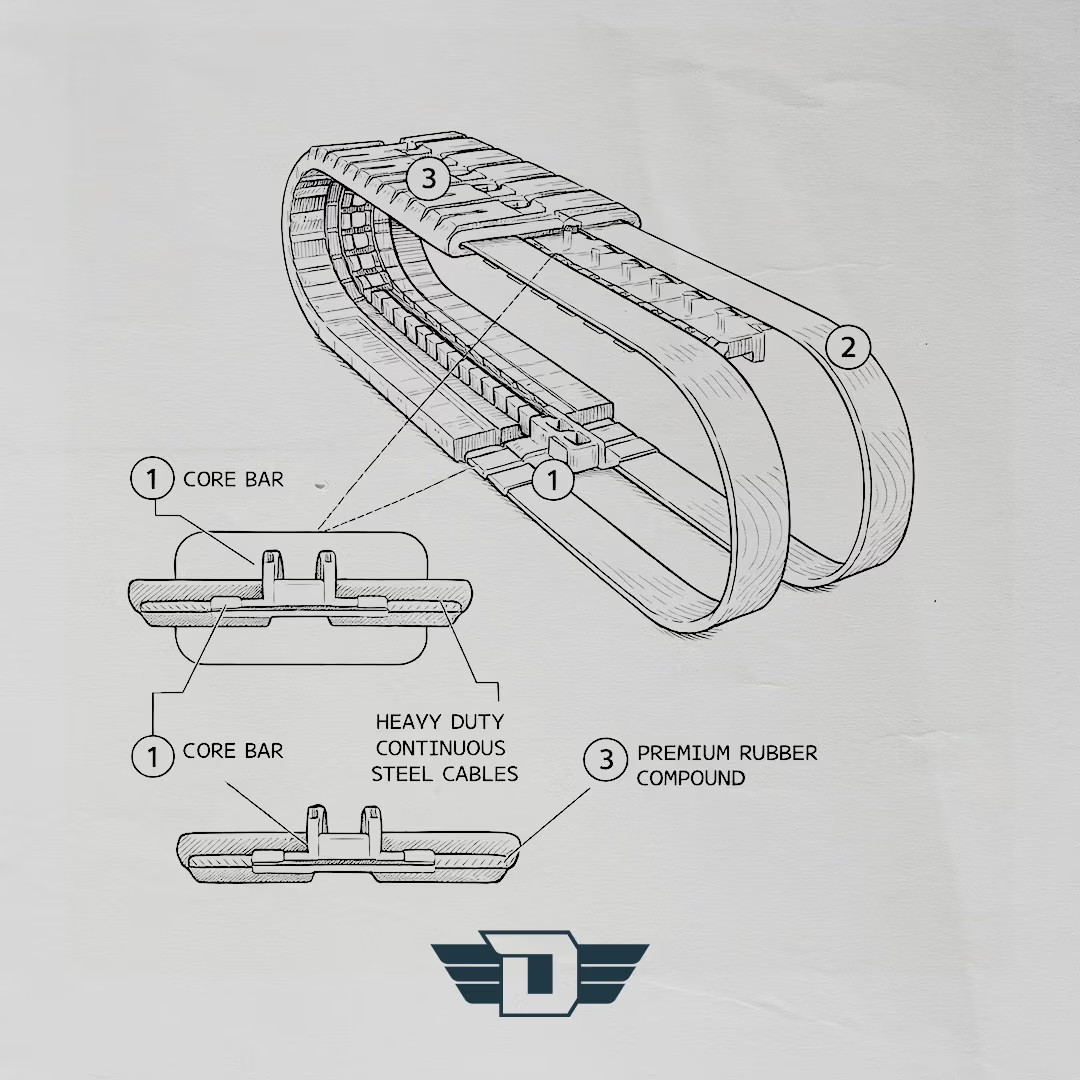
Quality usually comes down to internal construction and rubber compound. Look for strong reinforcement, a rubber blend that resists cuts and chunking, and lug design that engages the sprocket cleanly.
In real life, “cheap tracks” often fail early in rocky ground or heavy turning, and the real cost is downtime.
What to ask before you pay (lead time, return policy, freight, remote delivery)
Ask these before you spend:
- What is the lead time to your postal code
- What happens if the track does not fit
- How returns work on freight
- What the warranty covers and what it does not
Wrap up: The best track purchase is the one that arrives fast, fits right, and keeps you working. Next, we will talk about Dyne Industries and how to choose the right track for your SVL series machine.
Dyne Industries recommendation for Kubota skid steer tracks (SVL series)
If you are running an SVL, you need tracks that fit correctly and a supplier who helps you avoid guessing.
That is where Dyne Industries comes in, especially for Canadian buyers who want support and shipping that makes sense for real job sites.
Let’s keep this practical and focus on how to buy with confidence.
Who Dyne is and why it matters (uptime, fitment support, Canada-wide shipping)
Dyne Industries Inc. supplies replacement rubber tracks and helps customers confirm fitment using track size, photos, and application details.
That matters because a track that is “close” is still wrong, and wrong tracks can derail, wear fast, or create tension problems.
How to pick the right track for your Kubota (job type and tread match)
Start with your ground:
- Mud, clay, snow, loose soil, consider a tread that self-cleans well
- Rock and demolition debris, consider durability and your turning habits
- Mixed work, choose an all-around tread that balances life and traction
Then confirm your exact track size before ordering, and share photos of the inside lugs and sprocket area so fitment can be double-checked.
A Kubota skid steer track purchase should feel controlled, not like gambling. Next, we will wrap the guide with a simple decision recap so you can choose the right machine and keep it working.
Choose the Kubota skid steer that keeps you working
If you are still deciding, remember this, the best machine is the one that stays productive on your worst ground day. That is what protects your schedule, your crew, and your profits.
Here is the simple recap to finish strong.
The simple decision (SSV for speed and hard ground, SVL for soft ground and traction)
Choose SSV when you want speed, frequent transport, and mostly firm ground. Choose SVL when you need traction, flotation, and stability in wet, soft, snowy, or sloped conditions.
If you match the machine to the ground, most of the “brand problems” disappear.
Next Steps
Compare the models that fit your work, confirm your access and trailer plan, then confirm track size the right way before you order.
A Kubota skid steer is a serious tool, and the right choice pays you back in uptime. Next, let’s answer the most common questions buyers ask about models, sizes, ROC, and tracks.
FAQs about Kubota skid steer, sizes, and tracks
These quick answers are here to reduce confusion and help you make a clean decision. If you want, you can use them as a checklist when you talk to a dealer or order tracks.
Now let’s look at the questions that come up most.
Most of the time, yes. People use both terms to describe the same machine category.
Just confirm whether they mean a wheeled SSV or a tracked SVL.
Kubota has a strong reputation for durability and service access, and many owners choose them for long-term use.
Reliability still depends on maintenance habits and operating conditions.
A skid steer (SSV) runs on tires. A compact track loader (SVL) runs on rubber tracks.
That changes traction, flotation, and the wear parts you will pay for.
SSV is Kubota’s wheeled skid steer line. SVL is Kubota’s compact track loader line.
That one detail usually tells you how the machine will behave on soft ground.
ROC is the published lift rating used for comparing machines safely. Kubota lists SSV ROC at 50% of tipping load, while SVL ROC is commonly shown at 35% of tipping load.
This is why track loader ROC can look lower even when the machine is very capable.
Track fitment depends on the exact track size, not just the model name.
Confirm the stamp or measure width, pitch, and links, then match that size to the track listing.
It is the sizing format, 320 mm wide, 86 mm pitch, 52 links.
Suppliers use that to confirm fitment before shipping.
Track life depends on terrain, turning habits, tension, and cleaning. Many sources describe wide ranges, often from hundreds up to a couple thousand hours depending on conditions.
If you want longer life, avoid spinning, keep tension correct, and keep the undercarriage clean.
Measure width, measure pitch (drive lug spacing), and count links.
Then take photos of inside lugs and guide blocks to confirm variations.
Tension should be set to the operator manual spec for your exact model.
Too tight increases wear. Too loose increases derailment risk.
Yes, in many cases, but it depends on your tire setup and the track system you choose.
OTT tracks can help with seasonal traction, but they are not the same as a true SVL undercarriage.
Mud and snow usually benefit from a tread that self-cleans well. Rocky ground usually benefits from durability and careful turning habits.
If you do mixed work, pick a balanced all-around tread.
Look for a supplier that confirms fitment by size and photos, helps you choose tread, and supports shipping to your location.
Dyne Industries can support Canadian buyers with track selection and fitment help.