
If you run in mud, muskeg, snow, or soft ground, you already know the problem. Tires sink, crews lose time, and the job starts slipping.
That’s where Morooka comes in. Their tracked carriers are built to keep hauling when the ground turns against you, and when they’re set up right, they save a lot of recovery headaches.
This guide walks you through the practical stuff. Who Morooka is, why their machines work where wheels fail, and why rubber tracks are the make-or-break part of the whole system.
Then we shift into the part that protects your uptime. Track basics, sizing (width x pitch x links), common buying mistakes, and how to choose replacement Morooka rubber tracks with confidence.
Along the way, we’ll tie it back to Dyne Industries Inc. and how we help you get the right fit, keeping you on track so you can get back to work, fast. Now let’s start with Morooka and the machines.
Shop Rubber tracks
Products by Brand
-
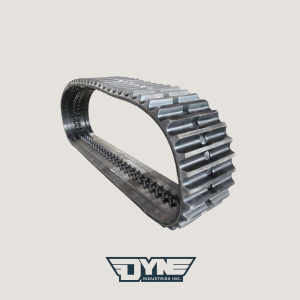
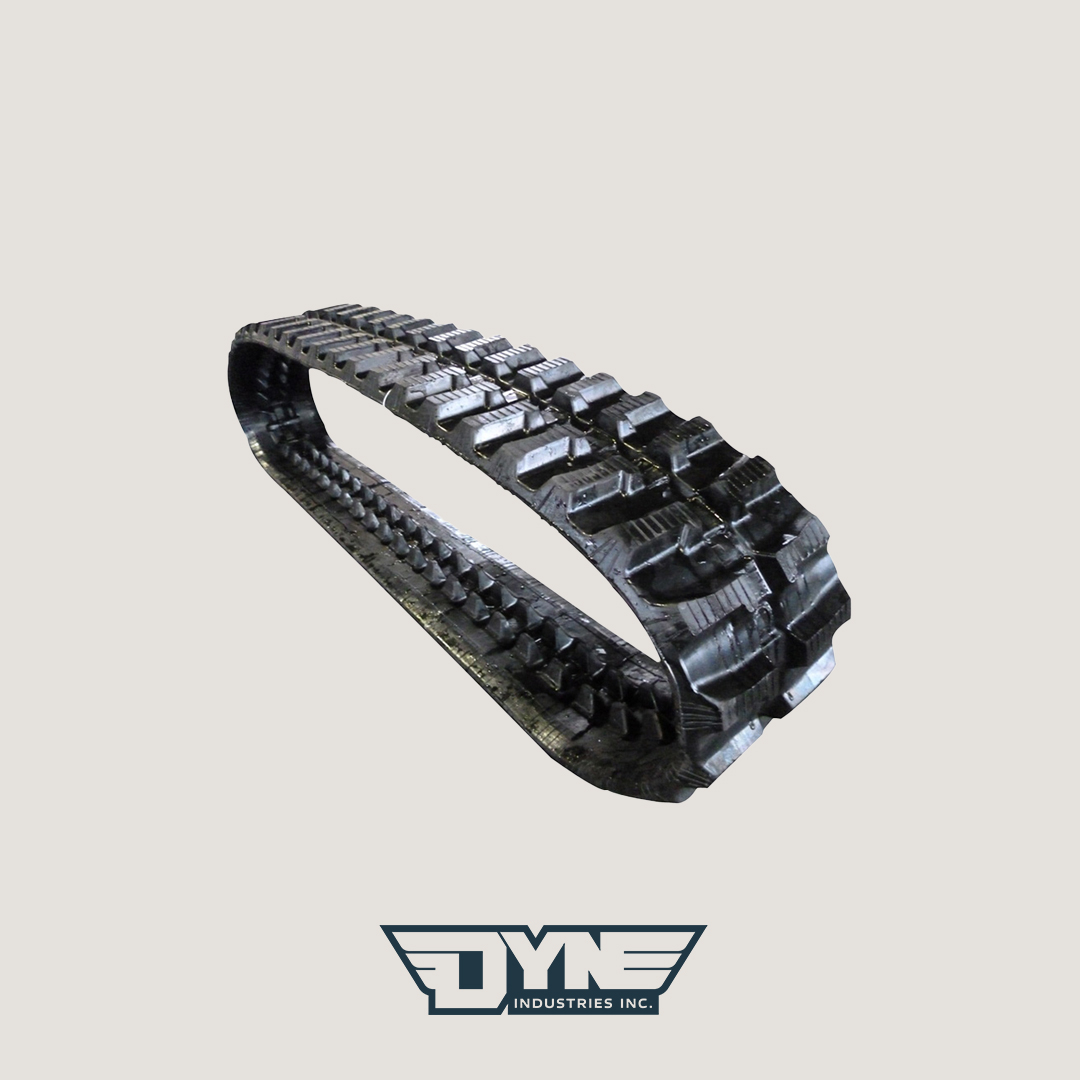
MOROOKA AT800 Rubber Tracks 600x100x80
-
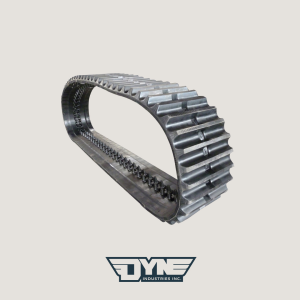
MOROOKA MK 125N Rubber Tracks 500x100x62
-
MOROOKA MK 80S Rubber Tracks 500x100x62
-
MOROOKA MK-70 Rubber Tracks 500x100x62
-
MOROOKA MST1000VD Rubber Tracks 600x100x80
-
MOROOKA MST1000VDL Rubber Tracks 600x100x80
-
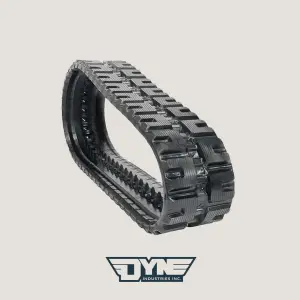
MOROOKA MST110C Rubber Tracks 750x150x66
-
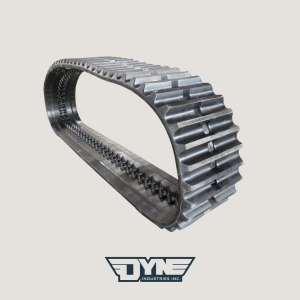
MOROOKA MST1500 Rubber Tracks 700x100x98
Morooka, the company and the machines
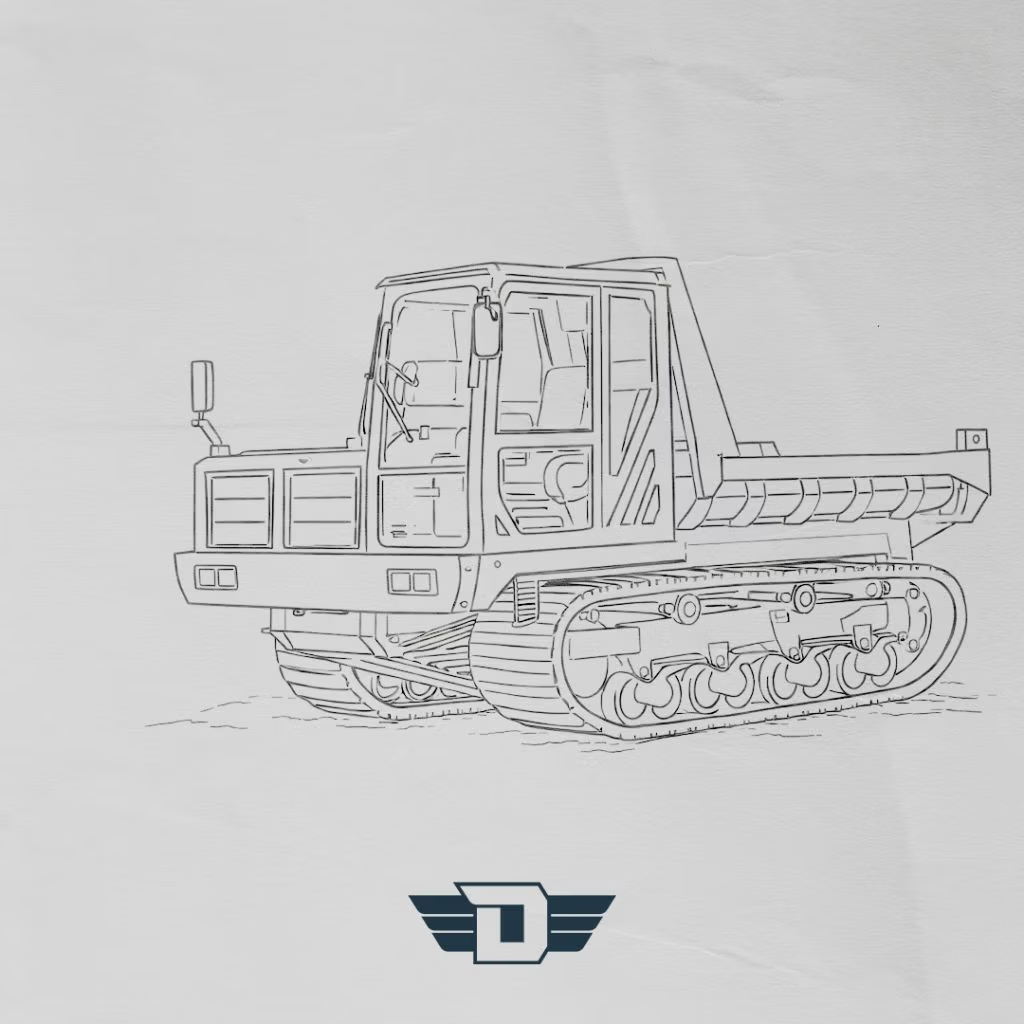
Morooka is a Japanese manufacturer best known for rubber-tracked crawler carriers. These are the machines you send into ground conditions that make wheeled equipment look helpless.
In the field, the name “Morooka” often gets used as shorthand for a tracked carrier or crawler dumper. You hear it most in mud, muskeg, snow, and soft soils where low ground pressure matters.
Where Morooka came from
Morooka was founded in 1958 in Ryugasaki, in Ibaraki Prefecture. The story starts in a practical place, farm work and civil work.
Early work included digging wells and installing pipes for farms, and they kept running into the same problem, machines sinking in marshy, muddy terrain.
That problem shaped the product direction and pushed the company toward tracked mobility.
In a later interview published by Japan Bank for International Cooperation, Morooka described how soft ground work influenced their move into rubber crawler technology. The founder often referenced in Morooka’s history is Kazuo Morooka.
What Morooka builds today
Now let’s look at what they build. Morooka’s best-known products are crawler carriers, including both standard carriers (fixed upper structure) and 360-degree rotating carriers (the top can slew independently of the tracks).
Across their lineup, Morooka groups products by type. That includes crawler carriers, 360 rotating carriers, forwarders, tracked forklifts, grinders (tub and horizontal), and bare chassis platforms meant for custom builds.
On most jobsites, people meet Morooka through the MST series. These are rubber-tracked haulers built to move material across ground that would shut down a wheeled dump truck or a skid steer on tires.
Morooka also highlights hydrostatic transmission, often shown as HST. That matters because HST gives smooth, controllable movement at low speed, which is exactly what you want when you’re creeping through mud, climbing uneven ground, or working near soft edges.
Why tracked carriers exist
Let’s break it down. A tracked carrier is a purpose-built hauler on rubber tracks.
Tracks spread the machine’s weight over a larger footprint. In many soft-ground situations, that means lower ground pressure than tires, less sinking, less rutting, and fewer recoveries.
That’s why Morooka machines show up in predictable places like forestry access, utility right-of-way, oilfield support, reclamation, and disaster cleanup. Anywhere the “road” is temporary, wet, or still being built, tracked carriers earn their keep.
There’s also a simple production reason. When you’re hauling on a tight timeline, downtime is not just a repair bill, it’s delayed trucks, crews waiting, and the job plan falling apart.
Tracked carriers don’t remove risk, but they can reduce the odds of getting stuck and keep hauling when the surface turns against you.
The MST series and how it’s talked about in the field
Morooka’s most recognizable naming in North America is the MST series. Within that lineup, “VDR” is commonly used for 360 rotating carrier models.
If you’ve run both fixed and rotating carriers, the difference is easy to explain. Fixed carriers dump where the machine is pointing. Rotating carriers can drive in, rotate the upper structure, and dump without spinning the undercarriage as much.
Here’s why operators care. Pivot turns scrub rubber, especially on hard pack, frozen ground, and rock. If rotation reduces how often you pivot, it can reduce some wear over time, depending on how the crew runs it.
That said, rotating carriers also get used in tighter, messier places where side-loading is common. So good habits still matter, including proper tension checks, smart turning, and realistic expectations about the ground.
Global footprint and regional support
Morooka is headquartered in Japan, and they’ve built a regional presence over time. Their Americas timeline includes the establishment of Morooka USA in March 2003 and production starting in the U.S. as of July 2012.
In Europe, Morooka states they’ve been represented since April 2017 through Morooka Europe GmbH, located in Gross-Gerau near Frankfurt.
For contractors and fleet owners, this matters because these machines often work far from major centres. Service, parts, and support become part of the total cost, especially when you’re trying to keep a carrier productive through a short season.
How Morooka machines are commonly used
Morooka groups their machines by fields like earthmoving, forestry, recycling and biomass, and agriculture or plantation work. That lines up with what most crews see in the real world.
Carriers haul material across messy ground. Forwarders and forestry carriers support timber operations. Tracked grinders and chippers show up where wood waste needs processing without building perfect access first.
A big clue to how these machines get used is the “bare chassis” category. In plain terms, that means the undercarriage gets adapted into a platform for custom builds, like:
- Flatbeds for pipe, culverts, and equipment moves
- Crane or knuckleboom setups for remote handling
- Tanks for water, fuel, or spraying
- Purpose-built topsides using the undercarriage as the foundation
Those builds can change how a machine loads the tracks, especially with side-loading and uneven weight. That’s one reason “same model name” doesn’t always mean “same track setup.”
Rubber tracks, low ground pressure, and why the details matter
Morooka carriers rely on rubber tracks for traction and flotation. Morooka also ties that to low ground pressure and stable handling, especially in soft or sensitive ground.
From a practical standpoint, rubber tracks on a carrier are not the same as tracks on a compact track loader. Carriers see heavy payload cycles, sustained torque, more travel distance, and more side-loading, especially on slopes, in ruts, or when dumping off-level.
Here’s what to watch for. Track size format, construction quality, inside lug design, and alignment features all affect how the machine behaves. Even if two tracks “fit,” the wrong pitch or link count can mess with tension range, sprocket engagement, and derailment risk.
If you’ve ever seen a carrier throw a track at the worst possible time, you already know this is not theoretical. A track that’s slightly wrong can install, run, and then fail under the exact stress these machines are built for.
A quick note on specs and model examples
Morooka publishes detailed specs by model and region, including operating weight, track width, travel speed ranges, and ground pressure values for certain machines. Those numbers are useful when you’re comparing carriers or planning a job.
Just keep in mind that specs can vary by configuration, region, and update year. Day to day, the spec that matters most is whether the machine stays mobile, carries safely, and keeps production moving without constant recovery.
Why Morooka still has a place on modern jobsites
Morooka’s niche isn’t flashy, it’s practical. They build machines meant to move and haul in conditions that are hard on everything, including the machine itself.
That’s also why the aftermarket side matters. Rubber tracks are a wear item, and they’re a big-ticket wear item. On remote work, the cost isn’t just the track, it’s freight, install timing, and downtime if you get it wrong.
So here’s the jobsite summary. Morooka is known for rubber-tracked carriers and other tracked equipment built around low ground pressure mobility and controlled hydrostatic drive. Their machines show up in forestry, utilities, earthmoving, and remote work because they keep hauling when the ground is soft and the schedule is hard.
Replacement Morooka Rubber Tracks from Dyne Industries Explained
With Morooka carriers, the tracks are not an accessory, they are the whole point. If the tracks are wrong, the machine loses traction, starts tearing up the site, or ends up stuck when you can least afford it.
At Dyne Industries Inc., we focus on one thing, helping you get the right replacement rubber tracks for your Morooka so you can keep hauling and get back to work, fast.
Now let’s look at why carrier tracks are built differently, and what actually matters when you’re ordering.
Why carrier tracks are not skid steer tracks
Carrier tracks live a harder life than most skid steer tracks.
They carry heavier loads, see higher sustained torque, and usually travel farther in a day. They also deal with more side-loading, especially on slopes and uneven dump points.
Here’s what that means in the real world. A loaded carrier on a side slope can stress the track edges hard, and the undercarriage takes that punishment all day.
What beats tracks up on Morooka carriers
Here’s what to watch for on jobsites that chew tracks fast:
- Heavy loads, day after day
- Sustained torque (especially when pushing through soft ground)
- Side-loading on slopes and ruts
- Travel distance (more rolling wear)
- Debris exposure (shale, demo debris, frozen ruts)
Add sharp rock or frozen chunks to the mix and you can get cuts, chunking, and torn lugs faster than most people expect.
The basics that affect performance
You do not need to be a rubber engineer. You just need to know which parts control traction, durability, and alignment.
Let’s break it down in plain jobsite terms:
- Tread pattern: the outside bars that grip and clean out mud
- Carcass strength: the body of the track that carries the load
- Internal cords: reinforcement that helps resist stretch and splitting
- Drive lugs: the inside lugs that engage the sprocket
- Guide blocks: help keep the track aligned on the rollers
If drive lugs are badly worn, or cords are showing, you are usually close to replacement.
Low ground pressure and traction
Morooka machines get used because they float and pull. That’s the value.
Here’s what that looks like on site:
- Flotation helps you ride higher on soft ground
- Reduced rutting helps protect the site and can cut recovery time
- Traction helps you climb, steer, and haul in bad ground
- Mobility keeps your crew producing when conditions change
These benefits only show up when the track size is correct. So next, let’s talk sizing the way operators and suppliers actually use it.
Morooka rubber track sizing (width x pitch x links)
Most rubber track sizing is written like this: Width x Pitch x Links.
Example: 700 x 100 x 98
- Width is measured in millimetres (mm)
- Pitch is the centre-to-centre spacing (mm)
- Links is the total count around the track
At Dyne, we use your size to confirm fitment before you order, so you do not get burned by a close-enough guess.
How to measure your Morooka track size fast
Measure safely and methodically. Follow your site lockout and safe work procedures before you put hands near pinch points.
Width (outside edge to outside edge)
Clean off heavy mud first, then measure across the face of the track. Record it in millimetres, not inches.
Pitch (centre-to-centre on the inside)
Pick two adjacent inside lugs and measure from the centre of one to the centre of the next. If you’re unsure, measure across several pitches and divide, it reduces tape error.
Link count (two field-friendly methods)
- Paint marker method: mark one lug, count until you return to the mark
- Count in tens: mark every ten so you do not lose your place
If you have a helper, one person counts while the other moves the track slowly.
Where to find the size without measuring
Sometimes the size is already on the machine or in your paperwork, and that can save time (especially in winter).
Check these spots:
- Inside track stamp or moulded size
- Manual or spec sheet for your exact model
- Past invoices from your last track order
- Dealer or fleet records (still confirm if the machine is used)
Track size mistakes that burn people
These are common, and they are avoidable.
Watch for:
- Mixing inches and millimetres
- Measuring pitch from the wrong reference point
- Guessing link count based on memory
- Ordering by model only, without verifying size
If you have the correct size, you are most of the way to a clean purchase. Now let’s look at size charts, and how to use them without getting fooled.
Morooka track size chart strategy (use charts as a starting point)
Size charts are helpful, but only if they push you toward verification.
Here’s the rule: use the chart to narrow it down, then confirm Width x Pitch x Links on your machine before you order. That’s how you avoid wasted freight and install headaches.
Common Morooka sizes (examples only, always verify)
| Morooka class (example) | Example size (Width x Pitch x Links) |
| MST1500VD class | 700 x 100 x 98 |
| MST2300 class | 750 x 150 x 66 |
| MST2200VDR class | 800 x 150 x 66 |
If you want the fastest path, use Dyne’s process: find your size, send a quote request, and we’ll help confirm fitment before it ships to your yard or jobsite.
Traction vs ride vs wear, directional vs non-directional patterns
- More aggressive tread can bite better in mud, but it can wear faster on hard pack.
- Some patterns ride smoother on gravel roads, others feel rougher.
- Directional patterns need correct installation direction to work as intended.
If you are unsure, tell your supplier your main ground conditions and your priority (traction, wear, ride comfort).
Now let’s talk about replacement timing, because most track failures give warnings before they turn into a stoppage.
When to replace Morooka rubber tracks (real warning signs)
This section covers visible wear signs, jobsite symptoms you can feel during operation, and the safety triggers that mean it is time to replace now.
The goal is to help you plan replacement before the track decides for you.
Top wear signs
Start with what you can see during walkarounds.
Cracks, chunking, torn lugs, exposed cords, delamination, stretching
Common signs:
- Deep cracks through the rubber body
- Chunking or missing tread blocks
- Torn or rounded drive lugs on the inside
- Delamination (layers separating)
- Exposed cords (this is a big one)
Some operator manuals also list wear limits for lugs as a maintenance check, which is another reason to keep your manual handy for your exact model.
Jobsite symptoms
Sometimes you feel the problem before you see it.
Derailing, poor steering, vibration, slipping under load
Watch for:
- Track walking off when turning or side-hilling
- Steering that feels sloppy or uneven
- Vibration that was not there last week
- Slipping under load even though the ground has not changed
Those are often signs of tension issues, lug damage, or internal stretch.
“Replace now” safety triggers
These are the “do not push it” moments.
Cord exposure, repeated derailment, missing lugs, severe sidewall cuts
Replace now if you see:
- Exposed steel cords
- Repeated derailment that returns after correct tension and cleaning
- Large missing sections of drive lugs
- Severe cuts on the sidewall where cords may be compromised
Once cords are exposed, the track is no longer protected, and failure risk goes up fast.
Next, let’s look at what causes early failure, because a lot of it is preventable.
Common causes of premature Morooka track failure
This section explains the big track killers, tension mistakes, spinning under heavy load, turning habits, and site conditions that cut track life short.
These are the things that quietly burn money until they finally stop the machine.
Running too loose or too tight
Tension is a huge deal on tracked carriers. Too loose, and you can derail. Too tight, and you load the undercarriage and the track itself.
Operator manuals often describe grease-charged tension adjusters and warn about safe procedures around the adjustment valve.
How tension affects derailment and undercarriage wear
- Loose tension can let the track climb, especially during turning or side loading.
- Over-tight tension increases heat and stress, which can speed up wear.
Always follow your machine manual’s method and safety steps, because the adjustment system can be under high pressure.
Spinning under heavy load
Spinning generates heat and tears lugs.
Heat, lug tearing, accelerated tread loss
If you are loaded heavy and the machine is not moving, stop and reset. Try a different line, clean out the track path, or reduce the load.
Ten seconds of spinning can cost you far more than ten seconds.
Turning habits that chew tracks
Hard pivot turns on high traction ground grind rubber away.
Pivot turns on high-friction ground, bad surfaces, operator training tips
Good habits:
- Use gradual turns when you can
- Avoid pivot turns on pavement, rock, or hard pack
- Plan your approach so you are not constantly correcting with sharp turns
If you train operators on this one habit alone, you usually see track life improve.
Site conditions that destroy tracks
Some ground will eat tracks no matter what, but you can still reduce damage.
Rebar, shale, demolition debris, sharp rock, frozen ruts
Track killers include:
- Rebar and scrap steel
- Sharp shale and broken rock
- Demolition debris and edges
- Frozen ruts that act like knives
If you are in that kind of site, build extra walkarounds into the day. Catch cuts early.
Now let’s talk about choosing tracks without guesswork, especially the OEM vs aftermarket question.
How to choose morooka rubber tracks (OEM vs aftermarket, without guesswork)
This section breaks down what OEM usually offers, what good aftermarket looks like, and the questions you should ask before you buy.
The goal is not to push a label. It is to help you buy confidence.
What OEM usually gets you
OEM often means consistency and a known spec target.
Consistency, price premium, availability realities
That said, OEM supply can be slow depending on your region. If you are remote, availability can matter as much as brand.
You also usually pay a premium, and you may still need to confirm fitment, especially on older machines.
What aftermarket gets you (when it is done right)
Aftermarket can be a strong option when it is built correctly and supported properly.
Value, lead times, options, but quality varies a lot
The trade-off is that quality varies wildly. A cheap track that stretches, delaminates, or loses lugs early is not cheap, it is downtime in disguise.
The quality checklist buyers should use
Use a checklist every time, no matter who you buy from.
Steel cord construction, lug bonding quality, rubber compound, warranty clarity, support
Ask about:
- Steel cord reinforcement (common in heavy-duty track construction)
- Drive lug build quality and bonding
- Rubber compound suited for your conditions
- Warranty terms and what they actually cover
- Fitment confirmation process, not just “pick a model”
Questions to ask before you buy
These questions prevent the expensive mistakes.
Exact spec match, lead time, shipping, returns, fitment confirmation process
Ask:
- “Confirm my Width x Pitch x Links, what do you need from me?”
- “What is the lead time if it is not in stock?”
- “Can you ship to my postal code, jobsite or yard?”
- “What is the return process if fitment is wrong?”
- “What photos help you confirm inside lug style?”
Next, let’s make this Canada-specific, because freight and remote delivery change the whole buying process.
Morooka rubber tracks buying guide for Canada and remote jobsites
This section covers shipping realities, what info to collect before requesting a quote, and simple planning steps that prevent downtime traps in remote and seasonal work.
If you work far from a freight terminal, this part matters as much as the track itself.
Shipping realities
Carrier tracks are heavy and bulky. That affects cost, handling, and delivery options.
Weight, freight terminals, jobsite delivery vs yard delivery
In practice, you usually choose:
- Yard delivery: Often easier for carriers and forklifts, fewer surprises.
- Jobsite delivery: Helpful when you cannot break away, but access needs to be clear.
In winter, add weather delays. In spring breakup, add road bans and soft shoulders.
What to have ready before requesting a quote
When you send good info, you get the right answer faster.
Model, serial (if available), track size, photos of inside lugs, delivery postal code
Have this ready:
- Model and configuration (rotating or fixed)
- Serial number (if you can access it)
- Track size (Width x Pitch x Links)
- Photos of the inside lugs and guide blocks
- Delivery postal code and delivery type (yard or jobsite)
If you are not sure on size, use the Track Fitment Worksheet and attach photos.
Avoiding downtime traps
Remote work punishes last-minute orders.
Ordering before failure, keeping a spare set, planning around freeze-up and spring breakup
A few practical habits:
- Order when you see early warning signs, not when cords are showing
- If you run remote full-time, consider keeping a spare set staged
- Plan ahead for freeze-up, spring breakup, and road restrictions
Mistakes to avoid with Morooka rubber tracks (the expensive ones)
This section walks through the most common buying and install mistakes that turn into derailments, wasted freight, and premature wear.
You do not need perfect conditions to avoid these. You just need a checklist mindset.
Ordering by model name only
Model name alone is not enough, especially with variants and serial range changes.
Use the model to narrow the search, then confirm size on the track or by measurement.
Ignoring pitch and link count
Width gets all the attention, but pitch and links matter just as much.
Wrong pitch can mean poor sprocket engagement. Wrong link count can mean the track will not tension correctly.
Buying “cheap” without checking construction
Cheap tracks are often expensive tracks later.
If there is no clear support, unclear warranty, and no fitment confirmation, you are taking all the risk.
Installing without checking sprockets, rollers, idlers
You said it best, keep this educational even if you are not selling undercarriage parts.
Before you install new tracks, do a basic check:
- Sprocket teeth condition
- Roller alignment and obvious damage
- Idler condition
- Debris and packed mud in the frame
If something is badly worn or misaligned, it can damage a new track quickly.
Next, let’s talk about simple habits that stretch track life, because good operation makes a bigger difference than most people think.
Pro tips for longer track life (simple habits that save money)
This section gives you daily and weekly checks, smarter operating habits, and storage tips that help protect rubber tracks over time.
None of this is fancy. It is the boring stuff that keeps you moving.
Daily and weekly checks
Short checks beat long repairs.
Tension, debris cleanout, visual inspections
Daily quick look:
- Check tension based on your manual’s method
- Clear packed mud, sticks, and rock
- Look for cuts, missing lugs, and cord exposure
Weekly deeper check:
- Inspect inside lugs for tearing
- Check for guide block damage
- Watch for uneven wear patterns
For any maintenance work, follow safe shutdown and lockout practices appropriate to your site, so attachments and parts are secured against movement.
Smarter operating habits
How you drive matters.
Reduce spinning, choose turn technique by surface, manage loads
Simple habits:
- If you are spinning, stop and reset your approach
- On hard surfaces, use gradual turns instead of pivot turns
- Keep loads balanced when possible, especially on side slopes
- Slow down over sharp rock and frozen ruts
Storage tips
Storage is easy to ignore until the rubber starts cracking early.
UV, temperature swings, keeping rubber healthy
If you store a spare set:
- Keep tracks out of direct sun where possible
- Avoid storing next to heat sources
- Keep them clean and dry
- Store flat and supported so they are not twisted
Conclusion
Morooka carriers are built for one job, staying mobile and productive in rough ground. That only works when the tracks match the machine and the work.
If there’s one takeaway from this guide, it’s this. Do not guess on tracks. Confirm your width x pitch x links, check your inside lug style, and plan replacement before cords are showing.
Here’s a quick recap you can use on site:
- Morooka carriers handle soft ground because the tracks spread weight and keep traction
- Carrier tracks take heavier loads, more torque, and more side-loading than skid steer tracks
- Correct sizing (width, pitch, links) is the difference between a clean install and a bad order
- Wear signs usually show up before failure, catch them early and you save downtime
- Good habits (tension checks, less spinning, smarter turns) stretch track life
When you’re ready to replace, Dyne Industries Inc. can help you confirm fitment and ship the right Morooka rubber tracks to your yard or jobsite, keeping you on track and getting you back to work, fast.
Send us your size, your model, your postal code, and a few photos of the inside lugs, and we’ll help you move forward with confidence.
FAQs: Morooka
In practice, Morooka is the founder’s surname, and the company is named after him. As a Japanese surname, it is often written with kanji that can be read as “various” and “hill” (kanji spellings can vary), so the exact meaning depends on how it’s written.
On Morooka’s current global crawler carrier lineup, the smallest listed model is the MST60C. In North America, the smaller crawler carriers commonly listed include the MST80C and MST110C, so what you see as “smallest” can depend on region and dealer lineup.
Morooka says it was founded in 1958 in Ryugasaki City, Ibaraki Prefecture, Japan, and the early work included digging wells and installing farm water pipes. Working in marshes and muddy terrain kept getting machines stuck, and that problem pushed them toward tracked equipment built for soft ground.
They’re used for hauling and support work on ground where tires struggle, like mud, muskeg, snow, steep grades, and sensitive terrain. You’ll see them in forestry, utilities, oilfield access, reclamation, and remote construction where staying mobile matters more than speed.
First, check the inside of the track for a moulded size stamp because that’s the fastest way. If it’s not there, measure Width x Pitch x Links, then send Dyne Industries Inc. photos of the inside lugs and guide blocks so fitment can be confirmed before shipping.
It’s the sizing format suppliers use to match the track to your undercarriage. It means 700 mm width, 100 mm pitch, and 98 links, and that full set of numbers is what helps prevent wrong orders.
Some tread patterns are directional and some are not, so it depends on the track design you’re running. If the tread is directional, installing it the right way helps traction and clean-out work the way it’s supposed to, so it’s worth confirming before install.
Track life depends on ground conditions, load, turning habits, and whether tension is kept in spec. With proper care, Dyne customers often see about 1,200 to 1,600 hours, but sharp rock, debris, and hard pivot turns can cut that down fast.
You can, but wear usually goes up on hard surfaces, especially if you pivot turn or travel long distances. Gravel is often fine at controlled speeds, but sharp rock and aggressive turning add abrasion and heat, which shortens life.
Most derailments come back to tension being off, packed debris in the frame, worn guide blocks, or hard turning under load. The best prevention is regular clean-out, correct tension checks using your manual’s method, and avoiding sharp turns when the carrier is loaded and side-hilling.
Not always, because “better” depends on correct sizing, solid construction, and real support if something goes sideways. OEM can be consistent, but a good aftermarket track can perform well when fitment is confirmed and the build is right for carrier work.
Send the track size (Width x Pitch x Links), your model and serial if you have it, clear photos of the inside lugs and guide blocks, and your delivery postal code with yard or jobsite delivery. When you send it all at once, it cuts down on guessing and speeds up quoting.
In-stock tracks usually ship within 24 hours, and delivery is often 1 to 2 days locally or 4 to 6 days across Canada, depending on freight routes and your location. If you’re remote, it’s smart to confirm access details and delivery options up front so there are no surprises.