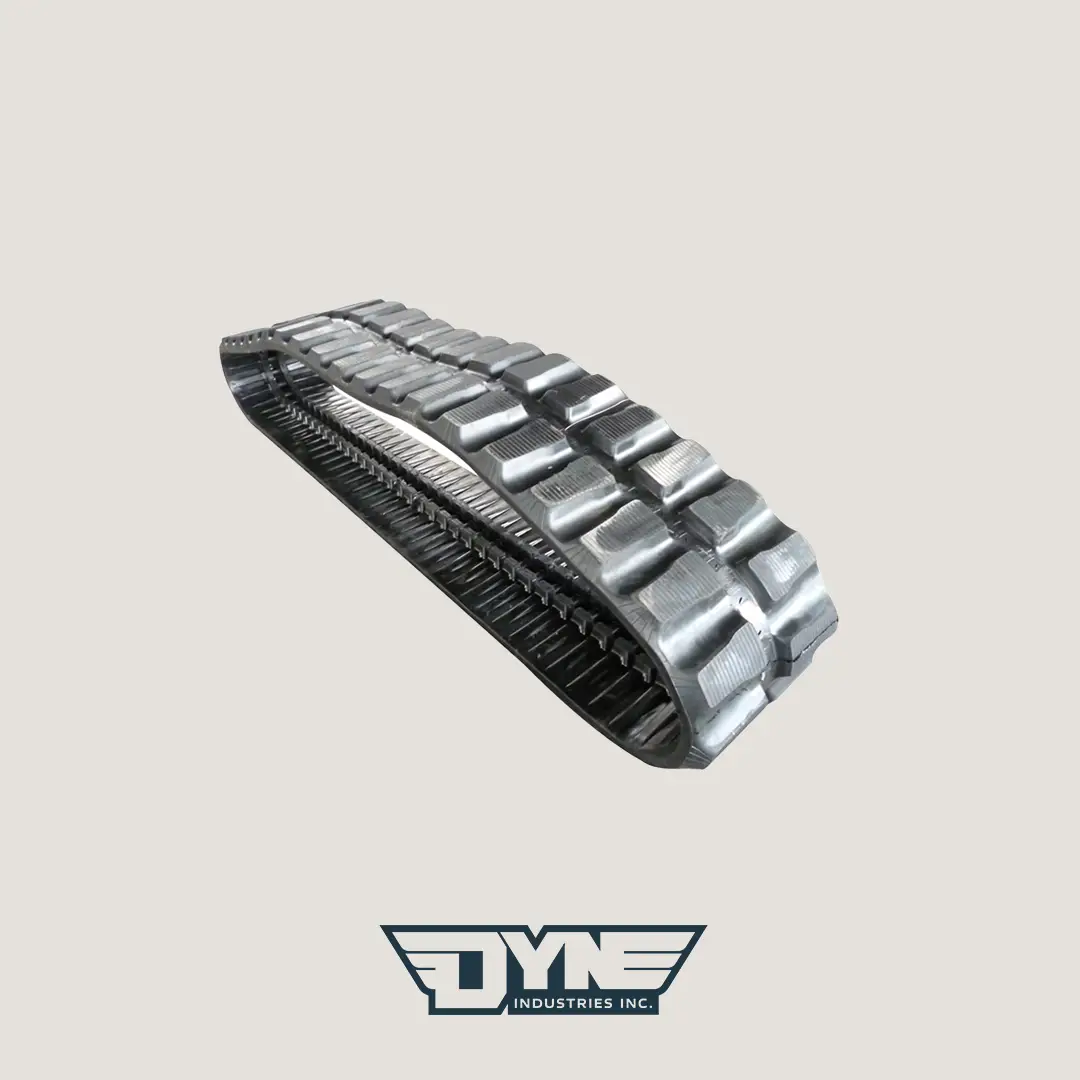



Takeuchi Rubber Tracks are a big part of what makes TB mini excavators and TL compact track loaders so useful on real jobsites. In this guide, you will learn how to size them, choose the right tread, maintain them, and replace them before they cost you time.
If you run a Takeuchi, you already know downtime is not just annoying, it is expensive. Tracks affect traction, safety, ride quality, and undercarriage wear, so the right choices here protect your machine and your schedule.
TL;DR
- Takeuchi Rubber Tracks need the exact width, pitch, and link count, check the stamp on your current track first.
- If the stamp is worn off, measure carefully and use your model and serial number to avoid ordering the wrong setup.
- Pick a tread pattern that matches your work, block for mixed ground, aggressive for soft mud, turf for finished surfaces.
- Track life comes down to habits, keep proper tension, clean out packed mud, and avoid spinning on hard ground.
- When you’re ready to replace, shop our rubber tracks for Takeuchi machines (and send us your track code or photos if you want fitment help).


Why Takeuchi owners care about track choice
A worn or wrong-size track can derail, slip, or chew up parts that cost a lot more than rubber. It also changes how the machine feels, especially when you are grading, pushing, or travelling on rough ground.
Track choice matters most when the jobsite fights back, like sharp rock, frozen ruts, deep mud, or tight timelines where you cannot afford a breakdown.
Who this guide is for (operators, fleet managers, parts buyers)
This is for the operator who wants the machine to track straight and stay on the ground. It is for the fleet manager who wants predictable maintenance and fewer emergency calls. It is also for the parts buyer who needs to order the right track the first time.
Takeuchi rubber-tracked machines at a glance
Takeuchi Rubber Tracks show up most often on two machine families.
TB series mini excavators
These cover everything from small, tight-access minis to larger compact excavators used for steady trenching, lifting, and site work.
TL series compact track loaders
These are the track loaders that get pushed hard in grading, backfilling, snow, land clearing, and material handling.
Why track fitment can change by model year and serial number
Even if the model decal looks the same, undercarriage parts can change mid-production. That can change pitch, link count, guide style, and what actually fits.
To wrap this up, treat track choice like a critical part, not an accessory. Next, let’s break down what Takeuchi Rubber Tracks are actually doing under your machine, and why that matters day to day.
Takeuchi Rubber Tracks Explained (What They Are and Why They Matter)
Takeuchi Rubber Tracks are not just rubber belts, they are a reinforced drive system that has to match your sprocket, rollers, and frame. When they fit and tension correctly, they deliver traction and stability with less surface damage.
When they do not, you will feel it fast, like ratcheting, slipping, de-tracking, rough ride, and higher wear on the whole undercarriage.
Rubber tracks vs steel tracks (quick comparison)
Rubber tracks are common on compact machines because they are easier on finished surfaces and easier on the operator.
Surface protection, vibration, noise
Rubber is gentler on asphalt, concrete, and hardpack, and it typically rides smoother than steel.
Traction and flotation on soft ground
Rubber tracks spread weight out and help the machine “float” more on soft soils, which can mean less rutting and better control.
Where rubber tracks struggle (sharp rock, demo debris, lots of pavement)
Rubber can get cut or chunked by sharp rock, rebar, and demolition debris. Lots of travel on pavement can also wear tread fast, especially with tight turns.
What your tracks actually do for performance
Tracks change more than traction, they change how the machine loads the drivetrain and how the machine handles.
Stability, pushing power, grading control
A stable track footprint helps the machine stay planted while pushing, lifting, or grading. If tread is worn unevenly, the machine can feel “loose” or wander.
How track condition affects ride, efficiency, and final drive strain
When tracks are too loose, too tight, or worn, the machine works harder to move. That extra strain shows up in heat, vibration, and stress on final drives and rollers.
Bottom line, Takeuchi Rubber Tracks are part of your performance and your maintenance budget at the same time. Next, we will get practical and answer the question everyone asks first, what size do you actually need?
What Size Takeuchi Rubber Tracks Do I Need?
The fastest way to size Takeuchi Rubber Tracks is to read the numbers on your current track. If those numbers are missing or worn, you can still measure and confirm fitment with a few checks.
The goal is simple, match the exact size and the correct guide style, so the new track meshes cleanly with the sprocket and clears the frame.
Find the size on your current track first
Most tracks have the size moulded or stamped into the rubber.
Where the size is usually stamped
Look along the outer sidewall, near the middle of the track, or sometimes on the inside edge near the lugs. Clean mud off first, the stamp can be faint.
What to do if the stamp is worn off
Do not guess. Take photos of the whole track, the inside lugs, and the guide area. Then measure width and pitch, and count links.
How track sizing works (Width x Pitch x Links)
Track size is normally written like Width x Pitch x Links, for example 450x86x60.
What each number means
Width is the track width (side to side). Pitch is the distance between the internal drive lugs (the spacing that must match the sprocket). Links is the total number of pitches around the track.
Why pitch and link count must match exactly
Width can sometimes have options, but pitch and link count are not “close enough” items. If pitch is wrong, it will not mesh right. If link count is wrong, it will not tension and sit correctly.
The serial number trap (why “same model” is not always the same track)
This is where people get burned ordering Takeuchi Rubber Tracks online.
How mid-production changes happen
Manufacturers can change roller layouts, guide styles, or sprockets during a model run. That can create two valid track setups for one model name.
What to record before ordering (model, serial, current track code, photos)
Record the model, serial number, current track size (or measurements), and take clear photos. Get close-ups of the inside lugs and guides, plus a photo of the undercarriage from the side.
If you remember one thing here, do not trust “model only” shopping when it comes to Takeuchi Rubber Tracks. Next, let’s look at common setups by TB and TL series, and where fitment variation shows up most.
What size rubber tracks are on a Takeuchi TL12V2?
If you are trying to size Takeuchi Rubber Tracks for a TL12V2, the biggest thing to know is this, the track size can vary by configuration and by machine version. That is why the safest way to confirm is always to start with what is on your machine right now.
First, look for the size stamp on the sidewall of your current track.
Clean the track first, mud and wear can hide the stamp. If the stamp is readable, you will usually see a format like Width x Pitch x Links.
If the stamp is not readable, do not guess. Measure the width, confirm the pitch (lug spacing), and count the links. Then match those numbers exactly when ordering, because pitch and link count must match the sprocket and undercarriage.
To wrap this up, TL12V2 sizing is not something to assume from the model name alone.
Next, let’s answer the common follow-up, whether TL12 and TL12V2 tracks are actually the same size.
Are Takeuchi TL12 and TL12V2 tracks the same size?
Sometimes TL12 and TL12V2 Takeuchi Rubber Tracks can be the same size, but you should not assume they are. Fitment can change due to undercarriage updates, different guide styles, or serial number breaks.
The right way to confirm is simple.
Check the size stamp on the current track, then verify using the machine serial number if there is any doubt. If you are shopping online, do not rely on “TL12” as the only filter, because two machines can share a name and still use different tracks.
If you are unsure, take photos of the track stamp area, inside lugs, and guide style, plus a photo of the undercarriage from the side.
That information is usually enough to confirm whether the TL12 and TL12V2 share the same track setup.
To wrap this up, treat TL12 vs TL12V2 as a “confirm first” situation, not a “should fit” situation.
Next in the article, the model guide section helps you understand typical track ranges, and where serial number variation shows up most.
Takeuchi Model Guide and Common Track Setups
This section gives you a plain-English map of where Takeuchi Rubber Tracks tend to land across the TB and TL lineup. We are keeping this in ranges because exact fitment can change by serial number and configuration.
Use this as a starting point, then confirm with your track stamp, measurements, and serial number.
TB series mini excavator tracks (typical ranges)
TB minis range from narrow tracks built for access, to wider tracks built for stability and flotation.
Micro and small minis (narrower track systems)
These machines usually prioritize access, light footprint, and working around finished areas.
They often run narrower tracks to fit tight spaces and reduce scuffing, but the trade-off is less flotation in soft ground.
Mid-size minis (common “workhorse” sizes)
This is where you will see the most fitment variation by model and serial.
These machines do a bit of everything, trenching, pads, grading, frost work, and they get moved job to job, so correct sizing matters.
Larger compact excavators (wider tracks for stability)
Wider tracks add stability, especially when lifting or working on side slopes.
They also help flotation in soft ground, but width must still clear the frame and match the correct guides.
TL series compact track loader tracks (typical ranges)
TL loaders tend to run wider tracks than minis because they carry and push heavy loads.
Mid-size CTLs (common width options by configuration)
Some configurations offer narrow and wide options.
Narrow can help in tight gates or transport limits, wide can help flotation and stability, so you pick based on real work needs.
Large-frame CTLs (popular 18-inch class tracks)
Large-frame CTLs often run the common wide track class used in that category.
Before ordering, confirm your track code, guide type, and any serial break that changes the undercarriage setup.
Mini checklist before you buy
Before you order Takeuchi Rubber Tracks, run this quick checklist.
- Confirm track code
- Confirm guide style (if applicable)
- Confirm undercarriage condition (sprocket, rollers, idlers)
This model guide is meant to keep you out of the “close enough” trap. Next, we will walk through how to choose the right Takeuchi Rubber Tracks for your job, starting with the fitment items you cannot compromise on.
How to Choose the Right Takeuchi Rubber Tracks
Choosing Takeuchi Rubber Tracks is half fitment, half jobsite reality. Fitment gets the track on the machine, job match keeps it alive and working well.
If you start with the non-negotiables, the rest of the decision gets a lot easier.
Fitment first (non-negotiables)
This is the stuff you do not gamble on.
Width, pitch, and link count
Match your width option, and match pitch and link count exactly.
Guide type and lug geometry
Guides and lug shapes need to match your undercarriage style. If you mismatch guides, you can get rubbing, tracking issues, and faster wear.
Clearance issues (too wide can rub, too narrow can reduce stability)
Too wide can rub the frame or rollers. Too narrow can reduce stability and flotation, and it can change how the machine feels on slopes.
Pick the right tread pattern for your work
Tread is where you tailor Takeuchi Rubber Tracks to the jobs you actually do.
General purpose vs aggressive traction
General purpose is a balanced choice for mixed work. Aggressive treads bite better in soft ground, but can wear faster on hard surfaces.
Mud shedding vs smooth ride
Open tread designs can clear mud better, but may ride rougher on hardpack. Block styles often ride smoother.
Turf-friendly options for landscaping
If you work on finished lawns or sensitive surfaces, turf patterns can reduce scuffing, but they can give up traction in sloppy mud.
Choose the right build quality (what separates premium from budget)
Not all tracks are built the same, and failures are usually internal first.
Rubber compound considerations (cut resistance vs flexibility)
Some compounds resist cuts better, some stay more flexible in cold. You want a track that fits your climate and terrain.
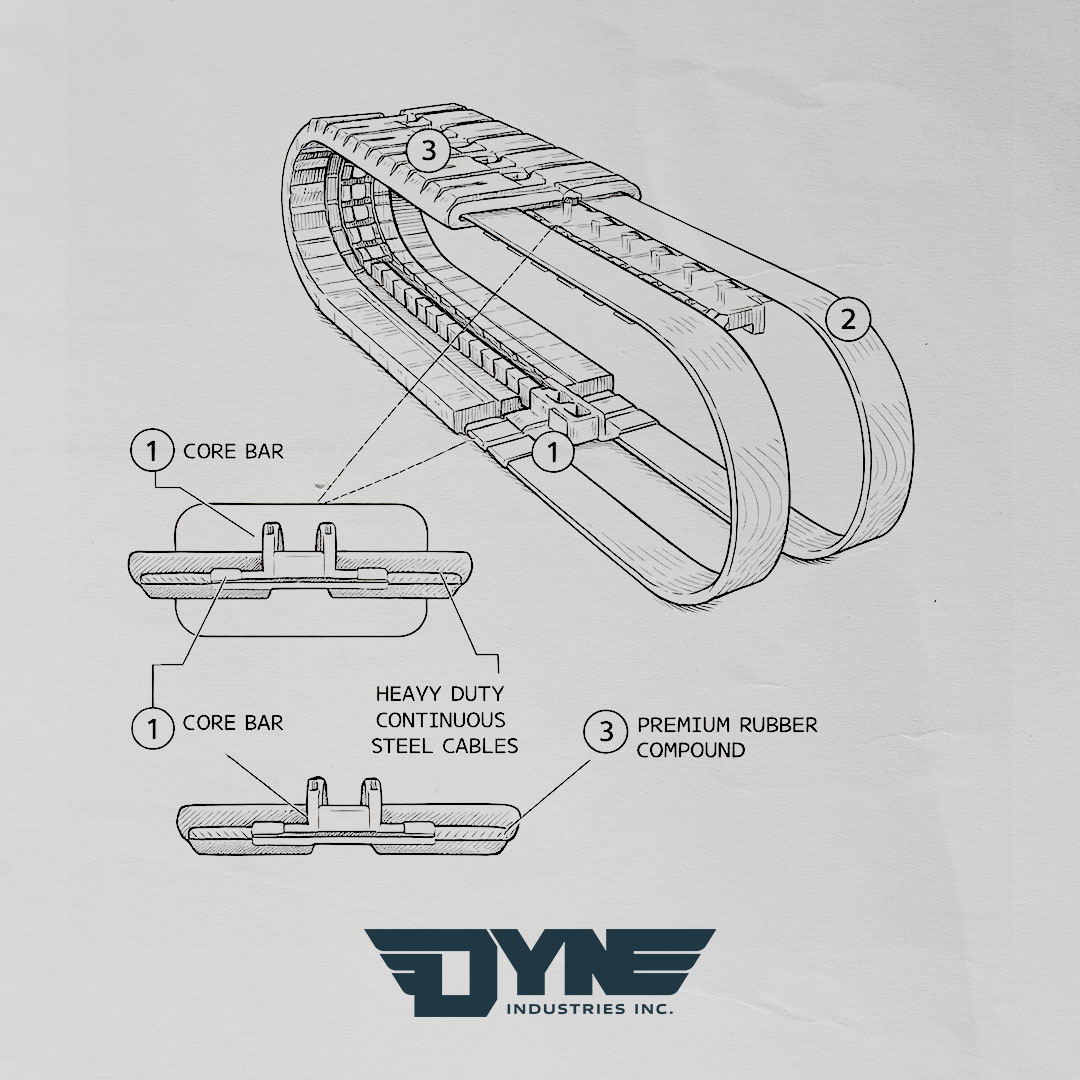
Steel cord reinforcement (what “heavy duty” should actually mean)
Look for reinforcement designed to resist stretching and internal separation. This is a big factor in how the track holds tension over time.
Drive lugs and internal structure (what fails first when quality is poor)
Drive lugs can tear, and internal bonds can fail if the build is weak. When that happens, you get slipping, ratcheting, and sudden downtime.
OEM vs aftermarket Takeuchi rubber tracks
This is a common buying decision.
When OEM makes sense
OEM can make sense when you want a dealer-supplied part and you know fitment is locked in.
When quality aftermarket is the smarter buy
A reputable aftermarket track can be a strong value when it matches the correct size, guide style, and build quality for your work.
What to look for in a warranty and return policy (especially on sizing)
You want sizing support, clear return rules on unused tracks, and a warranty that covers manufacturing defects, not wear.
Cost per hour thinking (how to compare track prices properly)
Sticker price is not the full cost.
Price is only part of the cost
A cheaper track that fails early can cost more once you add labour, lost time, and damage risk.
Add downtime risk and installation time to the decision
If your machine is critical during peak season, reliability matters. A track swap in the middle of a job is rarely convenient.
When you choose Takeuchi Rubber Tracks with fitment and job match in mind, you usually spend less over the life of the machine. Next, let’s make tread patterns simple, so you can pick with confidence.
Tread Patterns for Takeuchi Rubber Tracks (Plain-English Guide)
Tread pattern is how Takeuchi Rubber Tracks “talk” to the ground. The right pattern improves traction and control. The wrong one can wear fast or feel rough for the work you do.
Here are the common patterns, what they are good at, and what to watch for.
Block or staggered block (all-around work)
Best for: mixed terrain, smoother ride
Block patterns are a solid all-around choice. They tend to ride smoother on hardpack and mixed ground.
Watch for: less bite in deep mud
In deep mud or slick clay, block patterns can pack up sooner than more open, aggressive designs.
Zig-zag or multi-bar (traction and control)
Best for: general construction, snow-prone work, hardpack
These patterns can feel more “keyed in” on hardpack and can help in light snow or frozen ground.
Watch for: more vibration depending on machine and surface
On some surfaces, the ride can feel a bit busier, especially if you do a lot of travel.
C-lug and aggressive patterns (maximum bite)
Best for: loose soil, wet ground, steep work
Aggressive treads bite well in loose soils and wet conditions, and they can help on slopes when used with good operator habits.
Watch for: faster wear on hard surfaces
Aggressive lugs can wear quicker on asphalt, concrete, and long travel on hardpack.
Turf patterns (surface protection first)
Best for: lawns, finished properties
Turf styles help reduce scuffing and surface damage on finished sites.
Watch for: less traction in sloppy mud
In wet mud, turf patterns can slip sooner, so plan for conditions.
Tread choice is a work choice, not a marketing choice. Next, we will cover what installation really looks like, and when it is smarter to pay a shop.
Installing Takeuchi Rubber Tracks (What to Expect)
Installing Takeuchi Rubber Tracks can be a DIY job, but it has real safety risks and it can chew up time if you are not set up. This section gives you a high-level view of what to expect so you can plan the job properly.
If you are unsure, a shop install can be cheaper than a mistake, especially on heavier CTLs.
DIY vs shop install (when it’s worth paying)
Safety, lifting, and time considerations
Tracks are heavy and awkward. You need solid blocking, safe lifting points, and a plan to keep hands clear.
What makes CTLs different from mini excavators during install
CTL undercarriages can be tighter to work with, and track tension systems and access can differ from mini excavators. The machine weight also raises the stakes.
Tools and prep checklist
Blocking, lifting points, basic tools
Have proper blocks, a lifting method you trust, and basic hand tools ready.
Cleaning the undercarriage before you start
Mud and rock packed into the frame makes removal harder and increases the chance of damage or de-tracking after install.
High-level install steps (overview only)
De-tension safely
Follow the correct procedure and keep your body out of pinch zones.
Remove old track
Work slow and controlled. If it fights you, stop and re-check tension and debris.
Inspect sprockets, rollers, and idlers
New tracks on worn parts can wear fast and slip.
Install new track, re-tension, and test travel
Seat the track properly, tension it to spec, then test travel slowly.
Post-install break-in checks
Re-check tension after short run time
New tracks can settle. A quick re-check prevents early problems.
Listen for ratcheting, rubbing, or popping
Noise is a clue. Stop and inspect before you turn a small issue into a bigger one.
Installation is not the time to rush. Next, let’s talk about the maintenance routine that keeps Takeuchi Rubber Tracks alive longer, especially in mud, freeze-thaw, and abrasive ground.
Takeuchi Rubber Track Maintenance (Daily, Weekly, Monthly)
Takeuchi Rubber Tracks last longer when you treat maintenance like a routine, not a rescue mission. A few minutes a day can prevent de-tracking, reduce wear, and help you spot undercarriage issues before they get expensive.
This section gives you a simple schedule you can actually follow.
Daily walkaround (5 minutes that saves hundreds of dollars)
Check for cuts, chunking, and edge damage
Look for fresh damage, especially on the edges and around the tread lugs.
Look for missing or torn drive lugs
Drive lugs are what the sprocket grabs. When they tear, slipping and ratcheting often follow.
Watch for uneven wear left vs right
If one side is wearing faster, it can be operator habit, alignment, or undercarriage wear.
Clean-out routine (especially after mud, clay, or freeze-thaw)
Where material packs up
Packed material often collects around rollers, idlers, and inside the track frame.
Why packed debris can cause de-tracking and over-tension
Debris can force the track tighter than it should be, or push it sideways during turns. Both can cause problems.
Undercarriage health checks that protect new tracks
Sprocket tooth wear
Hooked or sharp sprocket teeth can chew drive lugs.
Roller and idler condition
Worn rollers can create tracking issues and uneven wear.
Alignment signs (rubbing, heat, edge wear)
If you see rubbing marks or one edge wearing hard, stop and inspect.
Storage tips (especially for seasonal machines)
Sun and weather exposure
UV and weather age rubber, so covered storage helps.
Chemicals and petroleum contact
Keep tracks away from oils, fuels, and chemicals that can degrade rubber.
Keeping tracks clean before parking for long periods
Clean tracks before storage so mud and salts are not sitting on rubber and metal.
Maintenance is what keeps a “new set of tracks” from becoming a short-lived set of problems. Next, we will focus on tension, because incorrect tension is one of the fastest ways to shorten the life of Takeuchi Rubber Tracks.
Track Tension on Takeuchi Equipment (How to Get It Right)
Track tension is one of the biggest make-or-break factors for Takeuchi Rubber Tracks. Too loose, and you risk de-tracking and lug damage. Too tight, and you add strain and wear to the whole undercarriage.
The best tension is the one in your operator’s manual for your exact machine and setup.
Why tension matters
Too loose: de-tracking, ratcheting, lug damage
Loose tracks can climb off rollers during turns or slope work. They can also ratchet over the sprocket, which tears lugs.
Too tight: faster wear, extra strain on rollers and final drives
Over-tight tracks increase friction and load, and that can speed up wear on rollers, idlers, and drive components.
How to check sag the right way
Where to measure (CTL vs mini excavator differences)
Measurement points can differ by machine style. Some setups measure sag between rollers, others on the upper run.
Use your operator’s manual spec (include an example range as a reference)
Many compact machines call for a small amount of sag, often in the range of roughly a finger-width to a couple of finger-widths, but the manual is the authority for the exact measurement method and target.
How tension adjustment works (grease cylinder overview)
Tightening and loosening basics
Most systems use a grease-adjusted tensioner that moves the idler. Adding grease tightens, bleeding grease loosens.
Safety warnings (stored energy and pinch points)
Stored energy can release fast. Keep your body clear, use proper blocking, and follow safe service steps.
How tight should Takeuchi tracks be (how do I check sag)?
Track tension is one of those things you can’t eyeball and hope for the best. The right sag depends on your exact model and undercarriage setup, so you want to measure it the way Takeuchi tells you to in the operator’s manual.
Start by lifting and supporting the machine safely so the track is unloaded. Then measure sag at the exact spot the manual calls for (it can differ between mini excavators and compact track loaders). Use the manual’s target sag number, not a guess or a “close enough” method.
If you are in muddy or freeze-thaw conditions, re-check more often. Packed debris can make a correctly adjusted track act too tight, and a quick clean-out plus sag check can prevent a thrown track.
To wrap this up, correct sag is the baseline for track life and undercarriage health.
Next, let’s look at why Takeuchi rubber tracks come off in the first place, and what to check first.
Why do my Takeuchi rubber tracks keep coming off?
When Takeuchi rubber tracks keep coming off, it is usually one of a few common causes. The big ones are low tension, debris packing, worn drive lugs, or worn sprockets.
Start with the simplest fix. Clean the undercarriage, especially around the sprocket, idler, and rollers. Then check sag and correct the tension using the proper procedure. After that, inspect the inside of the track for lug wear or tearing, and inspect sprocket teeth for wear that can stop the track from staying engaged.
If it keeps happening even with correct sag and a clean undercarriage, look harder at undercarriage wear and alignment. Rollers, idlers, and sprockets that are worn can guide the track poorly and make de-tracking more likely.
To wrap this up, most thrown-track problems are fixable if you follow a clean-out, sag check, then inspect routine.
Tension red flags you should not ignore
Constant re-tightening needed
If you are always chasing tension, the track may be stretched or something may be worn.
Adjuster near max travel
If the adjuster is near the end of its range, the track may be beyond service.
One side always loosens faster than the other
That can point to undercarriage wear, alignment issues, or specific operator habits.
Correct tension protects Takeuchi Rubber Tracks and the machine underneath them.
Next, we will cover operator habits, because even perfect tracks will wear fast if the machine is driven in ways that grind rubber down.
Operator Habits That Destroy Takeuchi Rubber Tracks (And What to Do Instead)
A lot of track wear is not “bad luck,” it is how the machine gets used. Takeuchi Rubber Tracks can take hard work, but they do not love unnecessary scrubbing, spinning, and shock loads.
This section is about habits you can change today to get more life out of your tracks.
Avoid counter-rotation when you can
Use three-point turns
Three-point turns reduce side-scrub, especially on gravel, concrete, and hardpack.
Why spinning on abrasive ground eats tread fast
When you spin in place, the tread scrubs sideways. That friction eats tread and can stress lugs.
Hard surfaces, sharp rock, demo sites (how to reduce damage)
Slow down, widen turns, avoid curb hopping
Speed plus sharp edges equals chunking and sidewall damage.
Don’t “power through” track slip
If the machine is slipping, backing off and resetting often saves the track. Powering through usually just heats and tears rubber.
Side slope and grading habits that reduce edge wear
How constant corrections chew one side
If you are always correcting the same way, one side of the track can wear harder.
Simple ways to balance wear over time
Switch travel direction when possible, vary approaches, and keep tension and undercarriage condition in check.
Matching the machine to the job
When a wheeled machine is the better tool
If the job is mostly pavement travel or sharp demo debris, wheels can sometimes be the more cost-effective choice.
When rubber tracks shine the most
Soft ground, sensitive surfaces, and mixed terrain are where Takeuchi Rubber Tracks usually pay you back.
Good habits extend track life without spending a dollar on parts. Next, we will talk about replacement timing, because running tracks to failure often costs more than replacing them at the right moment.
When to Replace Takeuchi Rubber Tracks (Don’t Run Them to Failure)
Replacing Takeuchi Rubber Tracks before they fail is usually cheaper and safer than trying to squeeze “just one more week” out of them. Failure can stop the job, damage undercarriage parts, and create a safety risk.
Here are the signs that it is time to plan a replacement.
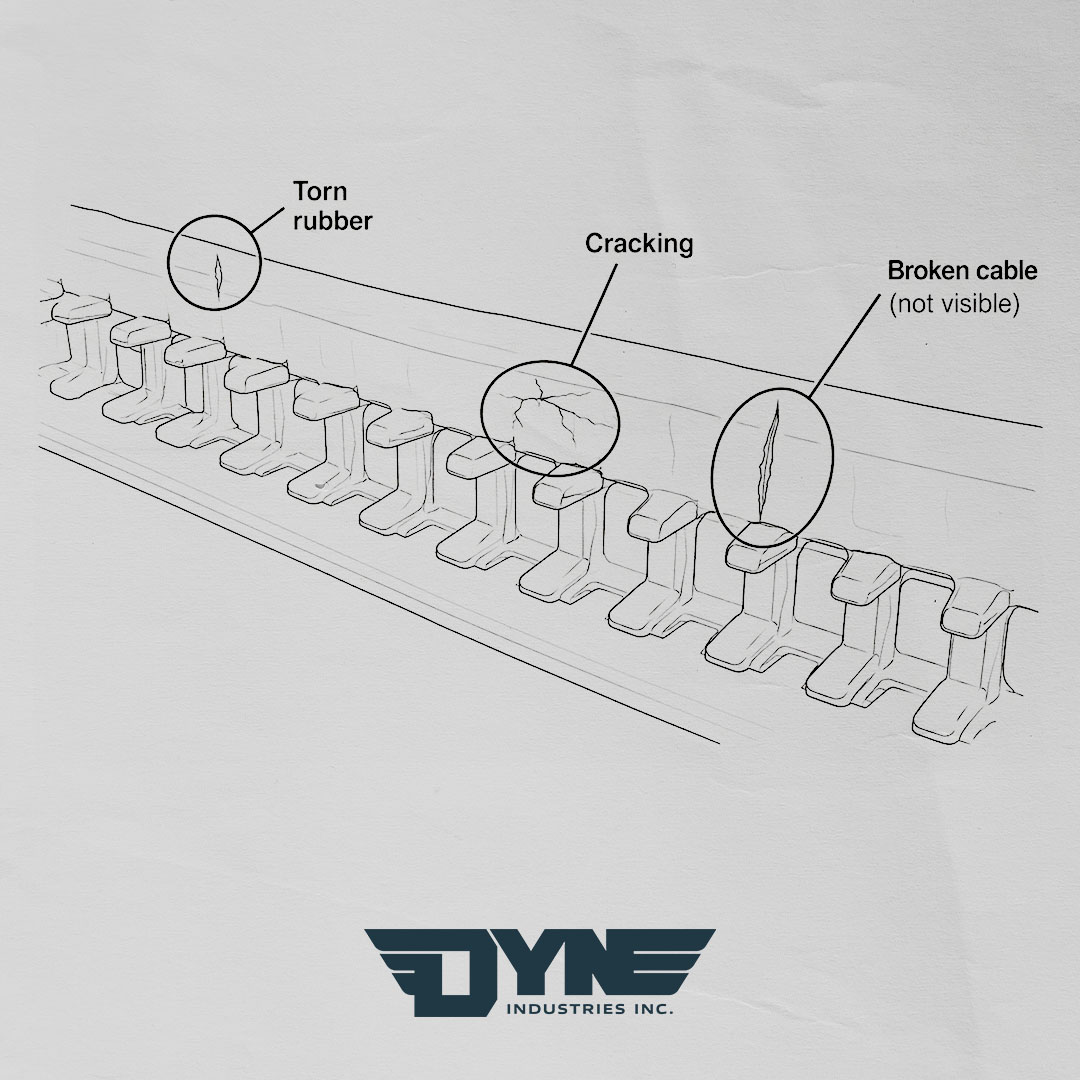
Visible cords or deep cuts into the carcass
What “structural damage” looks like
If you can see cords or deep damage that reaches the reinforcement, that track is no longer trustworthy.
Drive lugs worn down or tearing out
How it causes slipping and ratcheting
When lugs cannot engage properly, the sprocket slips. That can feel like popping, banging, or jerky travel.
Tracks that won’t hold tension (stretch or internal damage)
What “stretched beyond service” looks like in the real world
If the adjuster is near max and the track still sags too much, it is often time.
Frequent de-tracking
When it’s operator technique vs track wear vs undercarriage wear
One thrown track can be a mistake. Repeated throws usually point to tension problems, worn lugs, debris packing, worn sprockets, or alignment issues.
How long do Takeuchi rubber tracks last?
A realistic range depends on terrain, turning habits, maintenance, and how much hard-surface travel you do. Many crews plan around the idea that tracks can last from roughly the low thousands of hours in harsh work to a few thousand hours in cleaner, well-maintained conditions.
For fleets, the smart play is budgeting by hours and having a plan before failure, especially for mission-critical machines.
Should you replace one track or both tracks?
Replacing both tracks together often keeps travel straight and wear balanced, especially on track loaders.
Exceptions (and risks) if you only replace one
If the other track is still in strong shape and wear is even, you might replace one. Just know mismatched wear can affect tracking and put uneven load on the system.
Replacing at the right time keeps the job moving and protects the machine. Next, we will troubleshoot common issues, so you can diagnose problems fast and decide if it is a quick fix or a parts problem.
Do aftermarket tracks fit as well as Takeuchi OEM tracks?
Good aftermarket tracks can fit and perform well, but only if two things are true. First, the track must match the exact size and guide style for your machine. Second, the track has to be built to a quality level that holds up under your work conditions.
OEM tracks can be a solid choice when you want a dealer-supplied part and you know fitment is locked in. Quality aftermarket tracks are often the smarter buy when you want strong value without giving up performance, especially if the supplier helps confirm fitment before you order.
The key is fitment confirmation. Use the track stamp when possible, and back it up with model and serial number. If there is any uncertainty, send photos of the lugs and guide area and get the match confirmed before the track ships.
To wrap this up, aftermarket can be a win when sizing is confirmed and build quality is reputable.
Next, let’s talk lifespan, because that is what most owners are really trying to predict.
Do aftermarket tracks fit as well as Takeuchi OEM tracks?
Good aftermarket tracks can fit and perform well, but only if two things are true. First, the track must match the exact size and guide style for your machine.
Second, the track has to be built to a quality level that holds up under your work conditions.
OEM tracks can be a solid choice when you want a dealer-supplied part and you know fitment is locked in. Quality aftermarket tracks are often the smarter buy when you want strong value without giving up performance, especially if the supplier helps confirm fitment before you order.
The key is fitment confirmation. Use the track stamp when possible, and back it up with model and serial number. If there is any uncertainty, send photos of the lugs and guide area and get the match confirmed before the track ships.
To wrap this up, aftermarket can be a win when sizing is confirmed and build quality is reputable.
Next, let’s talk lifespan, because that is what most owners are really trying to predict.
How long do rubber tracks last on a Takeuchi mini excavator?
There is no single number that fits every machine, because rubber track life depends heavily on terrain and habits. Soft ground, smooth turns, and clean undercarriages can extend life. Sharp rock, demolition debris, and lots of spinning can shorten it fast.
A practical way to plan is to track hours, watch wear signs, and pay attention to tension behaviour.
If tracks start needing constant re-tightening, if lugs are wearing down, or if you see deep cuts and structural damage, start budgeting for replacement before you get forced into it mid-job.
For fleets, it helps to set a “start watching closely” hour threshold based on your own conditions and history. The goal is to replace on your schedule, not the jobsite’s.
To wrap this up, track life is mostly controlled by conditions and habits, not luck.
Troubleshooting Takeuchi Rubber Track Problems
Track problems usually give you warnings before they become a full stop. Takeuchi Rubber Tracks that start slipping, throwing, or wearing unevenly are telling you something.
Use this section to narrow down the cause before you keep running and make it worse.
Track keeps coming off
Common causes include incorrect tension, debris packing, worn lugs, and worn sprockets. Start by cleaning the undercarriage, checking sag, then inspecting lugs and sprocket teeth.
Track is slipping or ratcheting on the sprocket
This can happen with lug wear, sprocket wear, incorrect pitch, or incorrect guide type. If pitch does not match, the track will never feel right, even if you tension it.
Uneven wear patterns
Always turning one direction
If the machine always turns the same way in tight spaces, one side often wears faster.
Sidehill work habits
Sidehill travel and constant corrections can load one edge harder.
Alignment and roller issues
Worn rollers, bent guards, or alignment problems can push wear to one edge.
New vibration or thumping
It can be track damage, a missing lug section, or an undercarriage component issue. Do a slow travel test, inspect the track, then inspect rollers and idlers before you keep working.
Troubleshooting is about stopping small problems from becoming expensive ones. Next, we will map track choices to job types, so you can choose Takeuchi Rubber Tracks that match what you do most.
Best Track Choices by Job Type (Quick Use Cases)
Different work destroys tracks in different ways. Takeuchi Rubber Tracks that survive landscaping may not be the best choice for rock trenching, and vice versa.
Use these quick use cases to match tread and build to your day-to-day work.
General construction and grading
Prioritize balanced traction, predictable wear, and stable grading feel. General purpose or multi-bar styles are common picks for mixed terrain.
Landscaping and finished surfaces
Prioritize low scuffing and surface protection. Turf or smoother block patterns can make sense, especially when the customer cares about the finish.
Agriculture, acreage, and soft ground
Prioritize flotation and mud shedding. Open tread designs can help keep you moving when soils are wet and soft.
Snow work and winter conditions
Prioritize control and steady traction, and be realistic about wear if you travel a lot on frozen hardpack. Smooth turning habits matter a lot in winter.
Job matching reduces wear and reduces surprises. Next, we will show the fastest way to shop Takeuchi Rubber Tracks through Dyne Industries, and what information helps us confirm fitment quickly.
Can I drive my Takeuchi track loader on pavement?
Yes, you can drive a Takeuchi track loader on pavement, but it can wear tracks faster, especially if you do tight turns or counter-rotation. Pavement is abrasive, and the sideways scrub during sharp turns is what eats tread and stresses lugs.
If you have to travel on pavement, slow down and widen your turns. Avoid spinning in place whenever you can. If you are moving between work zones often, consider how much of your track wear is coming from travel rather than actual job work.
Also watch heat and chunking, especially in summer. If you start seeing faster tread wear or cracking, reduce pavement travel where possible and tighten up your turning habits.
To wrap this up, pavement travel is doable, but you want to treat it like “extra wear time” and adjust habits to protect the tracks.
Next, let’s explain continuous steel cord because it ties directly to durability and stretch resistance.
What is continuous steel cord, and why does it matter?
Continuous steel cord is an internal reinforcement used in some rubber tracks. Think of it as the structural “belt” inside the track that helps it keep its shape under load.
It matters because reinforcement affects how well the track resists stretching and how well it holds tension over time. Strong internal structure also helps the track handle repeated flexing, heavy pushing, and rough ground without separating internally.
When people talk about a track feeling “heavy duty,” this internal construction is a big part of what they mean. It is not the only factor, but it is one of the parts that separates long-life tracks from tracks that loosen, slip, or fail early.
To wrap this up, internal reinforcement is a durability factor you cannot see from the outside, but you will feel it in track life and tension stability.
Shop Takeuchi Rubber Tracks (Dyne Industries)
If you are ready to price or replace Takeuchi Rubber Tracks, the fastest win is shopping by your exact machine, then confirming fitment with your track code or measurements. That approach helps you avoid wrong orders and downtime.
Dyne Industries is Canada-based, and we focus on supplying replacement tracks that match real jobsite demands, plus fitment help when you need it.
Find the right track by model (fast path)
- [Internal link: Shop by equipment -> URL placeholder]
- [Internal link: Track sizing guide -> URL placeholder]
Popular Takeuchi track picks (examples)
- [Internal link: TL-series example product link -> URL placeholder]
Why this one: A solid all-around tread for mixed ground when you need a balance of grip and ride. - [Internal link: TB-series example product link -> URL placeholder]
Why this one: A practical tread choice for mini excavator work where clean tracking and steady wear matter.
What to send us to confirm fitment
- Model and serial
- Track code or measurements
- Photos of the track and undercarriage (guide/lug area)
If you send those details, we can usually confirm what fits before you spend money or lose time on a wrong track. Next, we will wrap the guide with the key takeaways that keep Takeuchi Rubber Tracks working longer.
Conclusion: Keep Your Takeuchi on Track
This guide was built to help you make smarter decisions about Takeuchi Rubber Tracks, from sizing to operation habits. The goal is fewer surprises, fewer thrown tracks, and fewer days where the machine sits.
If you do the basics well, correct sizing, correct tension, clean undercarriage, and smarter turning, you usually get longer track life and a smoother-running machine.
Next, we will answer common questions people have when they are researching Takeuchi Rubber Tracks, ordering replacements, or trying to fix a problem in the field.
FAQs About Takeuchi Rubber Tracks
If you are searching these questions, you are not alone. This section gives short, practical answers, with a focus on real fitment and real jobsite use.
Common issues people run into include track de-tracking from wrong tension, undercarriage wear, and damage from packed debris. Most track problems come back to tension, cleaning, and correct sizing.
Track life varies a lot. Many operators plan for track replacement somewhere in the low thousands of hours, depending on ground conditions, turning habits, and maintenance.
No. They are different equipment brands. Parts and track fitment are not interchangeable just because the machines look similar.
It depends on the exact TB260 configuration and serial number. The safest move is to read the size on your current track, or measure width, pitch, and link count if the stamp is missing.
Takeuchi is a Japanese equipment manufacturer. If you are confirming country of origin for a specific machine, use the serial plate and dealer records.
They should match the sag spec in your operator’s manual for your exact machine. Too loose risks de-tracking, too tight adds wear and strain.
It means 450 mm width, 86 mm pitch, and 60 links. Pitch and links must match exactly to mesh with the sprocket and tension correctly.
Keep Learning