
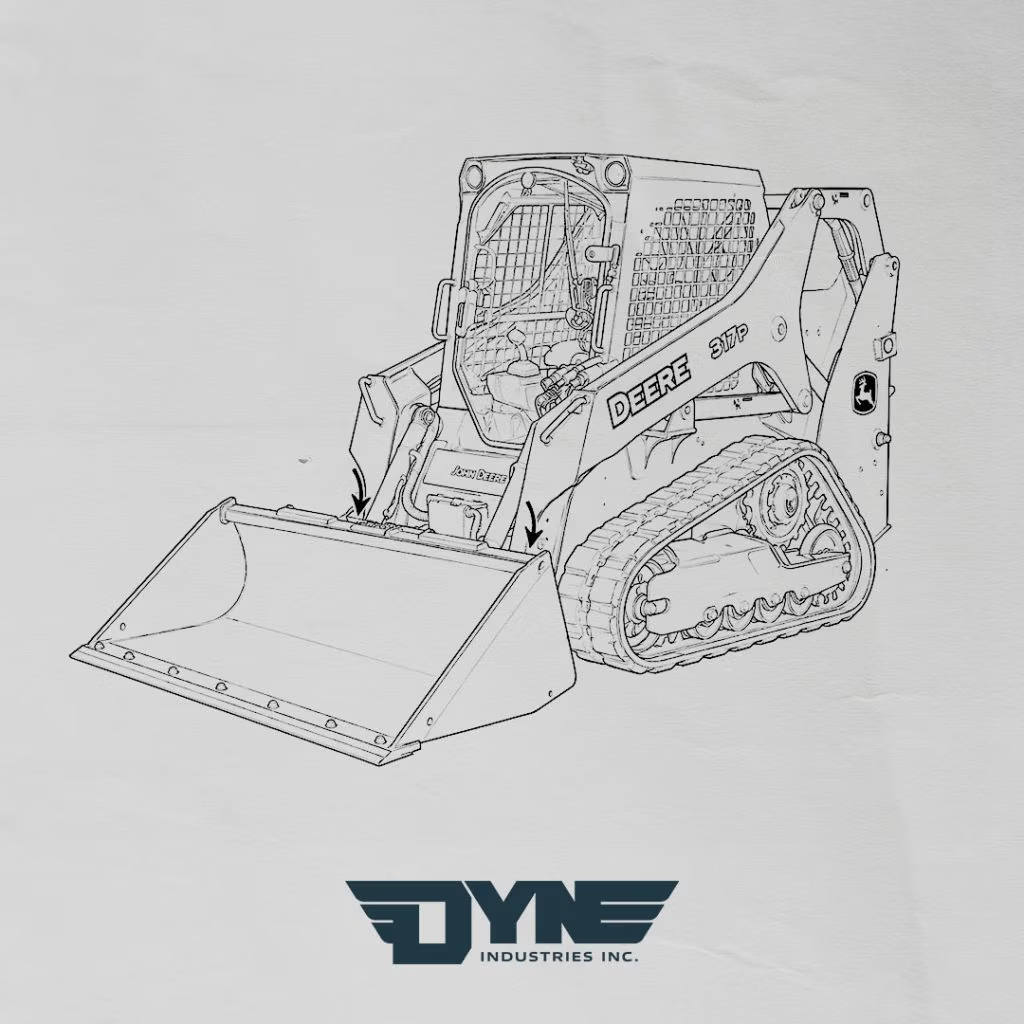
A John Deere skid steer on tracks can mean two different things.
It might mean a wheeled John Deere skid steer that has been fitted with over-the-tire tracks. Or it might mean a John Deere compact track loader, also called a CTL, that already runs on rubber tracks from the factory.
That difference matters.
If you already own a wheeled skid steer, you may be looking for more traction in mud, snow, soft ground, or rough jobsite conditions. If you own a John Deere CTL, you are likely looking for the right replacement rubber tracks before a worn belt takes your machine out of service.
Either way, the goal is the same: get the right fit, avoid downtime, and keep the machine working.
This guide walks through what to check before you buy, how John Deere track sizes work, when over-the-tire tracks make sense, how replacement rubber tracks compare, and what to watch for during installation and maintenance.
Shop John Deere rubber tracks now
-
JOHN DEERE 120 Rubber Tracks 500x92Wx84
-
JOHN DEERE 120C Rubber Tracks 500x92Wx84
-
JOHN DEERE 15 Rubber Tracks 230x72x43
-
JOHN DEERE 17C Rubber Tracks 230x48x70
-
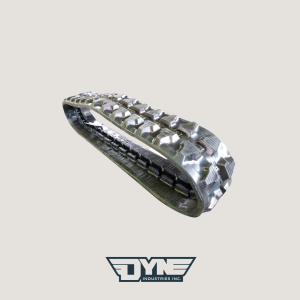
JOHN DEERE 17C Rubber Tracks 230x96x35
-
JOHN DEERE 17D Rubber Tracks 230x48x70
-
JOHN DEERE 17D Rubber Tracks 230x96x35
-
JOHN DEERE 17G Rubber Tracks 230x48x70
What “John Deere skid steer on tracks” really means
Before you price tracks or compare tread patterns, you need to know what kind of machine you are working with. The right answer depends on whether you have a wheeled skid steer or a factory tracked machine.
On the jobsite, people often call both machines “skid steers.” But there is a real difference.
A wheeled skid steer runs on tires. If you want tracks, you are usually looking at an over-the-tire track system, often called OTT tracks. These wrap around the tires and can help improve traction and flotation.
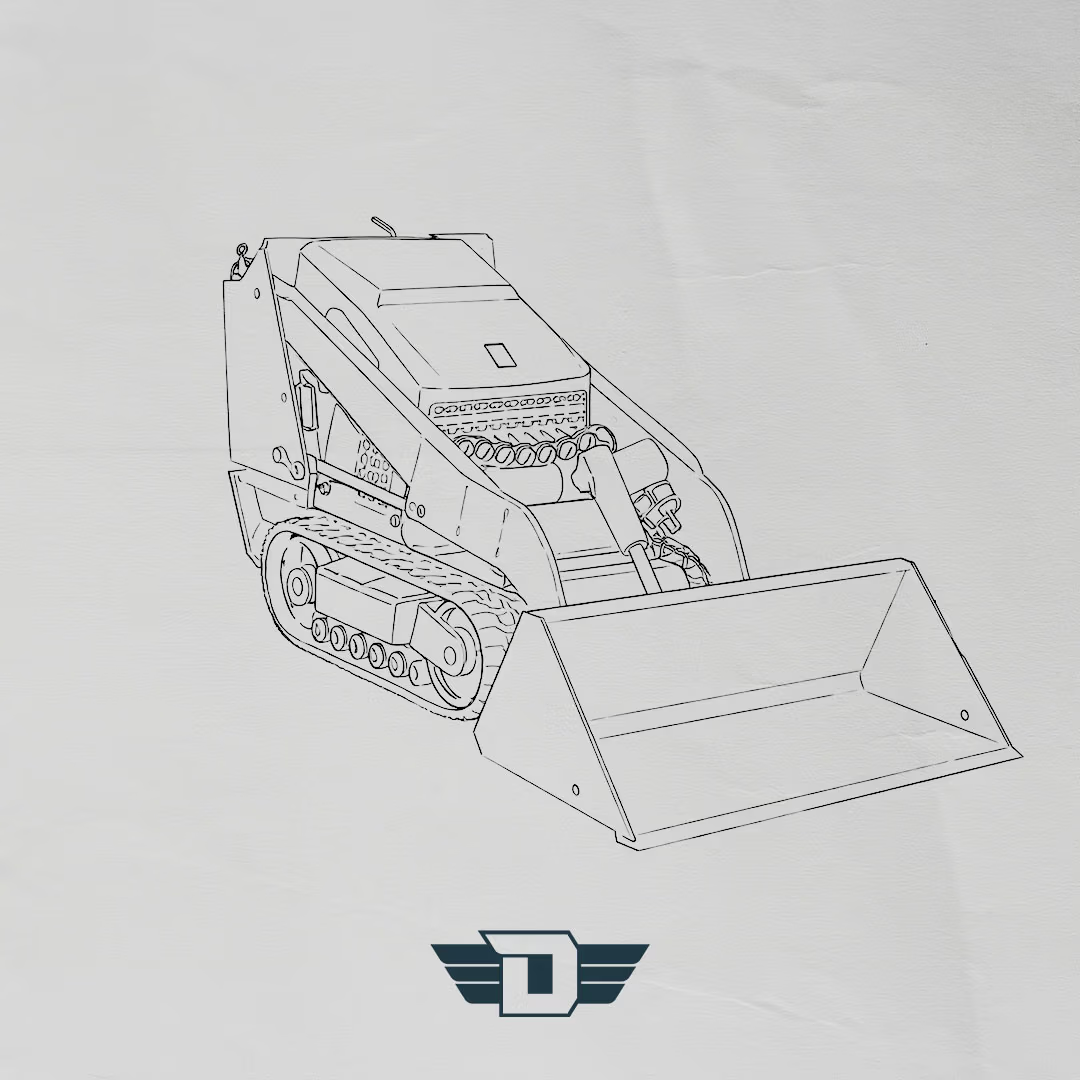
A compact track loader comes from the factory with a rubber track undercarriage. If you own a John Deere CTL, you are usually shopping for replacement rubber tracks, not a tire conversion kit.
Here is the simple split:
| What you own | What you likely need | Main fitment check |
| Wheeled John Deere skid steer | Over-the-tire tracks or another conversion system | Tire size, clearance, spacers, surface type |
| John Deere compact track loader | Replacement rubber tracks | Width, pitch, link count, guide style |
| New machine buyer | Factory John Deere CTL | Budget, jobsite needs, dealer support, attachments |
| Mixed fleet manager | A clear track sourcing plan | Machine list, track sizes, wear patterns, downtime risk |
That matters because a track that fits one setup will not automatically fit another.
For example, a wheeled John Deere skid steer may use tire sizes like 10 x 16.5, 12 x 16.5, or 14 x 17.5, depending on the model. Those tire sizes often guide the over-the-tire track class. A factory John Deere CTL uses rubber track dimensions like width, pitch, and link count instead.
Here is the key: do not start with the words “John Deere skid steer.” Start with the machine type, model, serial number, and current tire or track size.
Once you know whether you are dealing with a wheeled skid steer or a CTL, the buying path gets much clearer. Next, let’s look at how we can help with John Deere replacement rubber tracks.
How we help with John Deere rubber tracks
At Dyne Industries Inc., we help equipment owners, contractors, fleet managers, and shop teams find replacement rubber tracks that fit the machine and the work. For John Deere CTL owners, that starts with confirming the right track size before you order.
We supply replacement rubber tracks for a wide range of compact equipment models. Our aftermarket rubber track catalog supports more than 2,400 makes and models of machines.
For John Deere equipment, our rubber track listings are built to help you confirm key fitment details such as width, pitch, link count, tread type, and compatible machine models.
That support matters when a machine is already down or close to coming out of service. A wrong track does not just delay the repair. It can leave a machine parked while the crew waits, the weather changes, or the job falls behind.
For John Deere CTLs, our public product listings show useful fitment information such as track size, track type, model match, and construction details.
Examples include:
| John Deere machine | Track size to confirm | Notes |
| John Deere 325G, 13-inch width | 320 x 86 x 52 | Directional replacement rubber track |
| John Deere 331G / 333G, 16-inch width | 400 x 86 x 58 | Directional replacement rubber track |
| John Deere 331G, 16-inch width | 400 x 86 x 58GL | Directional replacement rubber track |
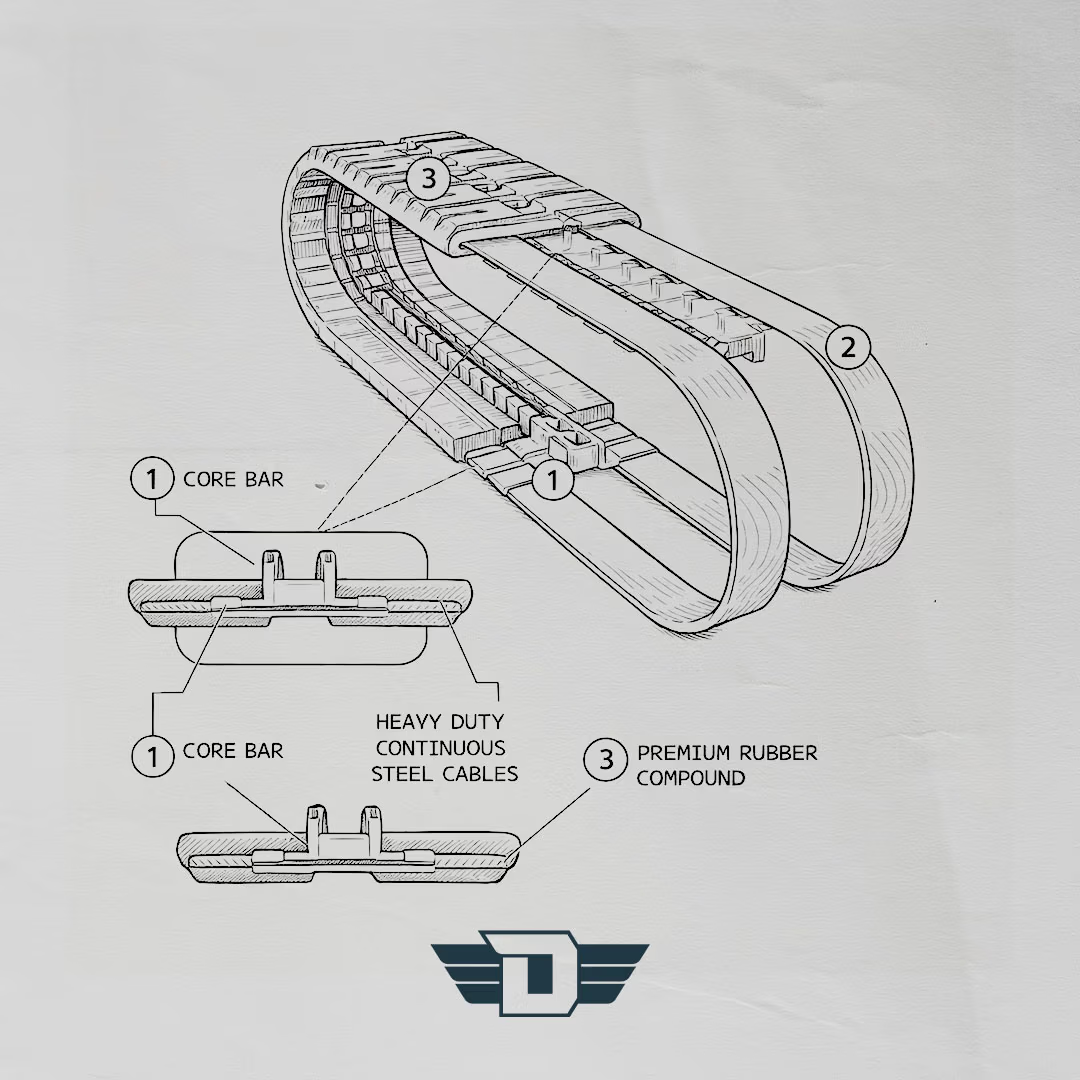
Our John Deere 325G listing shows a 320 x 86 x 52 replacement rubber track with width, pitch, link count, hardened forged steel drive links, and CSC Continuous Steel Cord technology listed in the product details.
Our John Deere 331G listing shows a 400 x 86 x 58 replacement rubber track, with compatibility noted for John Deere 331G and 333G machines.
Before you order from us or any supplier, confirm:
- Machine make and model
- Serial number, when available
- Current track size stamped on the belt
- Width, pitch, and link count
- Guide style
- Tread pattern needed for the job
- Undercarriage condition
- Whether the machine has a narrow or wide track setup
For CTL replacement tracks, the most common sizing format is:
Width x Pitch x Link Count
Width is how wide the track is. Pitch is the distance between the internal drive lugs. Link count is the number of pitch sections around the track.
Our return process is also important to understand before ordering. Returns are accepted within 30 days of delivery when tracks are unused, uninstalled, and in resellable condition. Compact track loader tracks carry a 12-month limited warranty, and installed or used tracks are non-returnable.
The practical goal is simple: confirm the right replacement rubber tracks before a wrong order turns into more downtime. Now let’s look at John Deere model compatibility and the track sizes that usually come into play.
John Deere model compatibility
John Deere fitment is not something to guess at. This section gives you a practical starting point for common John Deere skid steer and CTL groups, but the final fit should always be checked against the machine, the current track or tire, and the operator manual.
For wheeled John Deere skid steers, the first thing to check is tire size.
Common public fitment paths include:
| Wheeled John Deere group | Common tire class to check | Track option to research |
| Small-frame wheeled skid steer | 10 x 16.5 | 10-inch over-the-tire tracks |
| Mid-frame wheeled skid steer | 12 x 16.5 | 12-inch over-the-tire tracks |
| Large-frame wheeled skid steer | 14 x 17.5 | 14-inch over-the-tire tracks |
For example, some over-the-tire track suppliers list 10-inch over-the-tire track options for the John Deere 318G, including open face, steel pad, and rubber pad options.
For a larger machine like the John Deere 330G, some suppliers list 14-inch over-the-tire track options, including rubber pad and open face options.
With OTT tracks, clearance is a major issue. You need enough room between the tires, frame, loader arms, and body panels for the tracks to move without rubbing. Some machines may need wheel spacers. Do not assume a track kit fits just because the tire size seems close.
For factory John Deere compact track loaders, you are checking rubber track dimensions instead.
Here is a practical starting table:
| John Deere CTL group | Common track width class | What to confirm |
| 317 P-Tier | 320 mm class | Exact pitch, link count, guide style |
| 325G | 320 mm standard or 400 mm optional | Whether the machine has narrow or wide setup |
| 331G / 333G | 400 mm or 450 mm class | Width, pitch, links, tread pattern |
| 331 P-Tier / 333 P-Tier / 335 P-Tier | 400 mm or 450 mm class | Serial-specific details and current belt stamp |
John Deere’s 325G specification sheet shows a standard 320 mm track and optional 400 mm track. It also shows ground pressure of 5.7 psi with the standard 320 mm track and 4.7 psi with the optional 400 mm track.
John Deere’s G-Series CTL spec sheet shows 331G and 333G track width options of 400 mm and 450 mm, depending on model and configuration. That same spec sheet shows lower ground pressure with the 450 mm track compared with the 400 mm track.
That kind of difference matters on soft ground. A wider track can help spread the machine’s weight over more surface area. On a muddy jobsite or soft farm access road, that can help reduce rutting and improve flotation.
But wider is not automatically better for every job.
A wider track can improve flotation, but it may add stress in tight turning, increase scrub on hard surfaces, or change how the machine feels in confined areas. That is why track width should match the machine setup and the work, not just the biggest option available.
Before you buy, use this fitment checklist:
- Confirm whether the machine is wheeled or factory tracked.
- Find the model and serial number.
- Read the current tire size or track size.
- For CTLs, confirm width, pitch, and link count.
- For OTT tracks, confirm tire size and clearance.
- Check for worn sprockets, rollers, idlers, and leaks.
- Match tread pattern to surface conditions.
- Ask for fitment support before ordering.
The safest buying path is simple: confirm the machine first, then confirm the size, then choose the tread. Now let’s compare the main track and conversion options available to John Deere owners.
OEM vs aftermarket track and conversion options
Once you know what machine you have, the next question is what kind of track path makes sense. This section compares factory CTLs, OEM replacement belts, aftermarket rubber tracks, over-the-tire tracks, and deeper conversion systems.
There is no single best option for every owner.
A landscaper trying to improve flotation on a wheeled skid steer has a different need than a fleet manager replacing tracks on a John Deere 333G. A contractor working in mud and snow has different concerns than a rental yard trying to reduce surface damage and simplify service.
Here are the main options.
Factory John Deere compact track loader
A factory CTL is the cleanest tracked-machine option because the undercarriage was built for tracks from the start.
This path can make sense when you need:
- A purpose-built tracked machine
- Better flotation than a wheeled skid steer
- Integrated undercarriage design
- Dealer support
- Strong attachment compatibility
- Long-term daily tracked use
The trade-off is cost. A factory CTL is a machine purchase, not a track upgrade.
John Deere OEM replacement rubber tracks
OEM replacement tracks are Deere-branded belts for Deere compact track loaders.
This path may make sense if you want to stay fully within the Deere parts system. John Deere’s rubber track literature says its CTL rubber tracks are backed by an 18-month or 1,500-hour warranty on materials and workmanship, whichever comes first. It also says track tension adjustment is important for operation and machine life.
The trade-off is that public price visibility can vary by dealer and parts channel.
Our aftermarket replacement rubber tracks
Our aftermarket replacement tracks are a practical option for John Deere CTL owners who want a quote-based replacement track path with fitment support.
This path may make sense if you want:
- Help confirming size before ordering
- Canadian supplier support
- Replacement rubber tracks for compact equipment
- Practical tread and fitment guidance
- A quote request process instead of guessing online
For many buyers, this is the path that matches the real jobsite problem: the machine is down or close to being down, and the team needs the right track quickly.
Rubber over-the-tire tracks
Rubber OTT tracks wrap around the tires on a wheeled skid steer.
They can be useful for:
- Landscaping
- Turf-sensitive work
- Snow
- Soft ground
- Mixed surfaces
- Jobs where steel tracks may be too aggressive
Rubber OTT tracks are often a good fit when you want more grip without turning a wheeled skid steer into a full CTL.
Steel over-the-tire tracks
Steel OTT tracks are more aggressive.
They may fit severe work such as:
- Rock
- Ice
- Demolition
- Land clearing
- Rough off-road conditions
- Steep or uneven ground
The trade-off is surface damage. Steel tracks can be hard on pavement, concrete, turf, and finished surfaces.
Bolt-on track conversion systems
Some systems go beyond simple OTT tracks and replace the wheel setup with a larger track undercarriage style system.
These can provide a deeper conversion than an over-the-tire track, but they are usually more involved. They may add weight, change travel speed, affect service needs, and require more careful machine matching.
For most buyers, the main decision is simpler: if you own a CTL, confirm replacement rubber tracks. If you own a wheeled skid steer, compare OTT tracks or consider whether a factory CTL is the better long-term answer.
The right option depends on the machine you already own, how often you need tracks, and what ground conditions are costing you the most time. Once you know the path, installation and tension become the next big risk point.
How to install and tension rubber tracks
Track installation is not just a “pull the old one off and throw the new one on” job. This section gives a practical overview, but your John Deere operator manual and serial-specific service information should always be the final source.
A rubber track is heavy, stiff, and under tension. The undercarriage has pinch points. A mistake can damage the track, damage the machine, or hurt someone.
Here is a basic installation flow for a John Deere CTL replacement track.
Step 1: Park and secure the machine
Park on level ground.
Lower the attachment. Shut the machine down. Use proper blocking, cribbing, stands, and safe lifting methods. Never work under an unsupported boom, bucket, attachment, or raised machine.
Step 2: Release track tension
Most CTL rubber track systems use a grease tensioner.
The general process is to relieve grease pressure so the idler can retract and the track can loosen. John Deere’s rubber track guide says track tension adjustment can be done with simple hand tools such as a box-end wrench and grease gun, but it also points readers back to the operator manual for full details.
Use care here. Grease under pressure can be dangerous. Follow the manual.
Step 3: Remove the old track
With tension released, the track can usually be walked off the sprocket and idler.
This may require a pry bar, come-along, and slow controlled movement. Keep people clear of pinch points. Communication between the operator and the person guiding the track is critical.
Step 4: Inspect the undercarriage
Do not skip this step.
Check:
- Sprockets
- Rollers
- Idlers
- Guide lugs
- Bearings
- Grease tensioner
- Travel motor area
- Leaks
- Packed debris
- Uneven wear
- Sharp edges or damaged components
A new track installed over worn sprockets or seized rollers can fail early. That is not always a track problem. It may be an undercarriage problem.
Step 5: Install the new track
Fit the new track according to the machine guide.
Some procedures start at the sprocket. Others work from the idler and rollers. The exact sequence can vary by machine, so do not treat a generic guide as the final word.
Make sure the guide lugs sit correctly in the undercarriage path.
Step 6: Re-tension the track
Use the grease tensioner to bring the track back to spec.
Do not guess. Track tension affects wear, ride quality, and de-tracking risk. John Deere says proper track tensioning is important because excessive tightness can accelerate component wear, while looseness can cause de-tracking.
Step 7: Cycle and recheck
Run the machine slowly forward and backward.
Watch the track. Check that it stays centred. Recheck sag, alignment, and tension. After the first short work period, inspect again.
Here is a simple tool list:
| Tool or safety item | Why it matters |
| Jack, cribbing, blocks, or stands | Keeps the machine stable |
| Grease gun | Restores track tension |
| Wrench and socket set | Accesses tensioner covers and fittings |
| Pry bar or come-along | Helps walk track on or off |
| Gloves and eye protection | Reduces injury risk |
| Bucket or container | Captures released grease |
| Operator manual | Gives model-specific specs |
If you are not set up to do this safely, use a qualified technician. Saving a little time on install is not worth damaging a new track or putting someone in a crush zone.
A good install protects the track, the machine, and the crew. Next, let’s look at how tracks perform once they are on the ground.
Performance on mud, snow, rock, pavement, and slopes
The right track depends on where the machine works most of the time. This section breaks down common jobsite surfaces and how they affect tread choice, wear, and buying decisions.
Tracks help because they spread weight over a larger footprint. That can improve flotation and traction compared with tires, especially on soft ground.
But track performance is not only about grip. It is also about wear, cleaning, turning habits, load, surface damage, and operator behaviour.
Mud and soft ground
Mud is one of the main reasons operators look for tracks.
On soft ground, a wider footprint can help keep the machine from sinking as quickly. Aggressive tread patterns can also help bite and clean out better than smoother block patterns.
For muddy work, look for:
- Open tread voids
- Self-cleaning tread design
- Good guide lug fit
- Correct tension
- Strong undercarriage condition
But mud also packs into the undercarriage. If it dries hard or freezes overnight, it can cause major wear on rollers, idlers, and the track carcass.
Clean the undercarriage often.
Snow and frozen ground
Snow and frozen soil create mixed conditions.
One part of the site may be soft. Another may be icy, packed, or sharp. Tracks can help with flotation, but frozen ruts and ice chunks can still damage rubber.
For snow and frozen ground, check:
- Tread depth
- Tread pattern
- Cuts or chunking
- Frozen debris in the rollers
- Track tension after temperature changes
A machine that works fine in soft snow can wear quickly if it spends half the day turning on frozen gravel.
Rock and demolition debris
Rock is hard on rubber tracks.
Sharp stone, broken concrete, rebar, and demolition waste can cut, chip, or chunk rubber. Steel OTT tracks may make sense for severe off-road wheeled skid steer work, but they can damage finished surfaces.
For rock-heavy jobs, watch for:
- Cuts across the tread
- Missing chunks
- Exposed cables
- Guide lug damage
- Sprocket wear
- Sidewall cuts
In rocky work, operating habits matter. Sharp counter-rotation turns can scrub rubber fast.
Pavement and concrete
Hard surfaces create heat and scrub.
John Deere warns that continuous roading and aggressive turning on hard surfaces will shorten rubber track wear life. Deere also says hard-surface road use should not exceed 10 percent of total daily operation.
On hard surfaces, reduce sharp turns when possible. Wide sweeping turns are easier on tracks, rollers, and sprockets.
Side slopes
Tracks can feel more stable than tires, especially with a wider footprint.
But stability does not mean the machine cannot tip, slide, or lose control. Load height, attachment weight, ground conditions, speed, and operator habits all matter.
On slopes:
- Keep loads low
- Avoid sudden turns
- Watch wet grass, ice, and loose gravel
- Do not assume tracks solve every traction problem
- Follow the machine manual and site safety rules
Track performance is a balance between traction, flotation, surface protection, and wear. The best tread is the one that fits your real ground conditions, not just the one that looks most aggressive. Next, let’s cover maintenance and lifespan.
Maintenance, troubleshooting, and expected lifespan
Good tracks can fail early if the machine is neglected. This section explains the maintenance habits that protect your investment and the warning signs that a John Deere track setup needs attention.
Rubber tracks are wear items. They work in mud, rock, snow, brush, gravel, and construction debris. They need regular checks.
John Deere recommends periodic cleaning, proper tensioning, inspection for cuts, punctures, and tears, and regular checks of sprockets and rollers for wear or flat spotting. Deere also advises operators to make wider turns, control slippage, and regulate load to reduce stress on the tracks.
Track maintenance checklist
Use this checklist during regular service:
- Clean mud, rocks, sticks, and wire from the undercarriage
- Check track tension
- Inspect tread depth
- Look for cuts, cracks, chunking, and exposed cords
- Check guide lugs
- Inspect sprockets
- Check rollers and idlers
- Look for oil leaks
- Watch for one-sided wear
- Listen for clunking, grinding, or vibration
- Recheck after heavy mud, freezing weather, or demolition work
Common problems and what they may mean
| Symptom | What to check first | Possible cause |
| Track keeps coming off | Tension, debris, rollers, guides | Loose track, packed debris, worn parts, wrong fit |
| One edge wears faster | Alignment, rollers, idlers | Misalignment or worn undercarriage |
| Vibration or clunking | Rollers, sprockets, guide lugs | Debris, flat spotting, broken lug, damaged roller |
| Track needs constant tension | Grease tensioner, seals, belt condition | Leak, stretched track, internal wear |
| Rubber is chunking | Ground conditions, operator habits | Sharp rock, rebar, hard-surface turning |
| Exposed cables | Track carcass | End-of-life condition |
Here is the part many buyers miss: a worn undercarriage can damage a new belt.
Before you install new John Deere rubber tracks, inspect the full running path. If sprockets are hooked, rollers are seized, or idlers are worn, the new track may not last as expected.
When to replace rubber tracks
Consider replacement when you see:
- Exposed cords
- Deep cuts
- Missing guide lugs
- Severe cracking
- Repeated de-tracking
- Major chunking
- Uneven wear that keeps getting worse
- Tread worn past practical use
- Internal damage or stretching
John Deere says obvious replacement signs can include cracks, missing lugs, and exposed steel cables. Deere also recommends replacing rubber tracks when 40 percent of tread depth remains compared with a new set, and checking track sag weekly or as needed.
Do not wait until the track fails in the middle of a job if you can plan ahead. A machine sitting during peak season costs more than the part itself.
Track maintenance is not complicated, but it must be consistent. Clean, inspect, tension, and correct small problems before they become downtime. Now let’s look at cost and safety.
Cost analysis and safety considerations
Cost is not just the price of the track. This section explains what to include in your buying decision and why safety should be part of the plan from the start.
For a John Deere skid steer on tracks, the cost depends on which path you take.
A wheeled skid steer with over-the-tire tracks is usually a lower-cost upgrade than buying a factory CTL. A factory CTL is a larger investment, but it is purpose-built for track operation. A CTL replacement belt is different again, because you are replacing a wear item on an existing tracked machine.
OTT pricing can change by size, track type, brand, and supplier. Use public pricing as a starting point, then confirm the current price before you make a buying decision.
At the time of writing, one public supplier listed several 10-inch OTT options for the John Deere 318G, including an open face set at $1,624.50 and a rubber over-the-tire set at $2,803.50.
For the John Deere 330G, that same supplier listed 14-inch OTT options, including an open face set at $2,523.00, a diamond open face set at $3,542.40, and a rubber over-the-tire set at $5,658.30.
Our John Deere replacement track pages use an Add to Quote process, so the best next step is to request a fitment check and quote instead of assuming a price from another model or supplier.
Use lifecycle cost, not just purchase price
A cheaper track may not save money if it wears out too fast, damages the undercarriage, or leaves the machine parked during peak season.
Use this simple formula:
Lifecycle cost per operating hour = total track cost ÷ expected service hours
A better version includes:
- Track purchase price
- Shipping
- Install labour
- Spacers or adapters, if needed
- Sprockets, rollers, and idlers
- Downtime cost
- Expected service hours
- Warranty terms
- Supplier support
For a fleet manager, the best track is not always the lowest invoice. It is the track that keeps machines working at the lowest practical cost per hour.
Safety matters during install and service
Track work can be dangerous. Rubber tracks are heavy, and the undercarriage has serious pinch points.
Before service:
- Park on level ground
- Lower attachments
- Shut down the machine
- Block and support properly
- Wear eye protection and gloves
- Keep people clear of pinch points
- Use the operator manual
- Do not bypass safety systems
- Do not work under unsupported lift arms or attachments
John Deere’s 325G specification sheet lists ROPS and FOPS protective structure standards for the operator station.
If the work is beyond your tools, training, or comfort level, use a qualified technician.
Cost and safety both come back to the same idea: do the job right the first time. Confirm fitment, plan the install, check the undercarriage, and avoid shortcuts that cost more later.
Get the Right John Deere Tracks Before Downtime Gets Expensive
A John Deere skid steer on tracks can be a smart move, but only if you choose the right path.
If you own a wheeled skid steer, you may be looking at rubber or steel over-the-tire tracks. Start with tire size, clearance, spacers, and ground conditions.
If you own a John Deere compact track loader, you are likely shopping for replacement rubber tracks. Start with width, pitch, link count, guide style, tread pattern, and undercarriage condition.
The biggest mistake is rushing the order before you confirm fitment.
A wrong size, wrong tread, worn sprocket, or poor tension setup can turn a simple track replacement into more downtime. On a busy construction site, farm, landscaping job, or rental fleet schedule, that lost time costs real money.
Need help finding the right replacement rubber tracks for your John Deere machine? Contact Dyne Industries or request a quote, and our team can help you confirm the right fit before you order.
FAQ: John Deere Skid Steer on Tracks
Yes, in many cases a wheeled John Deere skid steer can use over-the-tire tracks. The main checks are tire size, frame clearance, wheel spacer needs, and work surface. Confirm fitment before ordering because not every machine and tire setup has enough clearance.
A John Deere 325G CTL can be found with 320 mm standard tracks or 400 mm optional tracks, depending on setup. A common replacement size shown in our public listing is 320 x 86 x 52 for the 13-inch width 325G track. Always confirm the size stamped on your current track before ordering.
John Deere’s G-Series spec sheet shows 400 mm and 450 mm track width options for the 331G and 333G, depending on model and setup. Our public 331G listing shows a 400 x 86 x 58 replacement track and lists compatibility with John Deere 331G and 333G machines. Always confirm width, pitch, link count, and guide style before buying.
Rubber OTT tracks are often better for turf, pavement, concrete, landscaping, snow, and mixed surfaces where surface protection matters. Steel OTT tracks are usually more aggressive for rock, ice, demolition, and severe off-road work. The better choice depends on the ground, not just the machine.
The cost depends on whether you are buying OTT tracks for a wheeled skid steer, replacement rubber tracks for a CTL, or a factory compact track loader. Public OTT examples for John Deere machines can range from lower-cost open face sets to higher-cost rubber pad sets, but pricing changes by supplier, track type, and size. For replacement rubber tracks, request a quote and confirm fitment before ordering.
Learn More